




Table of contents
Fall lighting trends 2026 are moving away from harsh overhead brightness and toward warmer, layered rooms built around lamps, textured shades and natural materials.
The shift is easy to understand. As evenings get darker earlier, lighting becomes one of the quickest ways to change how a room feels without repainting walls or replacing furniture. Designers are increasingly treating light fixtures as part of the room’s personality rather than purely practical objects, with softer pools of light helping living rooms, bedrooms and reading corners feel calmer.
That idea also fits a wider move toward homes that feel more personal and lived in. Wowplus recently looked at how a celebrity loft can reflect a quieter life chapter, and the same principle applies to ordinary homes: the strongest spaces often feel shaped by routines rather than trends alone.
Why layered lighting is replacing the “big light”
According to HouseBeautiful, designers are highlighting five autumn lighting ideas this season, including fringed shades, richer color and pattern, and fixtures made from materials such as rattan, bamboo, linen, paper and warm wood. The common thread is softness. Instead of asking one central ceiling fixture to light an entire room, the approach spreads light across several smaller sources.

That usually means combining a ceiling fixture with table lamps, floor lamps, wall lights or task lighting. The result is more flexible because different parts of the room can be brighter or dimmer depending on what people are doing. A reading chair may need focused light, while a nearby sofa can feel better with a lower lamp that creates atmosphere rather than glare.
Layered lighting can also make a modest room look more considered. Light falling at different heights adds depth, especially after sunset when natural light disappears. A floor lamp can lift a dark corner, while a lamp on a sideboard can highlight art or texture. The goal is not to make every surface bright; it is to create enough contrast that the room still feels comfortable.
That practical thinking matters when people are spending heavily on housing. Wowplus recently covered how higher mortgage rates are changing the math for homebuyers. For homeowners who do not want a major renovation bill, changing a few lamps or shades is a comparatively small intervention that can still alter the mood of a space.
Natural materials and patterned shades are doing more work
One of the clearest fall lighting trends is the rise of materials that look tactile even before the lamp is switched on. Woven fibers, linen, paper and timber bring texture into a room during the day, then soften and filter light at night. These materials work especially well in spaces that already contain wood furniture, wool throws, ceramic objects or other natural finishes.
Fringed and pleated shades are also returning, but the 2026 version is less about copying a period room and more about making a fixture feel distinct. A small patterned shade can bring burgundy, olive, amber or brown into a neutral room without requiring new upholstery. That makes lampshades a useful place to experiment with seasonal color because they are easy to change later.

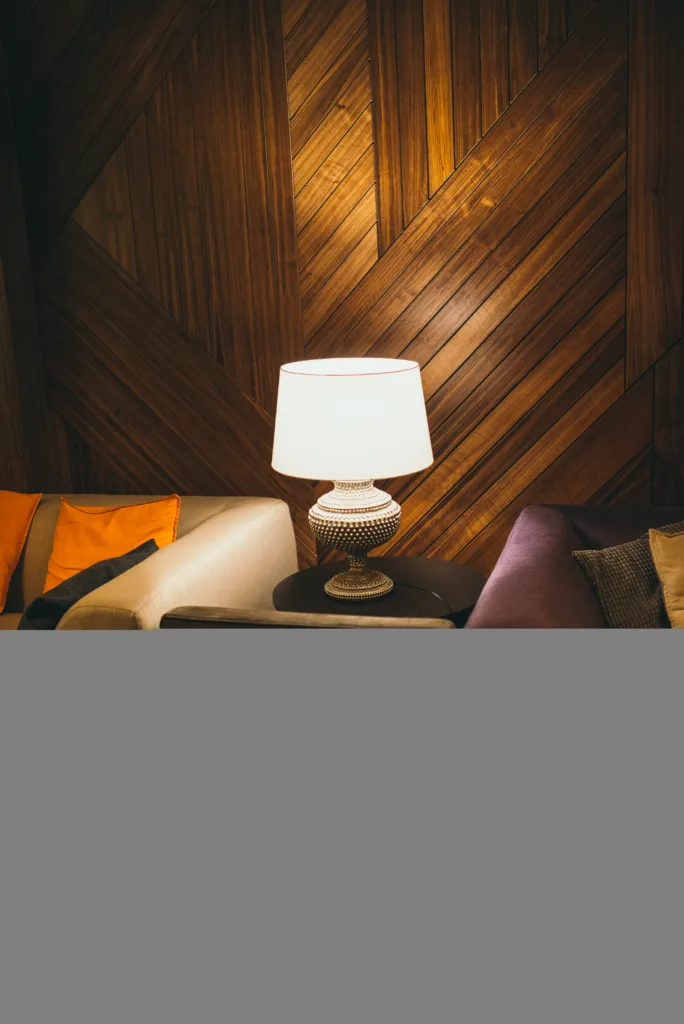
The same logic applies to the current interest in warmer finishes. Bright chrome and cool white lighting can still work in modern interiors, but bronze, aged brass and darker woods often create a gentler fall atmosphere. The effect becomes stronger when the bulb itself is warm rather than stark blue-white. Color temperature is an important part of the design even though shoppers often focus more on the fixture.
Home design coverage on Wowplus has also shown how interiors can become tied to identity. A profile on David Bromstad’s changing relationship with television design underlined how personal the work can become. That is useful context for lighting too: a room usually feels better when choices respond to the people living there, not simply to a list of fashionable products.
How to use fall lighting ideas without overdoing the room
The easiest starting point is to identify where the room feels uncomfortable after dark. If the problem is a bright ceiling fixture, adding two lower lamps may let that light stay off most of the evening. If a corner feels dead, one floor lamp can create a visual anchor. If a bedroom feels flat, matching bedside lamps are not the only answer; two different but related lamps can feel collected rather than staged.
It is also worth thinking about what the shade does to the light. Dark or heavily patterned shades can make a strong decorative statement but reduce brightness. Pale linen or paper will usually spread more light. In a room used for reading or detailed work, beauty and function need to be balanced so the lighting still supports what happens there.


Another mistake is adding too many statement fixtures. If the ceiling light is sculptural, every lamp in the room does not need to compete with it. One or two distinctive pieces usually have more impact when simpler lights support them. The same restraint helps with mixed metals and mixed woods: variation can make a room richer, but repeating at least one material or shape keeps the overall look connected.
For renters, lighting is one of the more flexible ways to make a space feel individual. Plug-in wall lights, floor lamps and table lamps can transform a room without permanent electrical work. Battery-powered lamps can also help on shelves or dining tables where there is no nearby socket, although their output is usually more atmospheric than functional.
The broader lesson from fall lighting trends 2026 is that comfort is becoming a design priority in its own right. People are not only asking whether a fixture looks impressive; they are asking what the room feels like at 8 p.m. on an ordinary night. Warm materials, lower light levels and several smaller sources answer that question in a way a single bright ceiling light rarely can.


Isiagu Tobby
Wowplus editorial contributor.