

Table of contents
Caring for family photographs starts with a small, manageable task: making one group of prints safer to handle, easier to identify and simpler to find again. You do not need to reorganise every album in a weekend. A careful first session can reveal what you have and which items need more experienced help.
Begin with ordinary paper prints in sound condition. Set aside unusual cases, glass negatives, flaking surfaces or tightly curled photographs for specialist advice. Different photographic processes need different care, so a method that works for a recent snapshot should not automatically be applied to every object in an inherited collection.
The information around a photograph deserves attention too. Names on an envelope, an album’s original order and a relative’s explanation may be as valuable as the image. Our guide to creating a family recipe collection takes a similar approach to preserving everyday objects alongside the stories that give them meaning.
Prepare a gentle first sorting session
Prepare a clear table before opening a box. Keep drinks and food elsewhere, and make room to support each print rather than balancing it in one hand. NARA recommends cotton or nitrile gloves for photographs and warns that fingerprints can leave permanent marks. Avoid touching the image surface.
Move gently, using two hands or a suitable supporting board or folder. If a photograph starts to crack, shed material or resist being opened, stop. A sorting session should not become an improvised repair job. Glue, household tape and attempts to flatten a stubborn original can create damage that is difficult to undo.
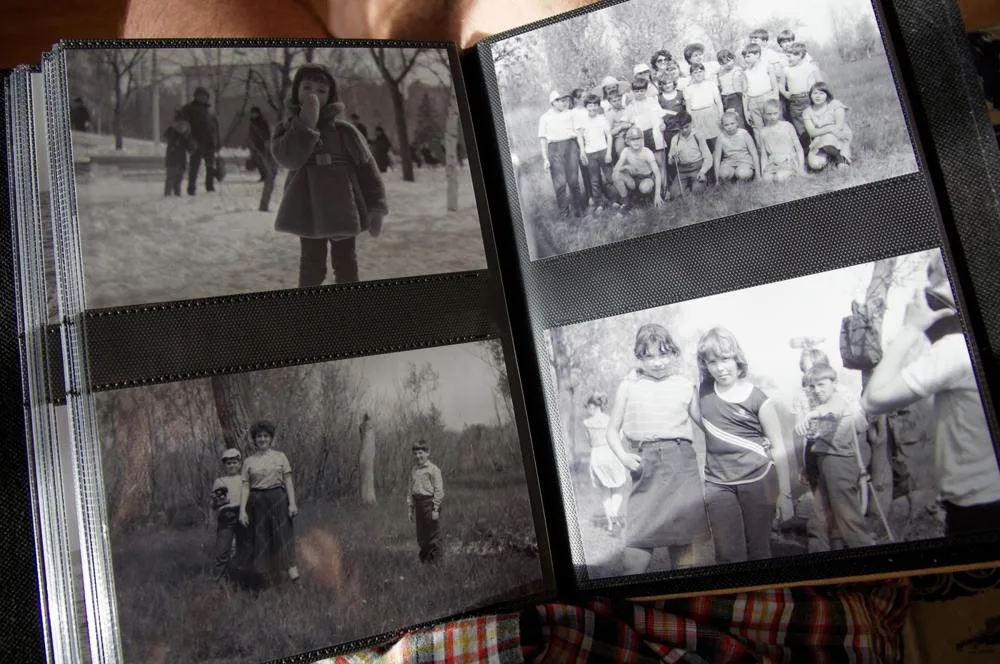
Before rearranging an old album, make a note of its existing sequence. Record captions and the relationship between facing pages. A wedding photograph beside a house picture may tell you something about a particular period. Keeping that context makes later research easier, even when the names of some people remain uncertain.
Choose a suitable place before buying supplies
A sensible storage place is part of the project. The National Archives advises cool, dry conditions and cautions against hot attics, damp basements and garages. Choose the most stable suitable space available in your home. A photograph box should be easy to retrieve without exposing the contents to frequent light or rough handling.
The principles overlap with our advice on organising a bookshelf with book care in mind: fit the storage to the object and its surroundings. An attractive album cover alone tells you little about the pages and plastic touching the photographs inside. Materials and support matter more than a decorative label.
Read the enclosure information
When buying enclosures, look for information about the Photographic Activity Test, usually shortened to PAT. The Northeast Document Conservation Center recommends materials that pass this test for photographic storage. Its guidance also distinguishes stable plastics such as suitable polyester, polyethylene and polypropylene from PVC, which can release harmful compounds.
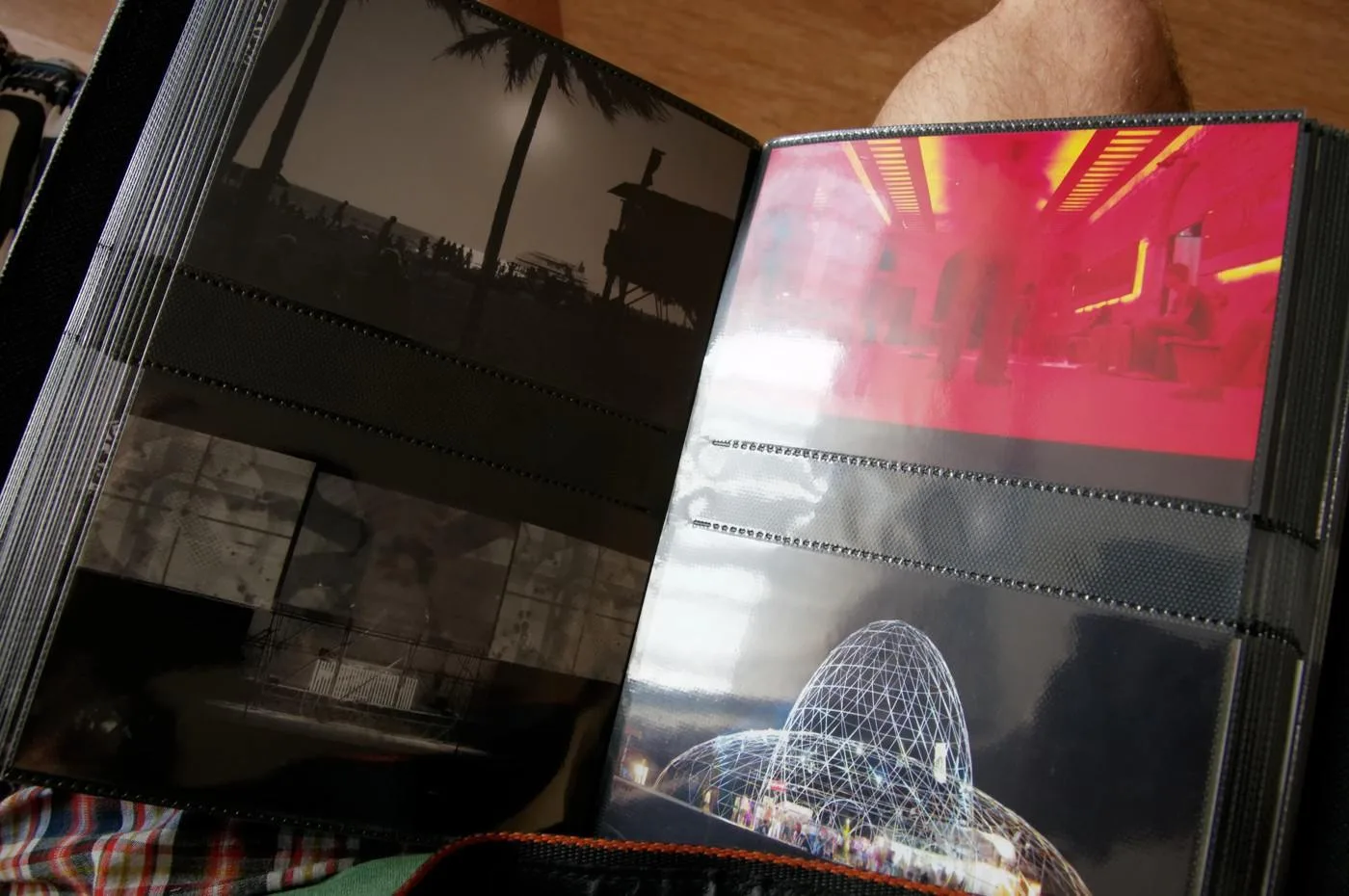
The Library of Congress recommends photo corners for attaching prints to paper album pages, keeping adhesive away from the photograph. It advises avoiding self-stick tape and magnetic or no-stick albums. There are important exceptions for particular photographic materials, so check the supplier’s specifications and seek advice when the print type or condition is uncertain.
Do not force too much into one album. Overfilled pages become awkward to turn, and a cover that no longer closes comfortably is a signal to reconsider the arrangement. The National Archives recommends avoiding overstuffing and using enclosures large enough to support and fully contain the originals. Leave room to view the pictures safely.
Keep identification separate from guesswork. A note such as “possibly Aunt Ada, location unknown” is more useful than silently turning a family suggestion into a fact. Record who supplied an identification and when. For a print in an existing album, a separate index or page note can preserve the explanation without adding writing to the image.
Photographs often connect with other records, including letters and voices. Our guide to preserving family audio offers a companion project for recordings. You could give related items matching reference names, allowing a spoken recollection and a photograph to remain connected even when stored in different formats.
Make copies while keeping the originals
Making a digital copy can reduce repeated handling of the original. For a loose, flat print, check that it fits entirely on the scanner surface. Do not press a thick or fragile album flat beneath a scanner lid. The National Archives recommends a copy stand and comfortable support for books, with the binding opened without force.
Save the context with the copy: who is pictured, what the occasion was, where it happened and the date, where known. Keep the original after digitising it. NARA also recommends the 3-2-1 backup approach: three copies, using two different media, with one copy stored off-site. A single file on a phone is a fragile plan.
Finish by returning the group to its storage place and writing down what remains to be done. Perhaps ten prints are now identified, one album has a useful index and a damaged photograph has been left safely alone pending advice. That is meaningful progress. The collection becomes more usable through patient, repeatable sessions, with the originals and their stories kept together.

Isiagu Tobby
Wowplus editorial contributor.