




Table of contents
Coco Gauff WTA Finals qualification offers a useful snapshot of a player who is still young enough to be described as the future of tennis but has already built a substantial present. The 22-year-old American has secured another place at the season-ending event, this time with a season that includes a Cincinnati title and deep runs at the majors.
The WTA confirmed on October 14 that Gauff and Jessica Pegula had qualified for November’s Finals in Indian Wells. Both will make their fifth consecutive appearance. For Gauff, who won the tournament in 2024, returning is evidence of sustained performance rather than a breakthrough invitation.
There is another part of her season that results alone do not capture. At the US Open in September, Gauff spoke about feeling happier socially as more successful players around her own age joined the tour. The teenager who once struggled to fit into an adult workplace is now describing a different experience of the same demanding profession.
Qualification rewards a season rather than one afternoon
Gauff’s 2026 results have included the Cincinnati championship, finals in Miami and Rome, semifinals at Wimbledon and the US Open, and an Australian Open quarterfinal. Those finishes explain her place in the season-ending field without requiring every tournament to become a victory.
The contrast matters in a sport where a single painful defeat can dominate the conversation. Wowplus recently covered Naomi Osaka’s prolonged Beijing battle, another reminder that a scoreline can contain a much more complicated account of confidence, resistance and missed opportunities.
Gauff arrives at this stage with experience of the Finals’ particular demands. A place among the qualifiers puts her in the competition; it does not predict another trophy. The round-robin format also means the task differs from the familiar rhythm of a straightforward knockout draw.
Her qualification is therefore best read as a measure of consistency. The next question is how effectively she can bring the strongest parts of her game into a compact event where the opposition is strong from the opening match.
The serve has been a patient rebuilding project
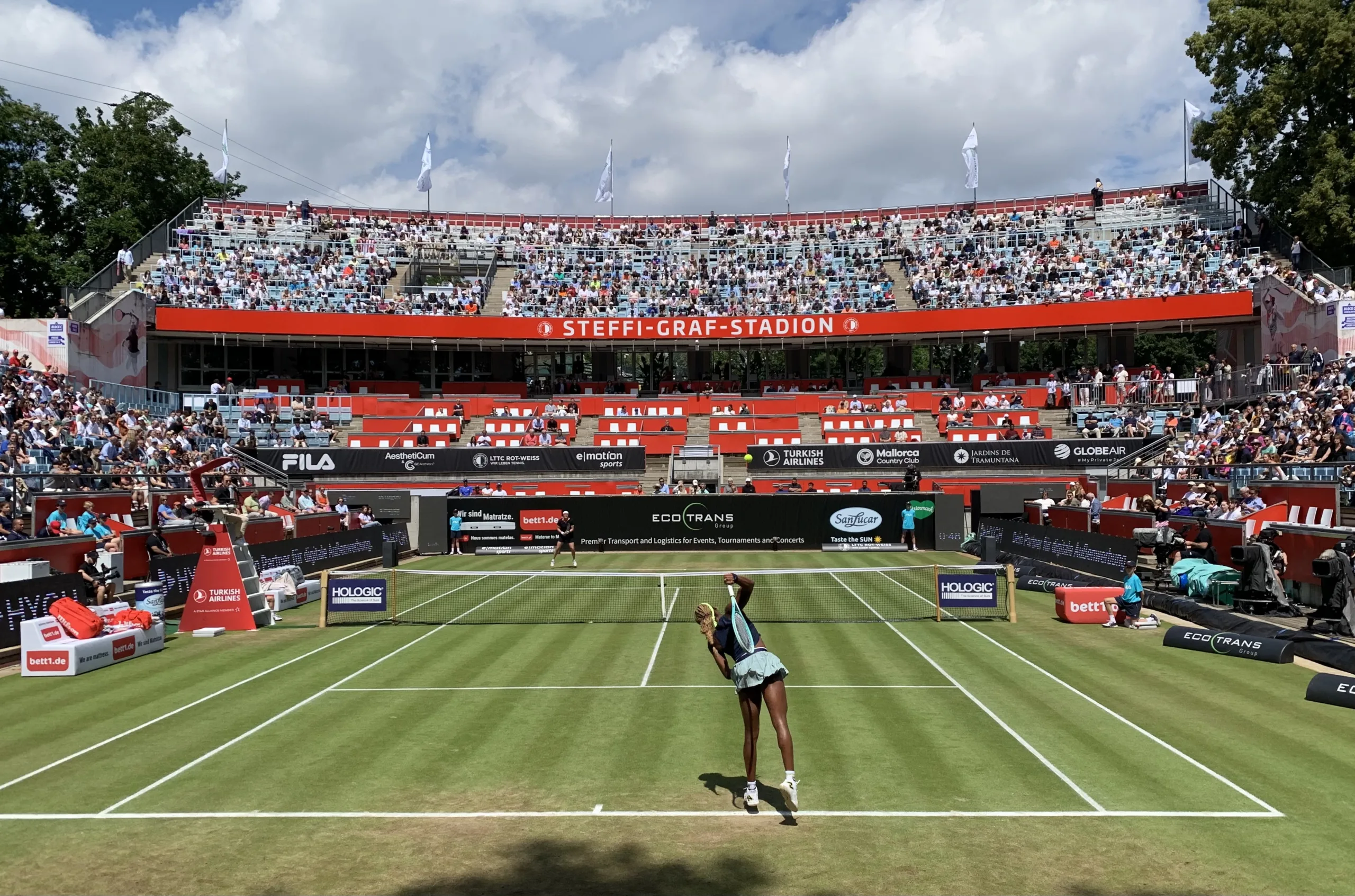
One of the clearest threads running through Gauff’s recent career is her work on the serve. In official US Open coverage, she explained that changes involving her ball toss and wrist position had developed gradually rather than arriving as an instant technical cure.
She began working with biomechanics specialist Gavin MacMillan before the 2025 US Open. By the following year, she could see differences when comparing footage, even when the movement did not always feel dramatically different while she was playing. That is a more realistic picture of improvement than the familiar story of one adjustment solving everything.


The distinction also helps explain why an athlete can be improving while still producing uneven passages within a match. A developing movement has to hold up under pressure, tiredness and the different demands imposed by opponents. Progress in practice remains only part of the job.
Recovery belongs in that discussion too. Wowplus explored Roger Federer’s perspective on sleep and recovery after tennis. Gauff’s situation is different, but both stories widen the view beyond the shots spectators see during a match.
New York supplied both resistance and a limit
Gauff’s US Open quarterfinal against Mirra Andreeva showed how a difficult start can become a test of problem-solving. She lost the opening set, saved two match points in the second and eventually won in three. The comeback did not erase the difficulties that came before it; she had to play through them.
Official tournament reporting described her improvement as the match developed, including a cleaner deciding set. It was a useful example of a player finding a workable level during competition rather than waiting for the afternoon to feel comfortable from the beginning.
Her run ended in the semifinals, where Elena Rybakina recovered from losing the first set to win in three. That result gives the season a necessary boundary: reaching the closing stages of a major is an achievement, but it is not the same as winning one.
Keeping both matches in view avoids two easy exaggerations. Gauff was neither an unstoppable force after the quarterfinal nor a failed contender after the semifinal. She was a leading player producing a strong tournament while still meeting opponents capable of beating her.


Growing older has changed the experience of the tour
When Gauff discussed her early years at the US Open, she described the social isolation of being considerably younger than many colleagues. She understood why an adult player would not naturally make a 15-year-old part of every evening plan. Understanding it did not make the age gap disappear.
At 22, she said having successful players of a similar age made it easier to arrange dinner, spend time together and share the ordinary ups and downs of touring. That is her account of her experience, rather than evidence that every pressure attached to professional tennis has gone away.
Public identity is another part of that environment. Our coverage of Naomi Osaka’s approach to tennis style considers how a player can express personality in a highly scrutinized setting. Gauff’s reflections add a different dimension: the importance of feeling comfortable among the people who share that setting.
The new Finals qualification brings those threads together. Technical work, repeated competitive results and a more settled social life are all visible in her season. None guarantees what happens in November. Together, however, they make it harder to describe Gauff only as the teenager who first surprised the tennis world. She returns to the Finals as an established contender with room to keep developing.


Isiagu Tobby
Wowplus editorial contributor.