


Table of contents
Coventry City won a five-goal Premier League match at the Coventry Building Society Arena on Saturday, 21 November, after an 85th-minute Dwight McNeil own goal gave them a 3–2 victory over Crystal Palace. Taiwo Awoniyi and Tatsuhiro Sakamoto had twice put Frank Lampard’s side ahead. Palace replied through Yéremy Pino and Jørgen Strand Larsen, then finally fell behind for good in Thomas Frank’s first match in charge.
The game’s first four goals were shared before half-time. The second half took longer to yield a decisive opening, but the final minutes brought the same problem for Palace: Coventry could put the visitors under pressure even when they had less of the ball. Coming back twice earned Palace a chance to secure a point on the road. The final sequence left Frank with the more pressing work of defending those situations.
The result follows another landmark afternoon covered in Wowplus’s look at Coventry’s first Premier League win in 25 years. Saturday gave the home supporters a different kind of occasion. Twice the lead had disappeared. When the third arrived, the home side had little time left to defend it and Palace had little time to find another answer.
Awoniyi gave Coventry the start they wanted
Awoniyi opened the scoring in the fifth minute after a pass from Jack Rudoni. It was a rewarding start for a home side that could immediately make Palace respond to a change in the match. Palace did so quickly. Strand Larsen supplied Pino for the 13th-minute equaliser, the first of two goals the pair would create for one another.
Rudoni was involved again on the half-hour, setting up Sakamoto to restore Coventry’s lead. The two assists told a clear story about his contribution. Palace had reason to account for a player who had already put Awoniyi in a position to score, and they still had to deal with his service into another dangerous area. Coventry could attack through different finishers while keeping Rudoni close to the crucial pass.
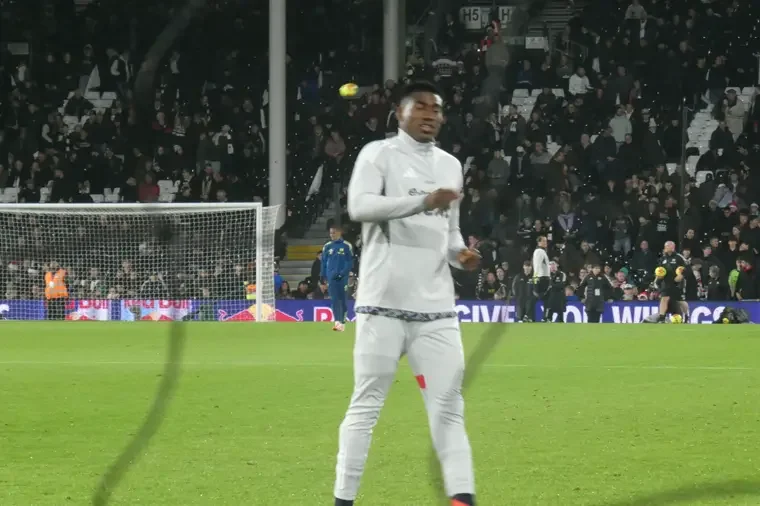
Palace returned the favour through the same two players who had levelled earlier. Pino turned provider for Strand Larsen in first-half stoppage time. The timing sent both teams into the interval level after Coventry had twice moved in front. For a side playing its first match under a new head coach, Palace’s capacity to recover offered Frank something he could carry into the next week of training.
Two Palace comebacks kept the game open
The timeline and team data from SportingLife put the match in perspective. Palace controlled 58 per cent of possession. Coventry still put seven shots on target to Palace’s five. A team that has already scored twice can use the ball to take pressure out of the game. Palace’s challenge was to do that while preventing Coventry from getting clean attempts when their spells of possession ended.
Palace have a rich history of players making those connections in attack, as Wowplus’s profile of Ian Wright recalls. On Saturday the live question for Pino and Strand Larsen was how often they could reproduce their first-half work. Their two combinations kept Palace within reach, but the away side also needed its defenders and midfielders to manage repeated entries into the penalty area through a much longer second half.

Frank took over from Pierre Sage with Palace already under pressure in the league. One match offers limited evidence about how a new coach will change a team, especially when its first test brings three score changes against it. It did show what Frank has to work with in the final third. Pino and Strand Larsen found ways to supply each other, so Palace had a route back even after their opponents took a second lead.
McNeil’s own goal decided it in the 85th minute
As the game approached its final five minutes, another delivery caused trouble in the Palace area. McNeil’s touch sent the ball into his own goal. It was an unfortunate way to concede after the work his teammates had done to level twice. The episode also rewarded Coventry for continuing to get the ball into areas where any loose touch could change the score.
For Lampard, the late winner rewards a side that kept searching after losing its advantage twice. Awoniyi and Sakamoto supplied the finishing before the interval, and the home team continued to make enough chances to test Palace after it. Those qualities are useful when Coventry cannot rely on having more possession and must make its best attacking spells count quickly.
Coventry’s attention now shifts to Leeds, whose 4–1 win at Chelsea made a strong case for defending well during changes of momentum. For Palace, the improvement to seek is equally concrete. Two good attacking combinations brought them back into a difficult away match. Calmer defending during the next wave of pressure would have given those goals lasting value. Coventry left the field with that lesson and three points.

Isiagu Tobby
Wowplus editorial contributor.