

Table of contents
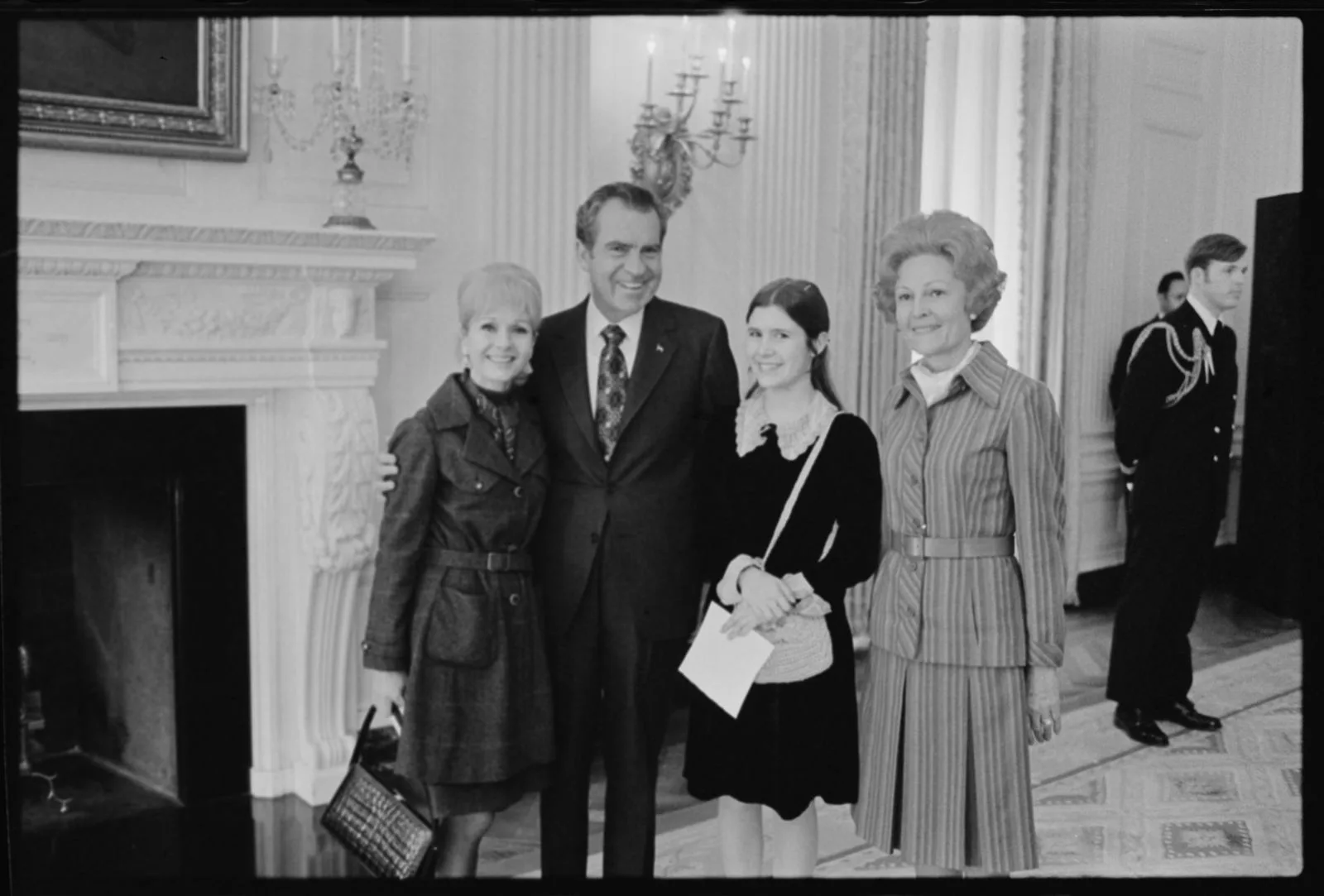
Carrie Fisher and Debbie Reynolds remain one of Hollywood’s most recognisable mother-and-daughter pairings. On October 21, 2026, the date that would have been Fisher’s 70th birthday, their shared story offers more than a collection of famous surnames. It connects two different screen careers, a family accustomed to public attention and a documentary that allowed both women to appear as themselves.
Fisher was born on October 21, 1956, to Reynolds and singer Eddie Fisher, according to her official biography. Reynolds was already a film star. Her daughter would become Princess Leia, a novelist and a screenwriter. Their relationship is most rewarding to revisit when those individual achievements remain visible alongside their family bond.
That perspective also matters when looking at later family tributes. Billie Lourd’s Christmas remembrance of her mother and grandmother is one part of the family’s public record. It should sit beside the work they left behind, rather than become the only way audiences encounter them.
Two careers with different starting points
Reynolds’s breakthrough in Singin’ in the Rain arrived in 1952, before Fisher was born. Her screen identity came from a period when musicals asked performers to combine acting, movement, singing and comic timing. TCM’s career retrospective describes the demanding preparation behind that film. The polished result on screen depended on learning and rehearsal, not simply an effortless smile.
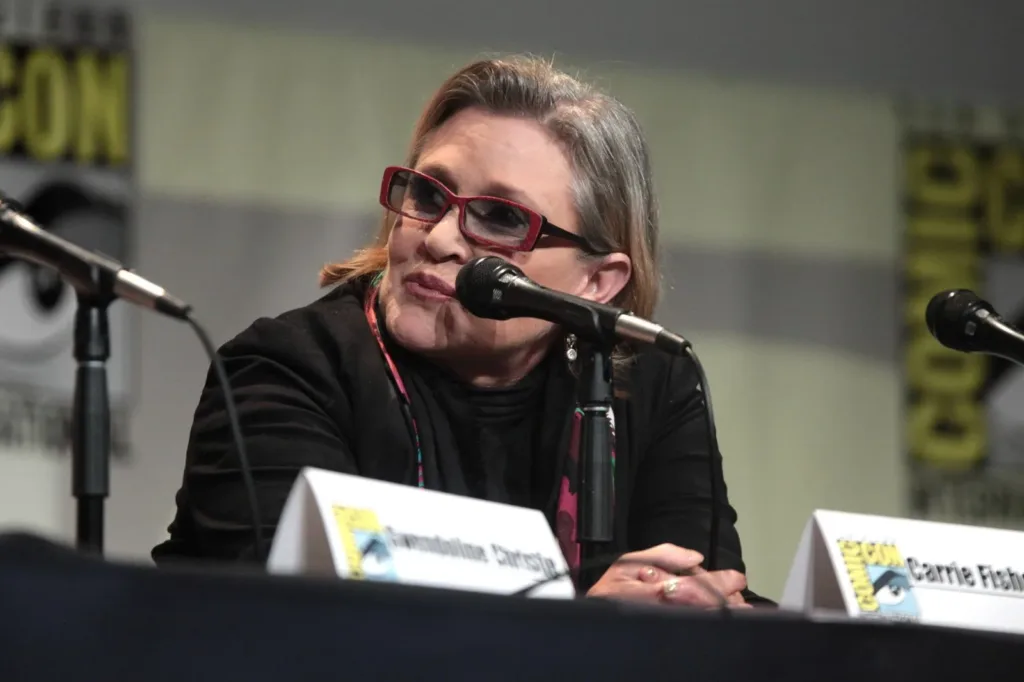
Her later career extended beyond that early image. Reynolds played the title role in The Unsinkable Molly Brown, receiving an Academy Award nomination, and continued working across film, television and live performance. Her official filmography includes Halloweentown, in which she played Aggie Cromwell. Those credits help explain why different generations remember different versions of the same performer.
Fisher’s first film was Shampoo in 1975; Star Wars followed in 1977. Leia made her internationally familiar, but the official career timeline also records a substantial writing life. Her first novel, Postcards from the Edge, appeared in 1987, and she adapted it for the 1990 film starring Meryl Streep and Shirley MacLaine.
The distinction between a novel and a direct family record is important. Fiction can draw on experience while changing characters, situations and emphasis. Readers exploring celebrity memoirs and personal storytelling should keep the form of each book in view. A fictional mother and daughter cannot automatically be treated as a complete transcript of Reynolds and Fisher’s private lives.
What Bright Lights adds to the family portrait
Bright Lights: Starring Carrie Fisher and Debbie Reynolds brought the two women together in a different format. Directed by Alexis Bloom and Fisher Stevens, it was presented in Cannes Classics in 2016. The festival’s introduction describes a mother-daughter relationship lived under public scrutiny and a story connecting distinct eras of American cinema.
The Cannes account also identifies old family films as part of the documentary’s material. Todd Fisher, Reynolds’s son and Carrie’s brother, was involved as a producer. That family archive gives the project a different starting point from a profile built entirely around premieres, publicity photographs and professional interviews.
Its importance lies partly in the change of scale. A screen performance asks viewers to follow a character. A family documentary invites attention to the people around that performance and the history they share. That does not make every filmed exchange a definitive explanation of a relationship; it gives audiences another piece of evidence to consider beside books, credits and interviews.
Fisher’s own voice is essential to that balance. Her books and screenplay work show that she was an author of her public story, as well as a subject of it. Even familiar accounts of her early experience of Star Wars become more interesting when read alongside that wider career, rather than as isolated trivia about a single role.

A legacy bigger than one family headline
There is a temptation to flatten a famous family into a neat pattern: the established parent, the child who follows, and a final reconciliation that explains everything. Reynolds and Fisher’s public records resist that tidy structure. They worked in overlapping professions, but their best-known performances, writing projects and routes to audiences were different.
Reynolds also devoted considerable energy to preserving film costumes and memorabilia, a commitment discussed in TCM’s retrospective and recognised in her official awards record. Fisher preserved experience in another form through books and performance. The comparison is an editorial one, not a claim that their motivations were identical: both bodies of work now give later audiences material to revisit.
A useful anniversary viewing plan is therefore small and specific. Choose one Reynolds performance, one Fisher performance and a piece of Fisher’s writing, then consider where Bright Lights fits beside them. This approach lets the documentary add context without requiring it to carry the full weight of two lives or provide a lesson for every other family.
It also leaves room for uncertainty. Public material can establish dates, credits and what someone chose to say on record. It cannot establish every private feeling, settle every disagreement or turn speculation into a fact. Affection and difficulty need not be reduced to a competition over which headline best describes an entire relationship.
On Fisher’s birthday anniversary, Carrie Fisher and Debbie Reynolds deserve that fuller frame. Their bond remains part of the story, but so do the musical performances, the comic roles, the novels and the screenplay pages. Returning to those works gives remembrance something concrete to rest on: two artists whose careers can still be encountered individually and together.

Isiagu Tobby
Wowplus editorial contributor.