


Table of contents
Spotify’s audiobook business is expanding in two directions at once: into more countries and across different ways of reading. Its October announcement sets a target of more than 180 markets by the end of 2026. Earlier this year, its Bookshop.org partnership added a route from discovering a title in the app to buying a physical book.
Those developments connect a familiar streaming service with a different commercial ecosystem. Authors, publishers and independent booksellers have distinct roles in it. Understanding the business requires looking separately at audiobook access, the technology that connects formats and the retail partner that handles printed books.
A wider rollout with different access routes
In its October 7 announcement, Spotify said it was expanding audiobook access from 22 markets to more than 180 before year-end. The announcement described more than 350,000 titles for newly added markets, spanning over 120 languages. This is a rollout commitment, rather than confirmation that every announced market already has identical access today.
The company outlined several routes: audiobook time included with eligible Premium plans, an Audiobooks+ add-on and purchases of individual titles. It explicitly said availability and pricing vary by market. That qualification matters to readers comparing a headline about global expansion with what their own account actually offers.
Different kinds of content also have different commercial arrangements. Our explanation of Spotify’s music royalty figures concerns payments to music rights holders. Those figures cannot simply be treated as a measure of the audiobook business or an individual author’s earnings.
For publishers, expanded distribution creates another place where a reader may encounter a book. Discovery and revenue are related business questions, but they remain separate measurements. A wider catalogue does not establish how many people finished a particular title, and a feature launch does not establish a publisher’s return.

Printed books remain part of the proposition
Spotify announced its Bookshop.org partnership in February, describing a connection between listening and physical ownership. Its April 15 update then said printed-book purchasing had gone live through the Spotify Android app in the US and UK, with iOS availability due the following week. The launch had a specific geography, distinct from the later global audiobook announcement.
Bookshop.org’s own support explanation describes Spotify as an affiliate partner. A person following the link can choose a bookstore to benefit from the purchase or allow the transaction to contribute to a shared profit pool. The bookseller network’s role is therefore an explicit part of the arrangement.
That structure matters because it connects a digital discovery surface to an existing retail business. It does not mean Spotify has become the publisher of every book it displays. Nor does the physical-book partnership mean that every book discovered in an audiobook catalogue has the same retail availability in every country.
Readers may also use different editions of a shared title. Our guide to starting a book club considers the practical importance of agreeing how a group will read and discuss a work. A business built around several formats has to accommodate those ordinary differences in reading habits.
Page Match connects two versions of a book
Page Match addresses a more specific problem: finding the corresponding place when changing between text and audio. Spotify’s February instructions describe scanning a page from a supported printed or electronic edition to locate the matching point in the audiobook. The reverse process helps a listener return to the written text.
The feature uses camera access, and its instructions include trying again when a page cannot be matched. It therefore works with a particular supported title and a successful match, rather than functioning as a universal conversion of any printed book into an audiobook. Readers still need access to the relevant audio edition.

The October update added another method using an ISBN barcode and page numbers. Spotify also reported that more than one million readers had used Page Match since February. That company-reported adoption figure describes use of the feature; it is not a published count of physical books sold through Bookshop.org.
From a product perspective, the attraction is continuity. A person can change activities without having to restart a story or manually search through a long recording. Whether that convenience increases total reading or shifts time between formats is a separate question requiring evidence beyond the feature description.
Several businesses sit behind one interface
Spotify’s February explanation separates included listening allocations from individually purchased audiobooks. Eligible subscribers use their allotted hours, while users on its free service can use Page Match with individual audiobooks they have bought through Spotify. The matching feature and the payment arrangement perform different jobs.
The company’s other creator initiatives have their own rules, as our coverage of the Spotify Partner Program for podcasters explains. Putting books, podcasts and music in one app does not make their eligibility requirements, contracts or revenue systems interchangeable.
The emerging audiobook strategy combines broader distribution, continuity between editions and a physical-book retail partnership. Its commercial test will involve what readers actually use, which titles they discover and how participating businesses benefit. The documented launches show how Spotify is building those connections, while the outcome remains something to measure rather than assume.
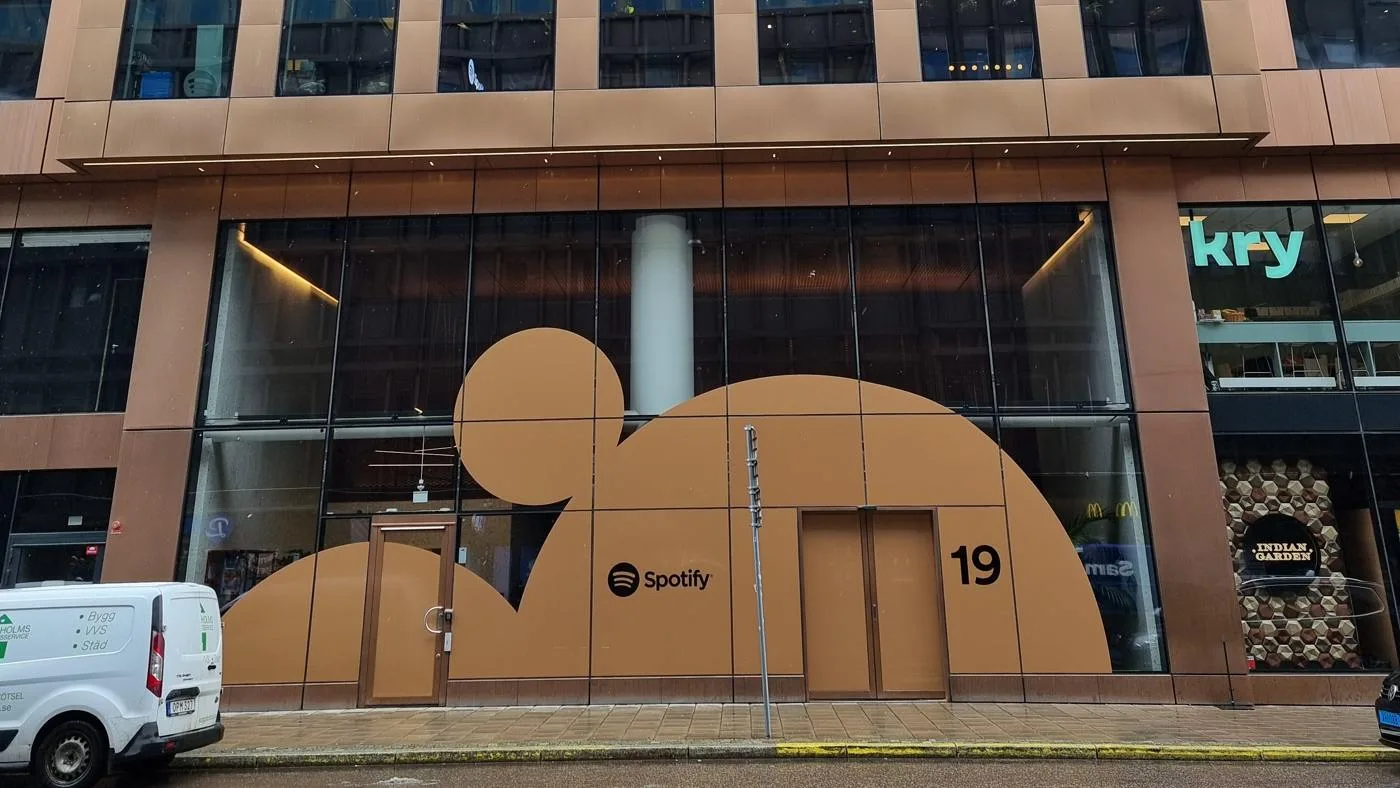
Featured archival photograph: Goombah / Wikimedia Commons, Stockholm, April 2024. CC0 1.0 (https://creativecommons.org/publicdomain/zero/1.0/). Cropped and resized; not an image of an audiobook launch event.

Isiagu Tobby
Wowplus editorial contributor.