



Table of contents
- GAC is entering Europe with more than one type of electric car
- Local production could become the most important part of the strategy
- Price and dealer coverage may matter more than headline range
- European buyers are becoming more open to Chinese EV brands
- France gives GAC a useful test market
- The bigger test is whether expansion can become durable market share
GAC Europe EV expansion is moving from a market-entry experiment into a much larger push, with the Chinese automaker planning more electric and hybrid models, more dealerships and potentially more production capacity inside Europe.
GAC has introduced the Aion UT and Aion V in France as part of a plan to launch 12 electric and hybrid models there by 2030. The company also wants to expand its French dealer network from about 50 locations in 2026 to roughly 200 by the end of the decade, turning a limited rollout into a much more visible retail presence.
Reuters reported that GAC is also exploring additional European production capacity, including work with Magna and other possible partners. The strategy would help the company reduce logistics costs, respond to European industrial policy and make its vehicles feel less like imports and more like locally assembled products.
The move comes as the global car industry is being reshaped by electrification, tariffs and rapidly changing customer demand. Wowplus previously examined Ford’s decision to reorganize around trucks and electrification, another example of how automakers are being forced to choose where scale and future investment should go.
GAC is entering Europe with more than one type of electric car
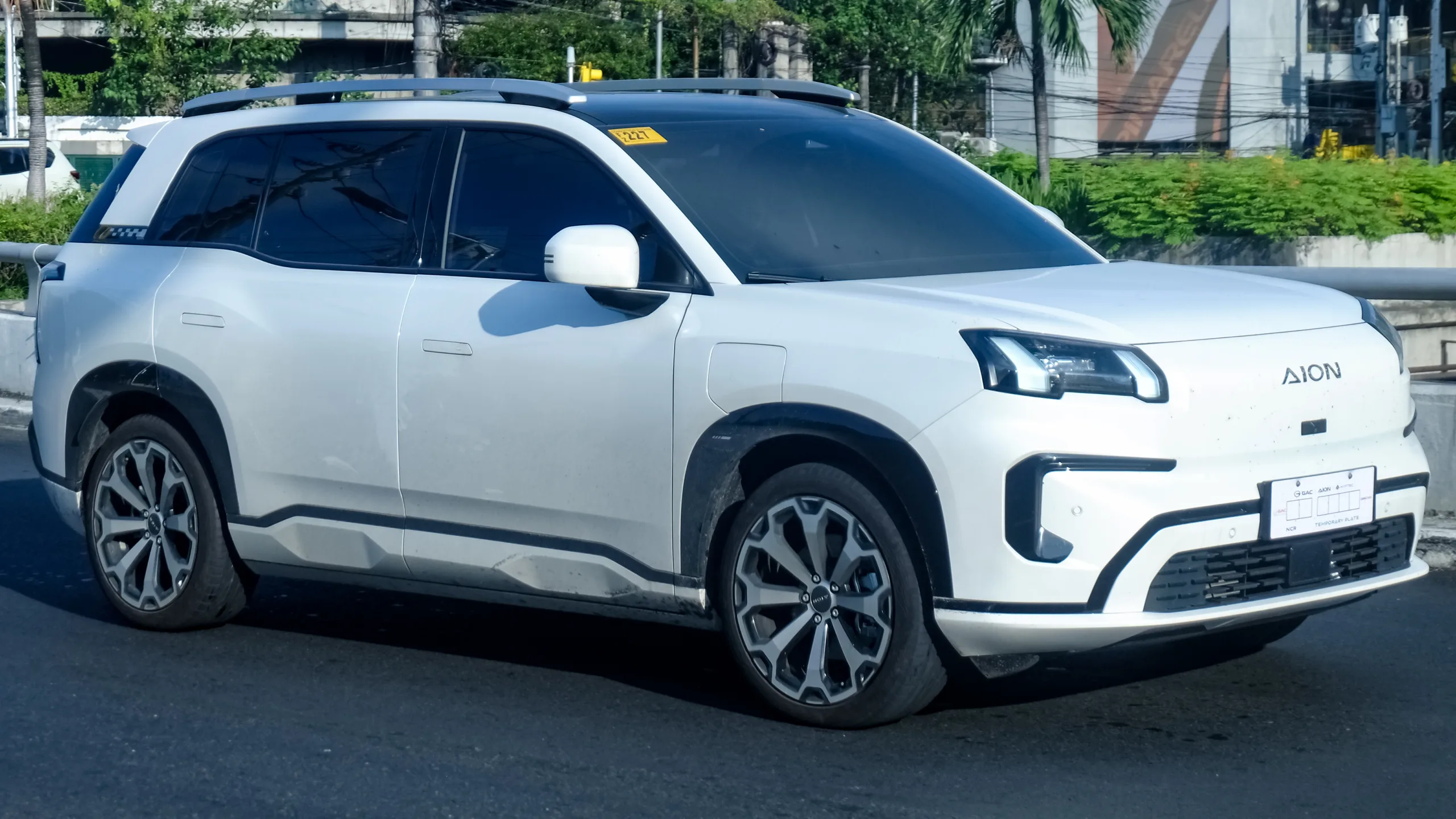
The two models already serving as the company’s European introduction target different buyers. The Aion V is a family-sized electric SUV, while the Aion UT is a smaller hatchback designed for urban use.
That product split matters because European EV demand is not concentrated in one category. Some buyers want larger vehicles with long motorway range, while city drivers care more about compact dimensions, lower prices and easy parking.
GAC says the Aion V can deliver up to 510 kilometres of WLTP range, while the Aion UT can reach up to 430 kilometres depending on configuration. Both vehicles use battery-electric powertrains, but they address different daily needs.
Starting with more than one body style also reduces the risk of being defined by a single niche. A brand entering a new region needs enough variety for dealers to serve more than one type of customer.
Local production could become the most important part of the strategy
GAC’s European story is not only about exporting vehicles from China. The company has already begun local assembly of the Aion UT in Austria through a partnership with Magna, and executives have said they are exploring further production options.
That matters because European policymakers are increasingly focused on where electric vehicles are built, not only where they are sold. Local assembly can reduce shipping costs, shorten supply chains and make it easier to comply with industrial rules tied to regional production.


It also changes the political optics. A Chinese brand that creates European manufacturing work can present itself differently from one that simply sends finished cars into the market.
The strategy echoes a wider shift in the industry toward regionalized production. Wowplus previously reported on how new automotive technology is already forcing regulators to rethink driving rules, and manufacturing policy is undergoing a similar adjustment as EV competition grows.
Price and dealer coverage may matter more than headline range
Electric-car marketing often focuses on battery range, charging speed and software features. Those specifications matter, but buyers also care about practical issues such as warranty support, service locations and resale confidence.
That is why GAC’s dealer expansion target is important. Growing from roughly 50 French outlets to around 200 would make the brand easier to discover, test drive and maintain.
Dealer coverage can also build trust. Consumers are more likely to consider an unfamiliar badge when there is a physical network behind it and when parts and repairs do not appear difficult to access.
For a new entrant, that infrastructure may be as important as the vehicle itself. A technically competitive EV can still struggle if buyers worry about service support after the sale.
European buyers are becoming more open to Chinese EV brands
Chinese automakers have become more visible in Europe as companies such as BYD, MG, XPeng and others expand their product lines. GAC is entering a market where the idea of buying a Chinese-designed EV is already less unfamiliar than it was only a few years ago.
That creates opportunity, but it also means competition is intense. GAC has to distinguish itself not only from Volkswagen, Renault, Stellantis and other established European groups, but from Chinese rivals with larger existing dealer networks.
The company’s advantage may come from combining relatively generous equipment levels with competitive pricing and local production. Features such as large infotainment displays, driver-assistance systems, heat pumps and fast charging are increasingly expected across the EV market.
At the same time, established automakers are simplifying and adjusting their own electric lineups. Wowplus previously covered Tesla’s decision to reshape parts of the Model S and Model X range, a reminder that even dominant EV brands regularly change product strategy as demand shifts.


France gives GAC a useful test market
France is especially attractive because electric-vehicle registrations have been strong and government policy continues to encourage lower-emission transport.
GAC executives have pointed to rising EV adoption as a reason the timing makes sense. The company is entering while buyers are already familiar with charging networks, incentives and the basic trade-offs of electric ownership.
France also offers a large enough market to test whether GAC can build recognition quickly. If the brand gains traction there, the dealer and production model could be repeated elsewhere in Europe.
The company is already active in countries including Spain, Portugal, Greece, Finland, Poland and the United Kingdom, giving it multiple places to compare demand.
The bigger test is whether expansion can become durable market share
The GAC Europe EV expansion plan is ambitious because it depends on several things working at once. New models must arrive on time, dealer networks must grow, production has to remain efficient and buyers need enough confidence to choose a relatively unfamiliar brand.
Launching 12 electric and hybrid models in France by 2030 would give GAC a much broader showroom than it has today. But volume alone does not guarantee success. The company still has to build resale values, service quality and customer loyalty.
That is why local production could become more important than any single vehicle specification. A strong manufacturing and retail footprint would make GAC harder to dismiss as a temporary importer and easier to view as a long-term European competitor.
For buyers, the result is likely to be more choice. For established automakers, it means another well-funded rival is moving closer to their home markets. Europe’s electric-car competition is no longer only about whether Chinese brands will arrive. It is increasingly about how deeply they will build themselves into the region.


Isiagu Tobby
Wowplus editorial contributor.