

Table of contents
Margot Robbie and Tom Ackerley have built a public partnership around more than red-carpet appearances. As October 2026 brings another expansion at LuckyChap International, their work together offers a useful way to understand a marriage that is usually discussed much less openly than their films.
The couple married in December 2016, after meeting through the film industry and helping establish LuckyChap. Robbie is the more visible performer; Ackerley works primarily behind the camera. Their shared credits show why describing him only as an actor’s husband leaves out a substantial part of the story.
That production work also connects to our coverage of the Ocean’s Eleven prequel and its Paris filming. For this partnership, the professional record is often more revealing than a photograph taken between projects. It documents what they have helped make and the collaborators working alongside them.
Margot Robbie and Tom Ackerley started as colleagues
Robbie’s 2016 Vogue cover interview described meeting Ackerley on Suite Française, where he worked as an assistant director. Their friendship developed into a relationship. The same interview introduced LuckyChap as a venture involving Robbie, Ackerley, Josey McNamara and Robbie’s friend Sophia Kerr, rather than a company built by the couple alone.
In Vogue’s 2019 profile, Robbie recalled the group sharing a house in London and founding the business in 2014. The domestic setting has become part of the company’s origin story, but the important point is practical: their relationship and their working lives developed within the same circle of friends.
Robbie has spoken positively about working with her husband. In a 2018 Porter interview, later recounted in Harper’s Bazaar’s relationship timeline, she described enjoying the experience and making an effort to see each other when their work took them to different countries. Those are her public comments about a particular period, rather than a complete account of their private life.
Ackerley described a similar overlap in a 2024 Times interview, reported by Us Weekly. He said that the couple’s business and personal lives had become closely connected. The remark helps explain their shared professional identity without establishing that every decision, every project or every working day is the same.
The film credits tell their own story
Barbie is the clearest example of the couple appearing in different parts of the same project. Robbie played the central character, while both she and Ackerley were credited as producers. The Academy’s 2024 Best Picture nomination names them alongside fellow producers David Heyman and Robbie Brenner.
Greta Gerwig directed the film and shared its screenplay credit with Noah Baumbach. Our feature on Gerwig’s Barbie considers the movie itself. The producing partnership is another part of that picture, alongside the director, writers, performers and other people responsible for bringing it to the screen.
The Academy record matters because it identifies a specific professional contribution. It does not require guessing what happened inside the couple’s home, and it does not imply that a film’s box-office receipts went directly to an individual producer. It places Robbie and Ackerley within a wider credited team.
Promising Young Woman provides a different example. Focus Features lists Robbie, Ackerley and McNamara among the producers of Emerald Fennell’s film, with Carey Mulligan in the leading role. Robbie did not have to be its star for LuckyChap to participate in making it.
Focus’s original production announcement named Fennell as writer and director and described the collaboration with FilmNation. That distinction is useful when looking at the company’s identity. A production business can support a filmmaker’s work while its best-known co-founder remains off screen, giving the partnership a professional life beyond Robbie’s acting schedule.

A 2026 collaboration with different responsibilities
Wuthering Heights continues the connection with Fennell. Warner Bros. Discovery’s official release information identifies Robbie as Cathy and Jacob Elordi as Heathcliff in Fennell’s interpretation of Emily Brontë’s novel. The director also wrote the screenplay, bringing the same filmmaker into another LuckyChap-associated project.
The credits distinguish the jobs involved. Fennell, McNamara and Robbie are named as producers; Ackerley and Sara Desmond are executive producers. Treating every title as interchangeable would obscure that detail. The public record shows the couple participating in the same film, with different credited responsibilities.
Warner Bros. Discovery announced the film’s HBO Max streaming debut for May 1, 2026. That makes it an existing release rather than a project still awaiting its first audience this October. A February premiere photograph illustrates the film’s public launch; it is not evidence of a new event involving the couple this week.
Shared work takes different forms across celebrity relationships. Our look at Ciara and Russell Wilson’s joint projects follows another partnership through its public output. For Robbie and Ackerley, screen credits and production announcements provide a particularly substantial record of collaboration.
LuckyChap’s next chapter is a wider team effort
The latest company development arrived on October 20. Screen reported that Searchlight executive Katie Goodson-Thomas will become president of film at LuckyChap International, beginning in January 2027. Her arrival is planned for next year; it should not be described as a job she has already started.
She will work with co-managing directors Mona Qureshi and Tanya Qureshi. The report identifies Robbie, Ackerley, McNamara and Milan Popelka as LuckyChap’s U.S. partners. Their statement welcomed Goodson-Thomas’s experience and creative judgement, placing the appointment within the company’s developing international ambitions.
Mediawan’s own announcement describes LuckyChap International as a London-based joint venture intended to make film and television across the UK and Europe. That context shows how far the operation extends beyond a household partnership. Other executives, filmmakers and production partners help determine what reaches an audience.
The result is a more grounded way to look at Robbie and Ackerley together. Their marriage has a public history, but the work has its own documented details: shared producing credits, different responsibilities on individual films and a company bringing in more collaborators. Those details are substantial enough without inventing the conversations behind them.
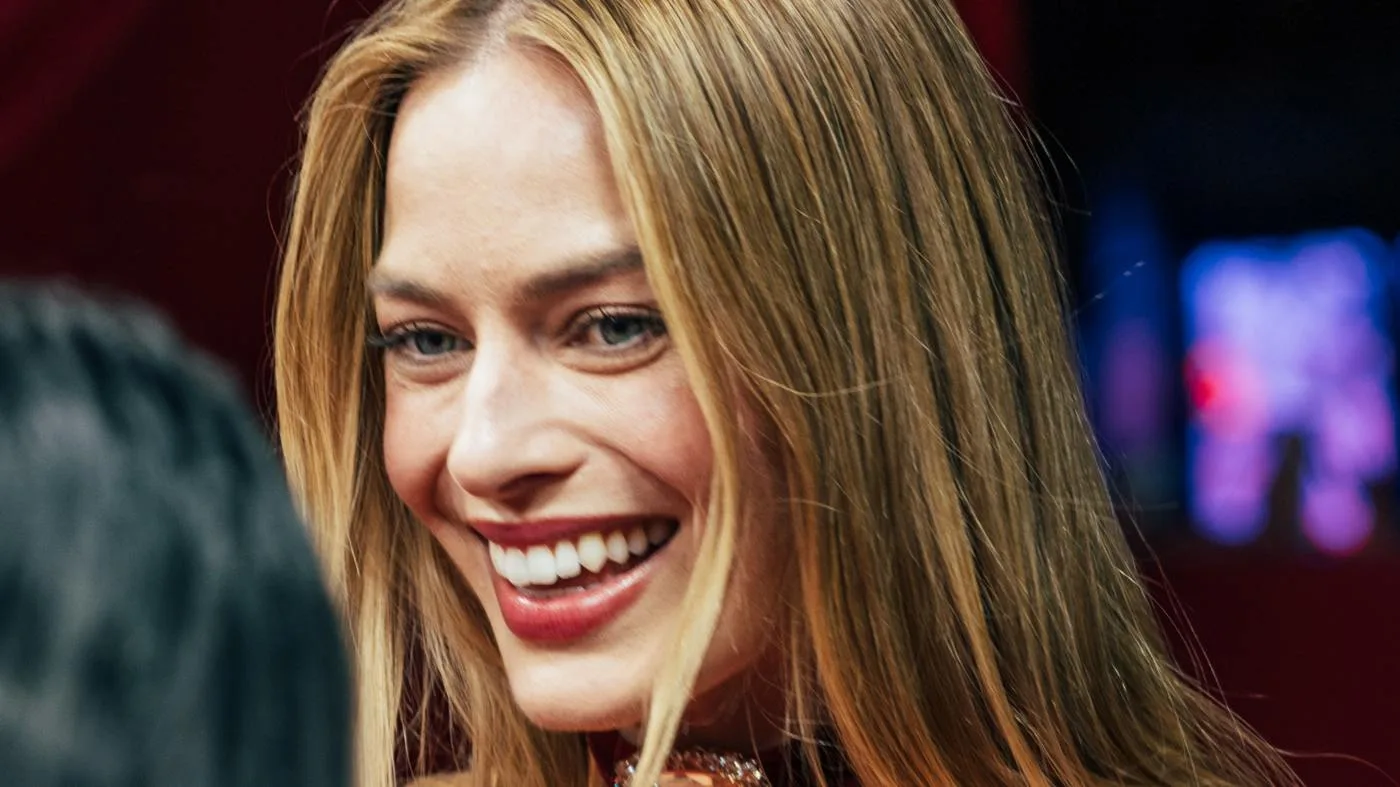
Featured photograph: Ondine Goat / Wikimedia Commons. CC0 1.0 (https://creativecommons.org/publicdomain/zero/1.0/). Cropped and resized.

Isiagu Tobby
Wowplus editorial contributor.