



Table of contents
Michael J. Fox and Tracy Pollan have a public story that extends beyond a familiar television romance. Married in 1988, they have maintained individual creative careers while contributing to the same research foundation. Looking at their documented work offers a fuller portrait than treating one person as the famous performer and the other only as a supporting presence.
Their names are closely associated with Family Ties, where Fox played Alex P. Keaton and Pollan played his girlfriend Ellen Reed. That connection gives viewers an easy starting point. It does not encompass Pollan’s theatre, television and publishing credits, or explain every stage of the couple’s lives away from the camera.
Fox’s public profile has recently included the Television Academy’s 2026 Bob Hope Humanitarian Award. Our coverage of his Emmy honour follows that recognition. Here, the wider question is how two working identities and a shared institution appear together in the public record, without presenting a private marriage as something an outsider can fully explain.
Two careers within a familiar television connection
Pollan’s acting record includes a 2000 Emmy nomination for a guest performance on Law & Order: Special Victims Unit. Her foundation biography also lists Broadway work in Neil Simon’s Jake’s Women and film appearances including Promised Land. These are specific professional credits, rather than evidence that her career can be reduced to a relationship.
Fox’s television identity developed through Alex P. Keaton before later roles widened the picture. The Television Academy’s official record lists his 2026 guest-actor nomination for playing Gerry in Shrinking. That recent credit places performance and advocacy alongside each other; recognition for humanitarian work does not mean that every part of his creative story belongs to the past.
Following those separate records changes how the couple’s history reads. Two people can share an enduring public association while taking different kinds of work into different decades. A complete account should make room for projects carried under each person’s name, rather than using the visibility of one career as a measure of the other’s significance.

That distinction also matters in other family profiles. Our Carrie Fisher and Debbie Reynolds feature considers two individual careers within a famous family connection. The relationships are different, but the reporting principle is useful: shared history provides context, while the individual body of work deserves attention on its own terms.
A family publishing project adds another perspective
Pollan’s publishing work supplies another part of that independent record. Scribner published The Pollan Family Table in October 2014, crediting Corky, Lori, Dana and Tracy Pollan as its authors, with a foreword by Michael Pollan. The collaboration brings her name into a project organised around another part of her family’s experience.
The publisher describes a collection of family recipes and practical cooking guidance. Fox contributed a published endorsement recalling meals with the Pollan family. That is a specific example of his public participation in her project, rather than proof of a universal rule about their home. The book can be discussed as a creative collaboration without turning its promotional material into private biography.
It is also important to keep the dates straight. An older biography that describes a book as forthcoming may still be online years after publication. The publisher’s dated listing establishes that The Pollan Family Table is an existing 2014 title. Reading the two records together prevents an old promotional sentence from becoming a supposed new announcement in 2026.
Public partnership can take several documented forms: joint creative work, separate careers, an institution or a long-running public commitment. Our Elton John and David Furnish timeline explores another example. Such comparisons are most useful when they identify what people have actually done together, without assuming that different couples organise their private lives alike.
A shared institution with a lasting public record
The clearest shared institution here is The Michael J. Fox Foundation. Fox’s official story dates its launch to 2000, and Pollan’s biography dates her board membership to the same year. The current MJFF board listing names Fox as founder and includes Pollan as an actress among its directors. That is a continuing public role with a record beyond attendance at an event.
The foundation’s existence also brings a wider group of people into the story. A board listing is a reminder that an institution has directors and responsibilities beyond its best-known name. It would be inaccurate to treat every aspect of its work as something the couple personally performs, just as it would be incomplete to overlook Pollan’s formal involvement.

The Television Academy’s 2026 honour recognises Fox’s humanitarian contribution. It supplies an occasion to revisit the public work, but an award citation is not a complete history of the people around its recipient. Pollan’s board service and her own creative credits provide additional, concrete strands that can be followed without assigning her an undocumented title or private responsibility.
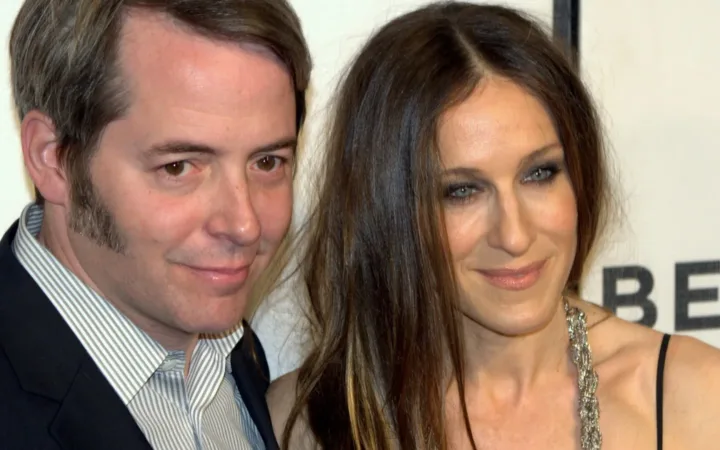
Archive photographs need similar care. An Emmy red-carpet picture from the 1980s can show the couple together at a particular event; it cannot establish their feelings decades later. Naming the event and year preserves what the image contributes while leaving speculation outside the account. The value lies in a visible moment with a reliable date.
Michael J. Fox and Tracy Pollan’s public partnership is therefore best understood through several records read together: acting credits, a published family project and longstanding foundation roles. Those records reveal substantial shared history while leaving room for two distinct working lives. They offer readers something firmer than a claim to know the secret behind someone else’s marriage.

Isiagu Tobby
Wowplus editorial contributor.



This was one of the more useful explanations I have found on this subject. It gave me something useful to think about long after finishing the article.