

Table of contents
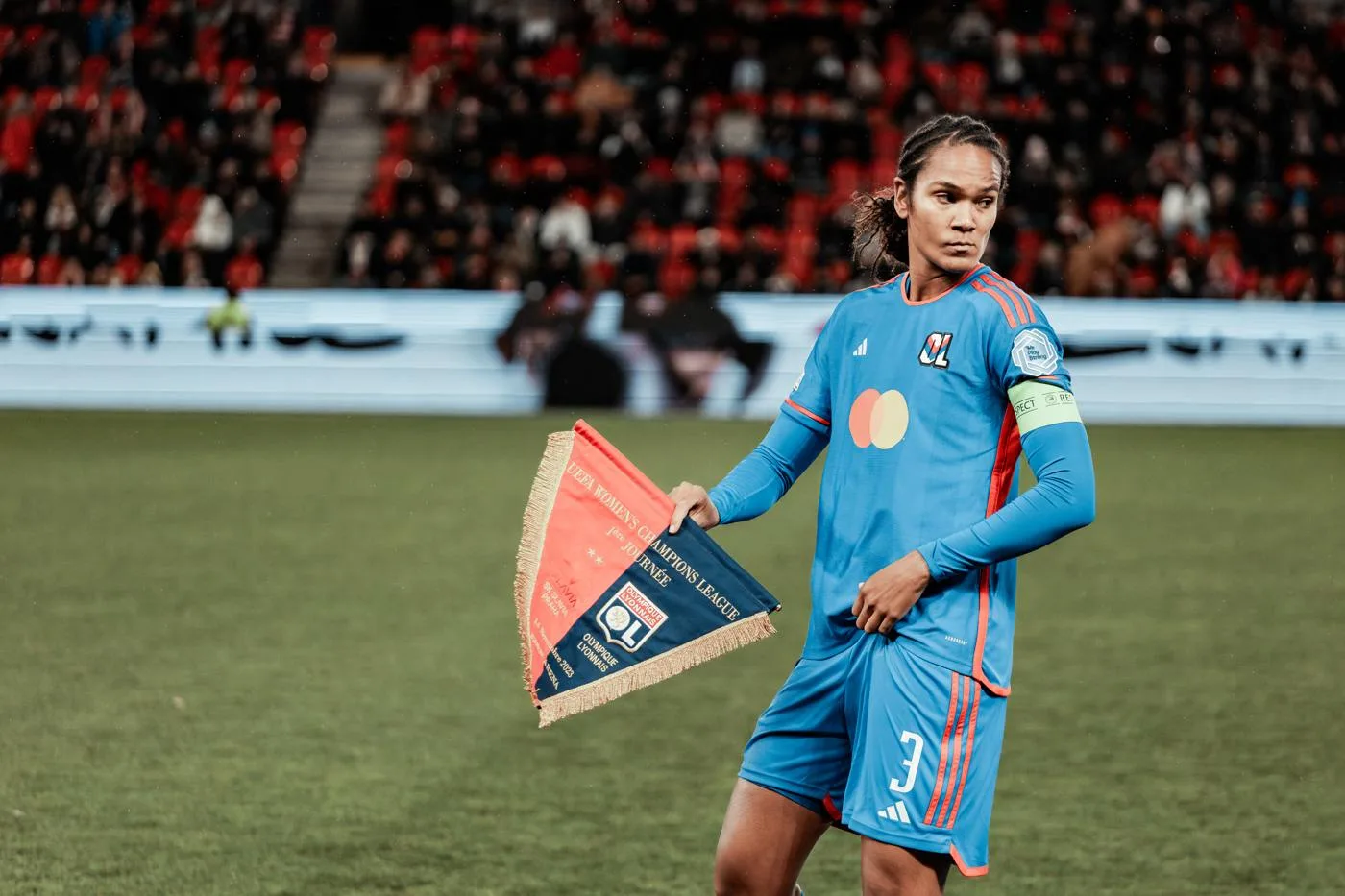
Wendie Renard’s record gives the 2026 Ballon d’Or shortlist a distinctive story: a central defender whose European achievements stretch across generations of the women’s game. With the ceremony approaching in London on 26 October, her nomination is an opportunity to examine that career carefully, without treating a place on the shortlist as a prediction of the result.
Renard is 36, and the official Ballon d’Or player profile lists her among the 2026 nominees. Her story is about more than an impressive collection of medals. It also raises a useful football question: how should a defender’s influence be understood when individual-award conversations so often gravitate towards goals, attacking highlights and the most recent match?
For readers who remember France hosting the 2019 Women’s World Cup, Renard is already a familiar figure. Our archival guide to players in that tournament’s last 16 belongs to an earlier chapter. The current award discussion comes seven years later, after further club finals and another long stretch at Lyon.
Wendie Renard’s record puts the numbers in perspective
In its June 2026 career assessment, UEFA recorded eight Women’s Champions League titles and 12 final appearances for Renard. Those figures describe different things. Reaching a final demonstrates progression through a competition; winning it adds a trophy. Keeping the two measures separate is particularly important after Lyon’s defeat in the 2026 decider.
UEFA also identifies her as the first player to make 100 appearances in its women’s club competition, a milestone reached on 24 April 2022. She captained Lyon through five consecutive European title-winning seasons. That combination of longevity and leadership helps explain why her name remains central to the competition’s history rather than belonging only to a single successful campaign.
A defender’s contribution cannot be reconstructed from trophy totals alone. Positioning, communication and decisions about when to step forward all matter to the way a side functions. Medals provide the outline of Renard’s career; watching the individual matches provides a fuller picture. The record is a starting point for assessment, rather than a substitute for examining performance.

Her international history provides another part of that picture. The French federation records 168 senior appearances and 39 goals, beginning with her debut against Switzerland on 2 March 2011. Two of those goals came in the opening match of the 2019 World Cup, covered in our report on France’s 4–0 win over South Korea.
The route from Martinique to a long Lyon career
The federation lists Renard’s birthplace as Schœlcher in Martinique and her date of birth as 20 July 1990. Its club history records Essor Prêchotin and RC du Lorrain before her move to Olympique Lyonnais in July 2006. The current entry uses the OL Lyonnes name. Read together, those entries trace a football career that began far from the mainland club.
Twenty years after that move, the length of her association with Lyon is striking. It has allowed supporters to see a player develop within the same club across changing teams and successive competitions. Longevity does not mean that every season has followed an identical pattern, or that a player’s responsibilities and form remain unchanged throughout that period.
The federation’s honours list includes the 2026 French league, Coupe de France and Coupe LFFP. Domestic success is part of the season’s context even though the European campaign ended differently. An individual profile becomes more informative when it holds both kinds of result together, instead of choosing only the victories or only the defeat that supports a preferred argument.
Football’s wider award debates show how easily different measures of greatness become mixed together. Our archival report on Rodri’s 2024 discussion of Messi and Ronaldo concerns the men’s game, but illustrates the appeal of those comparisons. Renard’s own case deserves attention on its particular evidence, within the women’s award category.
What the 2026 final adds to the award conversation
Lyon lost the Women’s Champions League final 4–0 to Barcelona in Oslo on 23 May. UEFA’s match report records Renard in the starting side, extending her sequence of appearances in all 12 of the club’s finals. She also threatened early with a header saved by Cata Coll. The subsequent rebound was put in by Lindsey Heaps, but the goal was disallowed for offside.

Barcelona’s winning goals came after the interval, with Ewa Pajor and Salma Paralluelo each scoring twice. Those details matter because they place the final in its proper context: Renard’s participation was another historical landmark, but the trophy belonged to Barcelona. An accurate account can acknowledge a remarkable individual career while giving the victorious team full credit for the result.
UEFA’s ceremony guide confirms that the 2026 awards take place at the London Palladium on Monday 26 October. As of 24 October, the outcome remains ahead. Neither Renard’s nomination nor her European record establishes where she will finish in the voting, and a career assessment should not be presented as inside information about the award.
Whatever the eventual ranking, her place in the discussion offers a reason to look closely at the work of a defender. The route from Martinique to Lyon, the international scoring record and the repeated European finals tell related parts of a substantial football story. The most useful recognition begins with understanding those achievements accurately, rather than reducing them to a forecast.

Isiagu Tobby
Wowplus editorial contributor.