

Table of contents
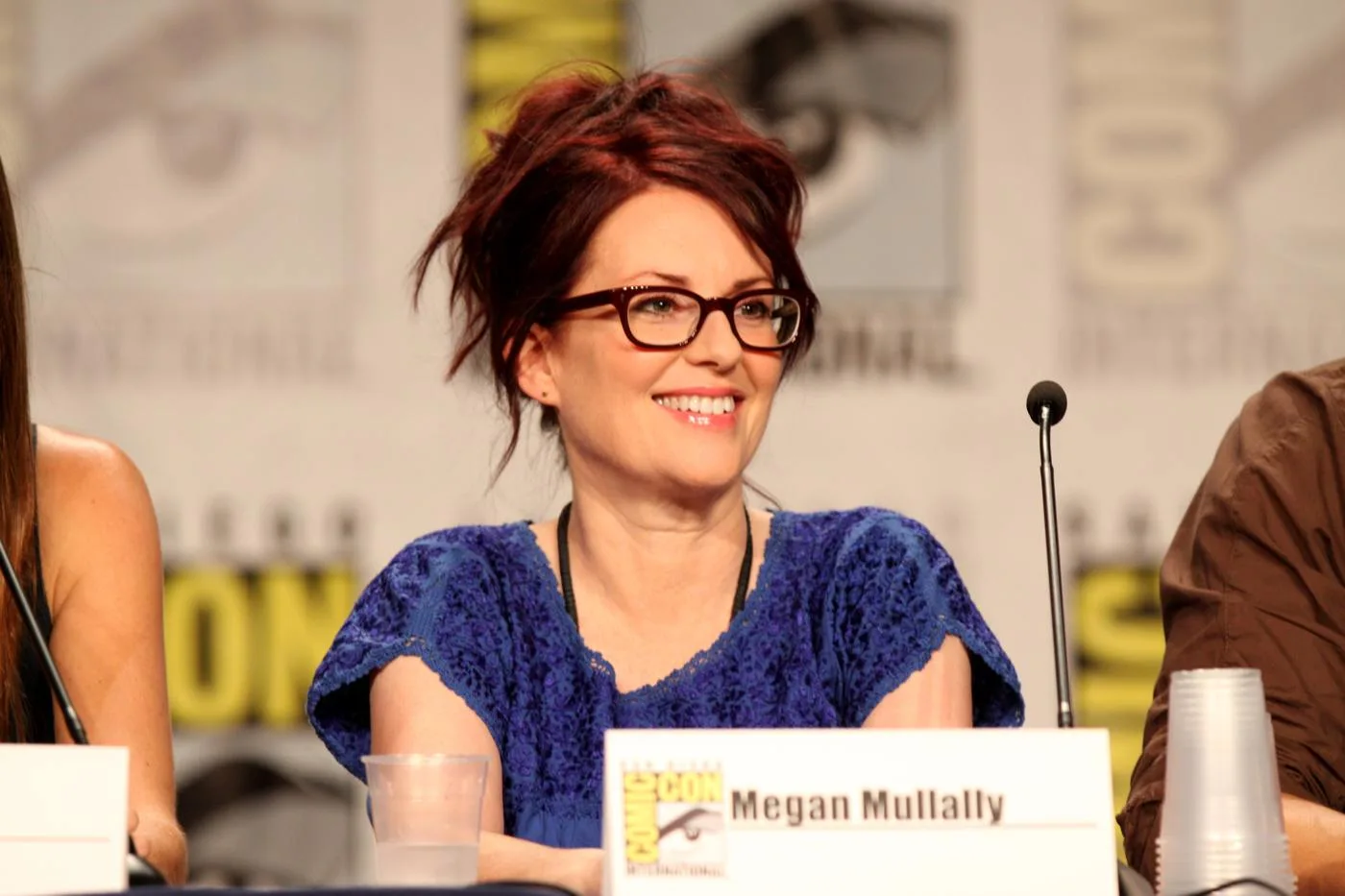
Megan Mullally and Nick Offerman have turned parts of their relationship into several kinds of shared work: stage performances, a book of conversations and a podcast. Their story began with a play in 2000 and a marriage in 2003. The public timeline is most revealing when those collaborations are followed as individual projects rather than treated as one continuing television performance.
Fans may first know them through different characters. Mullally’s Karen Walker in Will & Grace and Offerman’s Ron Swanson in Parks and Recreation are familiar comic creations. Their own conversations offer another point of entry, allowing them to discuss the experiences behind a working partnership without requiring an audience to know either sitcom’s complete history.
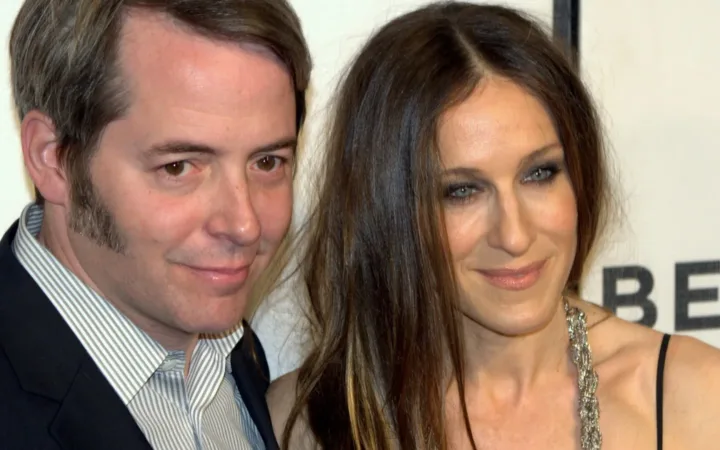
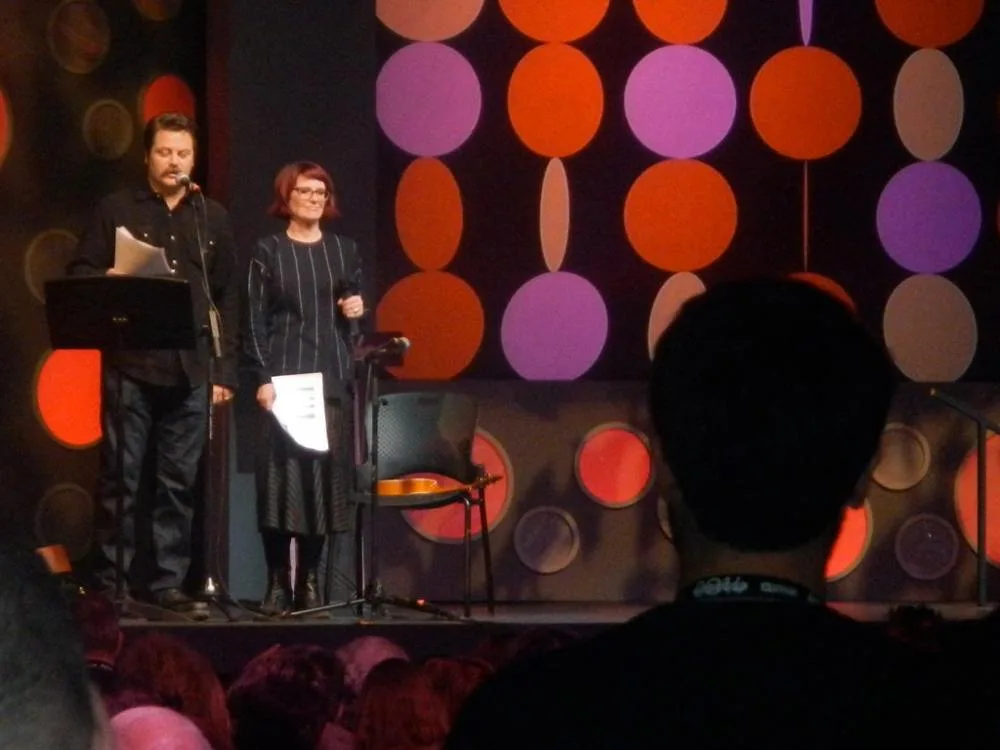
Our timeline of Sarah Jessica Parker and Matthew Broderick’s stage work follows another marriage that intersects with theatre. In Mullally and Offerman’s case, the stage belongs near the beginning. Their book’s publisher places their first shared rehearsal in Los Angeles in 2000, long before they began telling the story together on the page.
A meeting in theatre led to a shared life
The publisher’s account presents two people arriving at the same production with different professional backgrounds. Mullally was an established actress, while Offerman was combining acting with carpentry and scenic work. The description is deliberately comic, matching the tone of their later book. Its useful factual marker is the meeting through work, rather than the promotional suggestion that any romance can be perfectly explained.
In a 2013 Chicago Magazine interview, the couple discussed the relationship and their small 2003 backyard wedding. Mullally described liking each other and sharing ordinary backgrounds as important parts of their connection. Those are her reflections in that interview, not a formula that can be applied to every couple or a complete account of the private years that followed.
Keeping the date of an interview visible matters. A recollection can explain how someone understood a relationship at that moment, while later conversations may add or change the emphasis. It is more useful to preserve that sequence than to combine remarks from different years into a single timeless statement about what the couple must think today.
Creative partnerships also extend beyond a pair. Our report on Kevin Bacon and Kyra Sedgwick’s family movie follows a project involving relatives and other collaborators. A shared personal history can shape the way performers work together, but a production still depends on its wider cast, crew and the particular demands of its material.
A book allowed them to tell the story together
The Greatest Love Story Ever Told appeared in ebook and audiobook editions on October 2, 2018, with the paperback following in September 2019. Penguin Random House describes an oral history built from conversations, photographs and anecdotes. Both are credited as authors, and both narrate the audiobook, making the exchange between them part of the format rather than simply its subject.
The title is knowingly grand. Readers do not have to accept it as a ranking of relationships to understand the book’s appeal. Two performers who know each other well can tell a story through disagreement, interruptions and different memories of the same occasion. That gives a joint account a different texture from a conventional biography written in one uninterrupted voice.
In a 2014 Playbill interview about Annapurna, the actors discussed another shared challenge: performing a play that asks for more than the comedy audiences might expect from them. Offerman described the material as developing new layers through performance. The account is useful as an acting conversation, showing them considering a text and characters rather than simply presenting themselves as a celebrity couple.
Our feature on Tom Hanks and Rita Wilson’s separate creative careers makes a related distinction between a relationship and the work around it. Mullally and Offerman’s shared credits belong alongside their individual projects. A collaboration adds to those careers; it does not mean that either performer’s choices can be explained entirely through the marriage.
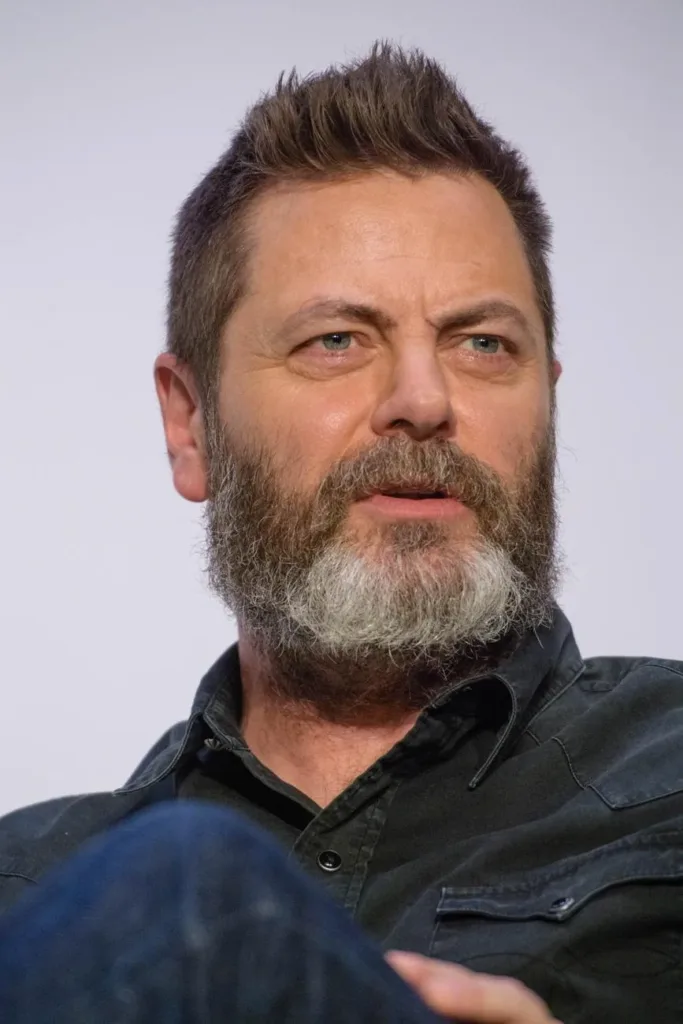
The book’s publisher also identifies Offerman as a woodworker and author of titles including Good Clean Fun and Paddle Your Own Canoe. That background helps explain why his public conversations move beyond acting alone. It gives the couple different experiences to draw on, while leaving room for interests and work that are not shared in exactly the same way.
The podcast made conversation the continuing format
Earwolf announced In Bed with Nick and Megan in November 2019, promising guest conversations recorded in the couple’s actual bed. The playful setting was part of the premise. It created an informal frame for interviews, rather than turning every exchange into a staged scene with the characters viewers knew from their television work.
The episode archive records a varied guest list, including Bill Hader, Retta, Lisa Kudrow and Will Forte. Later entries include discussions with fellow performers during the 2020 lockdown period. The dates belong to the archive; their presence online does not establish that new episodes are being produced now. Someone discovering the show can still listen to those conversations as the work of that period.
The archive also includes episodes where one partner interviews the other about earlier life and career decisions. That structure complements the joint book. An audience can hear the familiar partner asking a question, while the answer still needs enough context for a listener outside the relationship. Shared history becomes useful material rather than an excuse to leave the listener behind.
Seen in sequence, theatre, the book and the podcast offer different views of a partnership with a public creative life. They also leave plenty outside the frame. Following what Mullally and Offerman have actually made and said gives readers a substantial story without requiring guesses about the private routines or disagreements they have chosen to keep to themselves.

Isiagu Tobby
Wowplus editorial contributor.