Table of contents
Brad Paisley’s music business extends beyond the familiar image of a singer in a cowboy hat with a guitar. As he turns 54 on October 28, the public record connects songwriting, publishing, touring and an instrument partnership. Those activities tell a more specific story than an unsupported total attached to his name.
The most revealing thread runs through Sea Gayle Music, the Nashville publisher he helped establish. Its history shows how a songwriter can participate in the business around songs, while later transactions and administration partnerships change the companies involved. Following those arrangements requires attention to what each announcement actually covers.
Sea Gayle connects the songwriter with the catalogue business
In its October 2025 announcement, Sony Music Publishing identified Paisley, Chris DuBois and Frank Rogers as Sea Gayle’s 1999 founders. The statement announced a global publishing-administration partnership with Sea Gayle and Domain Capital Group, covering the publisher’s roster and catalogue. It also recorded Domain’s 2020 catalogue purchase and joint venture with the company.
The announcement names Paisley among the writers whose catalogues Sea Gayle represents. It does not state a purchase price for the earlier transaction or disclose Paisley’s personal proceeds. The documented news is the administration arrangement and the catalogue history. A claim about how much one founder received would need information that statement does not provide.
Our profile of Shakira’s tour and catalogue deals explores another artist whose business spans more than one kind of income. A catalogue transaction, a concert and a stream concern different uses of music. They become easier to understand when ownership, administration and performance remain separate parts of the story.
A song and its recording are different assets
The US Copyright Office explains the distinction between a musical work and a sound recording. The composition includes the underlying music and lyrics; the recording captures a particular performance. The two are commonly owned and licensed separately. That basic distinction helps explain why a publishing announcement cannot automatically be read as a sale of every recording a singer has made.
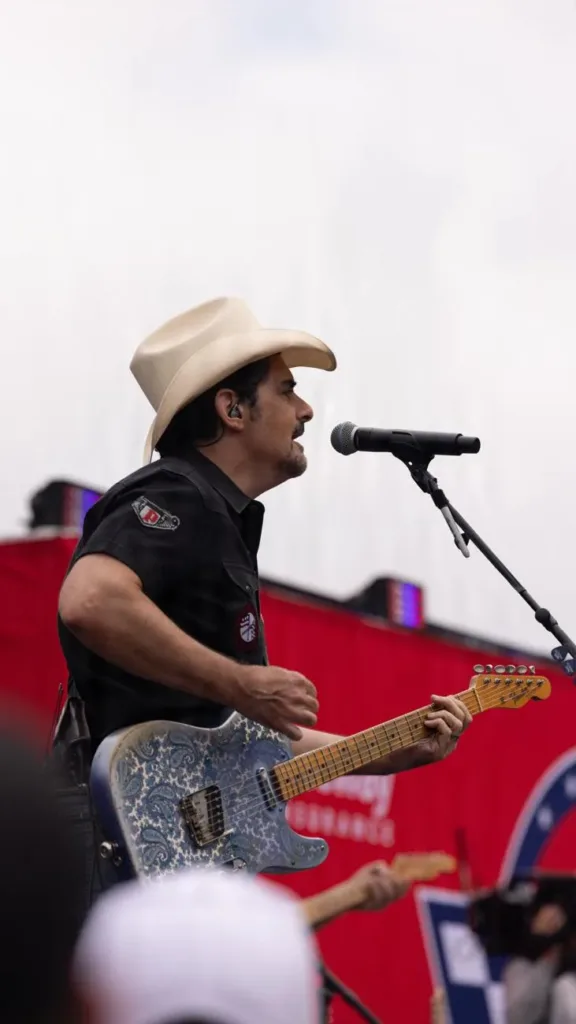
In Paisley’s case, his songwriting was established before his first album arrived. His official career account records a publishing deal in 1995, an Arista recording contract in 1998 and the release of Who Needs Pictures in 1999. The debut produced the chart-topping songs He Didn’t Have to Be and We Danced.
That chronology puts writing and recording alongside one another from the beginning. It also gives a listener a useful way to read album credits. The person singing a track may also be one of its writers, but those credits describe different contributions. Where a song has several writers, the public credit alone does not disclose everyone’s contractual share.
The 2025 announcement for Paisley’s Truck Still Works World Tour provides a concrete example. It credits the title song to Paisley, Chris DuBois, Will Bundy, Hunter Phelps and Rodney Clawson, with production by Paisley and Luke Wooten. The track therefore sits within a collaborative writing and recording process, rather than being the work of only the name on the poster.
The distinction also helps when reading our explainer on Spotify royalty payouts. A platform-wide payment figure describes money moving through a rights system. It cannot establish one performer’s take-home income without the relevant agreements, ownership information and accounting period. Paisley’s individual streaming receipts are not disclosed in the sources used here.
The stage remains a separate part of the business
Paisley’s March 2025 tour announcement identified Live Nation as producer and described a package combining concert tickets with additional experiences. That is a dated account of that tour’s commercial structure. It demonstrates how a live event can involve a promoter, supporting artists and different ticket options, rather than simply a singer collecting the entire advertised price.
His official site currently lists Encore Theater performances in Las Vegas on November 6 and 7, 2026. Those are advertised future dates at the time of this profile, with availability subject to the organiser’s current information. They should not be treated as completed shows or as evidence of a disclosed appearance fee.
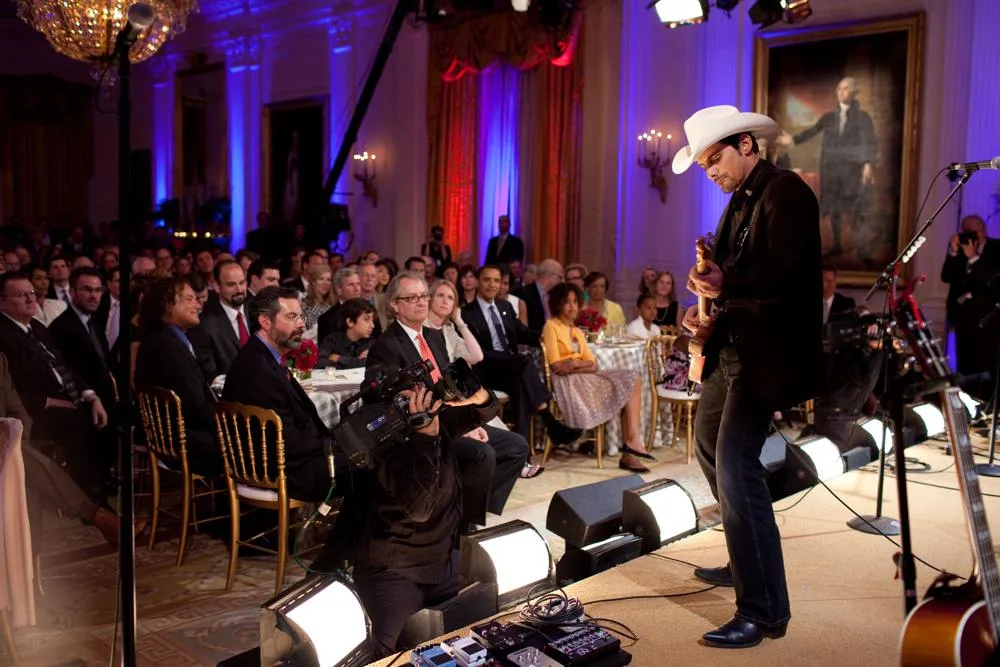
For listeners, the contrast is straightforward: a recording can be revisited repeatedly, while a concert is tied to a place and time. For an artist’s business profile, the corresponding figures also need context. A ticket listing shows an event being offered; it does not reveal the artist’s final profit after the arrangements and costs behind it.
A guitar partnership puts his playing into a product
Fender announced Paisley’s signature Telecaster in 2017 and a signature Esquire in 2020. The latter release described his involvement in an instrument combining a familiar shape with custom electronics, including a concealed neck pickup. It is a documented product collaboration linked to the guitar playing central to his performances, rather than a generic endorsement unrelated to his work.
Creator businesses can change form as partnerships develop, a theme in our feature on Reese Witherspoon’s Hello Sunshine transaction. The useful question is what rights, company interests or services an agreement includes. Fender’s announcement describes the guitar, while leaving Paisley’s personal compensation terms undisclosed.
The Store belongs in the community story
Belmont University’s community-service listing identifies Paisley and Kimberly Williams-Paisley as The Store’s founders. The nonprofit operates a grocery-style model in which eligible customers choose food without paying for it. Its stated purpose concerns food insecurity and dignity. It belongs in a profile of their public work, but its resources should not be counted as the singer’s personal wealth.
At 54, Paisley’s documented business story contains several connected roles: songwriter, performer, publishing founder and instrument collaborator. The public announcements explain what those roles involve without supplying an audited personal balance sheet. For a fan interested in the career behind the songs, those connections offer plenty to follow beyond a single estimated fortune.
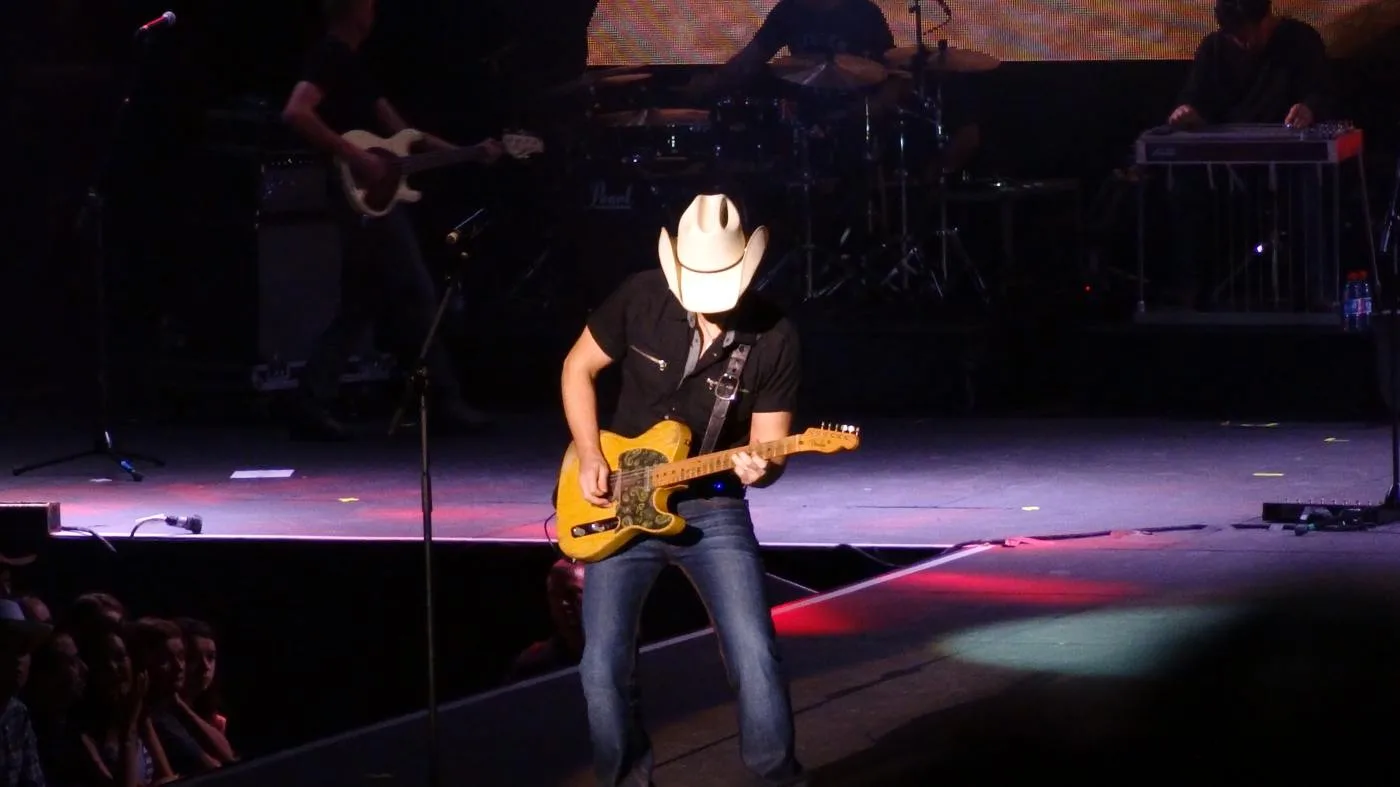
Featured archival photograph: RFdeRooij / Wikimedia Commons, March 15, 2014. Brad Paisley at the Country 2 Country festival in Dublin. CC BY 2.0 (https://creativecommons.org/licenses/by/2.0/). Resized; not a photograph of the advertised November 2026 shows.

Isiagu Tobby
Wowplus editorial contributor.