

Table of contents
- Basketball made Magic Johnson famous, but it did not make him a billionaire
- Magic Johnson Enterprises turned celebrity into operating businesses
- EquiTrust became the largest known engine of the fortune
- Sports ownership brought Magic Johnson back to the arena as an investor
- His biggest financial lesson came from choosing ownership over appearance fees
- Magic Johnson’s fortune is a second career, not a basketball afterthought
Magic Johnson net worth 2026 is estimated at $1.6 billion, according to Forbes, making the Los Angeles Lakers legend one of the richest former athletes in the world.
The striking part of Johnson’s financial story is how little of the fortune came directly from basketball. He earned roughly $40 million during his NBA playing career, a huge sum for the 1980s but nowhere near enough on its own to explain a modern ten-figure net worth. The real expansion came later through ownership stakes, franchising, real estate, insurance and sports-team investments.
Forbes estimates Johnson’s fortune at $1.6 billion and says the majority now comes from a 60% stake in life-insurance company EquiTrust. The insurer has grown substantially under his ownership, becoming the largest known piece of a portfolio that also includes professional sports teams and other operating businesses.
Johnson’s path is a useful contrast with LeBron James’ $1.4 billion fortune. James accumulated much more playing salary and off-court endorsement income, while Johnson’s billionaire status was built after retirement through a longer sequence of investments and partnerships.
Basketball made Magic Johnson famous, but it did not make him a billionaire
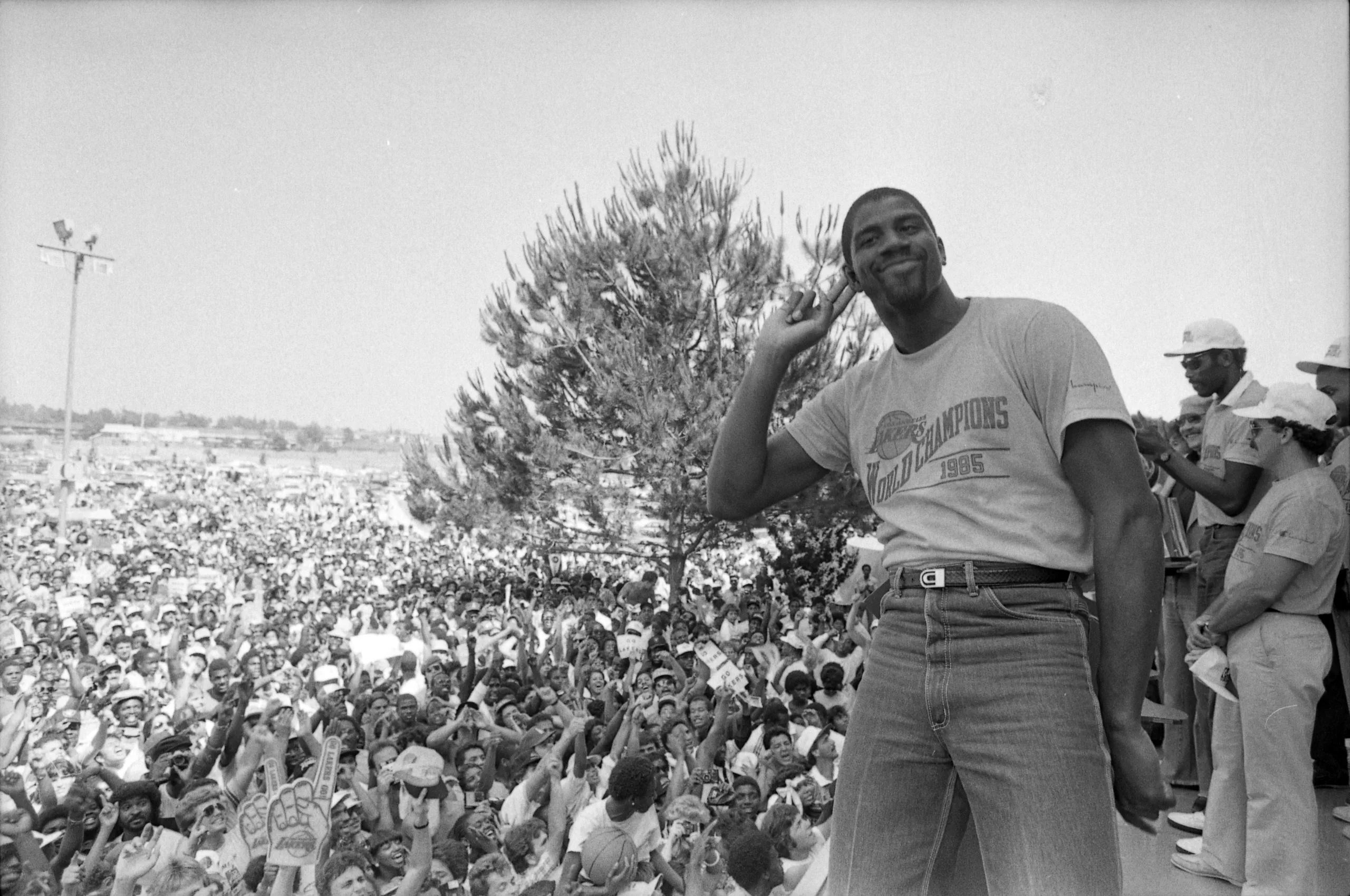
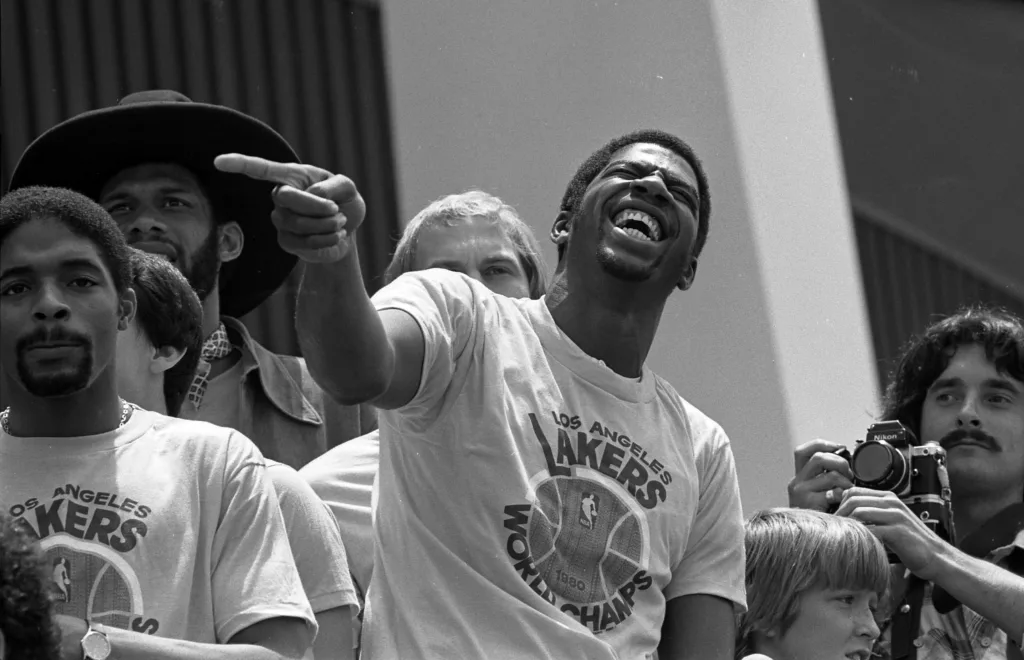
Johnson entered the NBA in 1979 and became the face of the “Showtime” Lakers, winning five championships while turning himself into one of the league’s most recognizable personalities. His career coincided with the NBA’s transformation into a global entertainment business, yet player pay was still modest by modern superstar standards.
Forbes estimates that Johnson earned only around $40 million in total playing salary. Even his endorsement income was relatively limited at the time, generally running in the low millions per year rather than the tens of millions now available to top athletes.
That makes his later wealth unusually instructive. Johnson did not simply preserve a giant athlete fortune. He had to build a business portfolio after basketball, using his name, relationships and capital to enter industries that had little to do with scoring points.
One famous missed opportunity helped shape that thinking. Before the 1979 NBA Draft, Nike reportedly offered Johnson stock and royalties as part of a shoe deal. He chose guaranteed cash from Converse instead. In hindsight, Nike shares would have been enormously valuable, and Johnson has spoken publicly about the lesson.
The experience illustrates why athlete wealth often depends less on the size of an endorsement cheque than on what the athlete owns. Wowplus made a similar point in its look at Roger Federer’s post-tennis wealth, where equity and long-term commercial stakes became more important than prize money.
Magic Johnson Enterprises turned celebrity into operating businesses
After leaving basketball, Johnson built Magic Johnson Enterprises as the umbrella for a series of investments aimed heavily at urban markets that large companies often underestimated.
One of his best-known early strategies involved movie theaters. Johnson partnered with Sony to develop theaters in underserved communities, showing that major entertainment businesses could perform strongly in neighborhoods many national operators had overlooked.
He later entered a high-profile partnership with Starbucks, operating more than 100 stores before selling the stake back to the company. The significance was not only the eventual return. Johnson was learning how to scale established brands through local operating knowledge rather than trying to invent every business from scratch.
That pattern became a defining feature of his investment career. Instead of relying entirely on celebrity-branded products, he often joined proven businesses through joint ventures, franchises or meaningful ownership stakes.
The approach resembles the broader ownership strategy behind Arnold Schwarzenegger’s $1.2 billion fortune, where entertainment income became seed capital for investments that eventually mattered more than salary.
EquiTrust became the largest known engine of the fortune
The biggest single driver in Forbes’ current estimate is Johnson’s ownership of EquiTrust Life Insurance Company. Through an investment group, he acquired a controlling interest in 2015.
Forbes says Johnson owns about 60% of EquiTrust. The company’s assets under management have grown from roughly $16 billion when his group took control to around $33 billion, dramatically increasing the value of his stake.
Insurance is far removed from the celebrity businesses most fans associate with retired athletes, which is precisely why the investment is important. EquiTrust provides recurring financial activity that does not depend on Johnson remaining in the public spotlight or selling products bearing his name.
That kind of asset can make wealth more durable. A restaurant partnership, endorsement deal or speaking career may depend heavily on personal popularity. A large regulated financial-services company has its own customers, employees, assets and earnings structure.
Johnson’s ability to move into that kind of ownership helps explain why his fortune continued expanding decades after his final NBA game.
Sports ownership brought Magic Johnson back to the arena as an investor
Johnson has also built a valuable portfolio of minority stakes in professional sports teams. He is part of the ownership groups behind Major League Baseball’s Los Angeles Dodgers, the WNBA’s Los Angeles Sparks, Major League Soccer’s LAFC and the NFL’s Washington Commanders.
These holdings combine financial value with a business he understands deeply. Major U.S. sports franchises have appreciated rapidly as media rights, sponsorship revenue and scarcity push team valuations higher.
Johnson does not control each of those teams, so their headline valuations should not be mistaken for his personal wealth. His net worth reflects only the value of his actual ownership percentages, after accounting for deal structures and other assets.
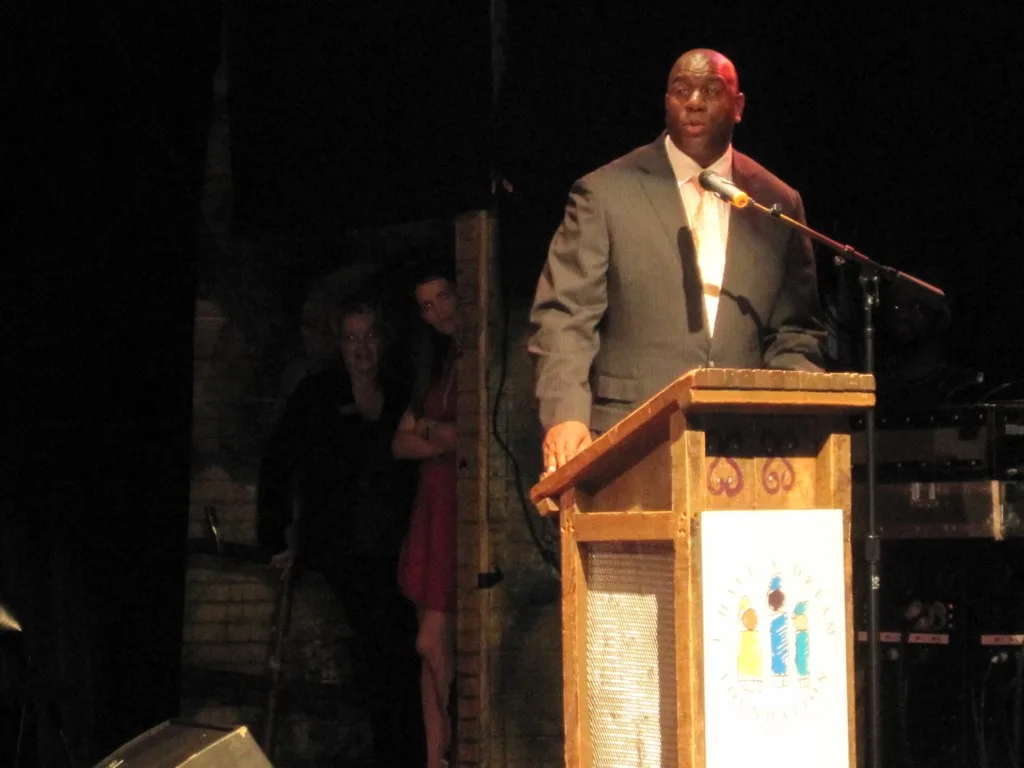
Still, the portfolio gives him exposure to several leagues at once. That diversification is unusual even among former athletes, who may own a small stake in one team but rarely participate across baseball, football, basketball and soccer.
Wowplus’ recent LeBron James wealth profile also shows how modern athletes increasingly use fame to gain equity in businesses rather than remaining only paid endorsers. Johnson helped establish that model before it became common.
His biggest financial lesson came from choosing ownership over appearance fees
Johnson’s post-playing career repeatedly comes back to one principle: use access to buy or build assets rather than treating celebrity as the final product.
He certainly earned money from endorsements, appearances and entertainment work, but the Forbes estimate is driven by holdings that can rise in value independently. EquiTrust, real estate, sports franchises and past joint ventures created a portfolio instead of a collection of paycheques.
That distinction also explains why net worth should not be read as cash. Johnson’s $1.6 billion estimate includes private-company equity and sports stakes that cannot necessarily be sold instantly at the values used in a wealth calculation.
Private businesses are especially difficult to value from the outside. Forbes’ figure is therefore best treated as an informed estimate based on known holdings, transaction data and comparable assets rather than an audited personal balance sheet.
Magic Johnson’s fortune is a second career, not a basketball afterthought
Magic Johnson net worth 2026 is ultimately the result of two very different careers. Basketball created the name, network and initial capital. Business ownership turned those advantages into lasting wealth.
The numbers make that clear. Roughly $40 million in NBA salary was the starting point, not the explanation for a $1.6 billion fortune. The much larger value came from decades of partnerships, acquisitions and equity stakes, especially the controlling interest in EquiTrust.
That is why Johnson remains one of the clearest examples of an athlete becoming a true business owner rather than simply a retired star with endorsements. He used celebrity to open doors, but the fortune grew because the assets behind those doors continued producing value after the applause stopped.

Isiagu Tobby
Wowplus editorial contributor.