




Table of contents
Jessie Cave OnlyFans income has turned a niche idea about hair into one of the most surprising creator-economy stories of the year, with the former Harry Potter actress saying the platform now earns her more than acting ever did.
Cave, who played Lavender Brown in the final three Harry Potter films, started her account in 2025 during a period of financial pressure. Her page is deliberately non-explicit. Instead, she posts videos centered on brushing, styling and playing with her long hair, treating the visual itself as the main attraction.
According to People, Cave said she initially felt embarrassed about joining OnlyFans because people assumed a performer connected to such a huge film franchise must be financially secure. In reality, she described inconsistent acting work, expensive childcare and the difficulty of supporting four children while waiting for traditional roles.
Her story has echoes of Maitland Ward’s shift from television fame into a creator-led income model. Both women entered subscription platforms from established screen careers, but Cave’s version is unusually narrow and non-explicit.

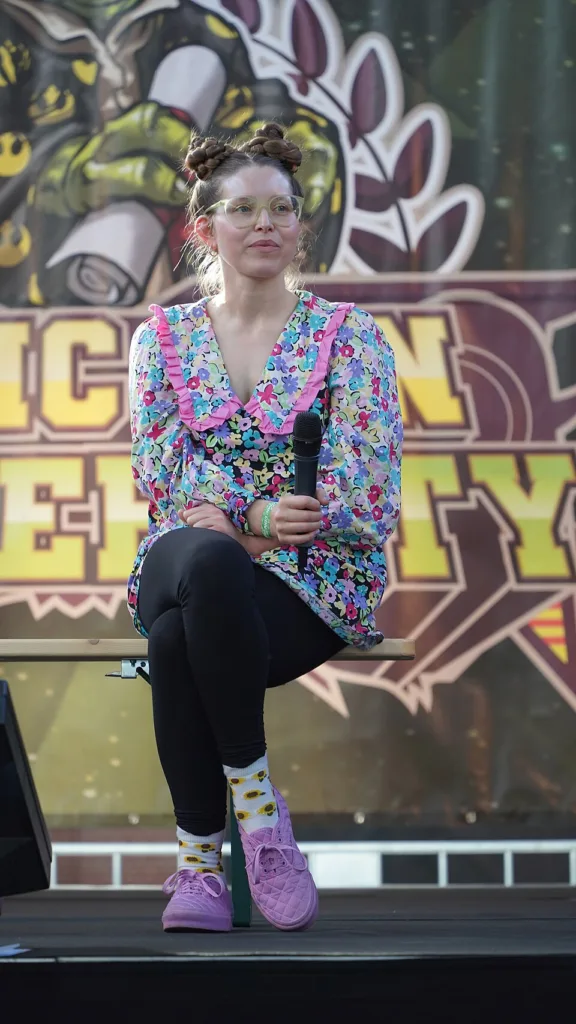
Jessie Cave built the account around a very specific niche
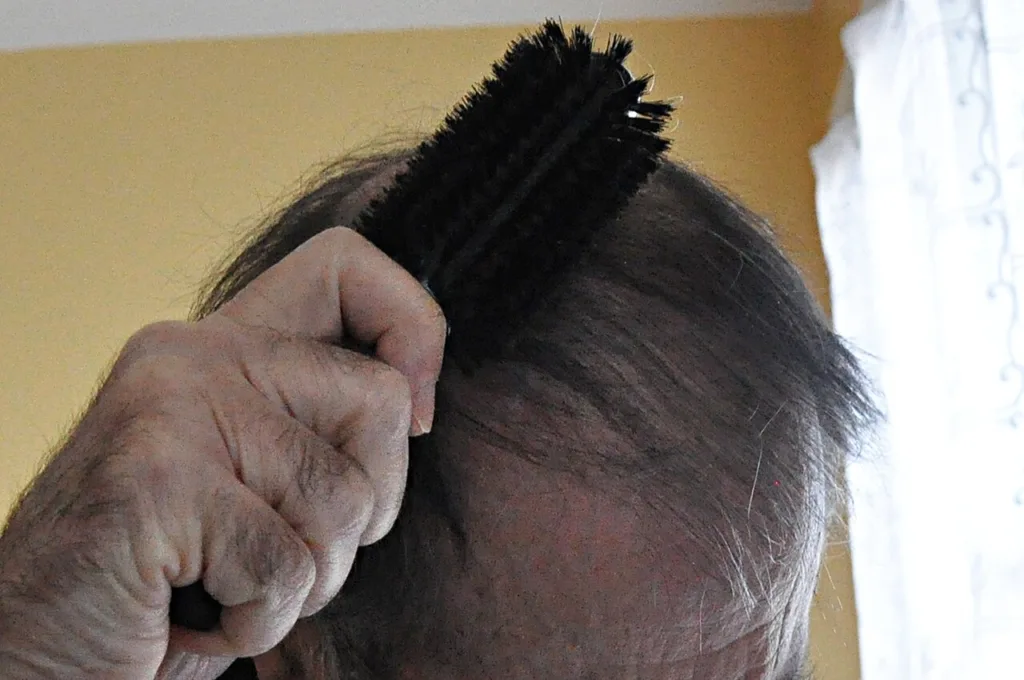
The phrase “hair content” sounds almost too simple to support a paid subscription business, but that narrow focus may be exactly why it worked. Cave has said her rule is that the hair remains the main character. She brushes it, braids it, styles it and sometimes uses costumes, while keeping the page inside boundaries she set from the beginning.
That clarity likely helped her attract the kind of subscribers who understood what they were paying for. It also separated her account from the adult-content expectations attached to OnlyFans, which became important once the novelty of her launch faded and some early subscribers realized she was not planning to post explicit material.
Cave has said the audience became smaller after those expectations were clarified, but the remaining fanbase was more aligned with what she actually wanted to create. That is a familiar pattern in paid communities: a smaller audience can be more valuable when the product and expectations are clearly matched.
The result is a different kind of subscription business from the one covered in Shannon Elizabeth’s recent OnlyFans comeback, yet both show how familiar performers can turn recognition into direct fan relationships rather than relying only on casting opportunities.

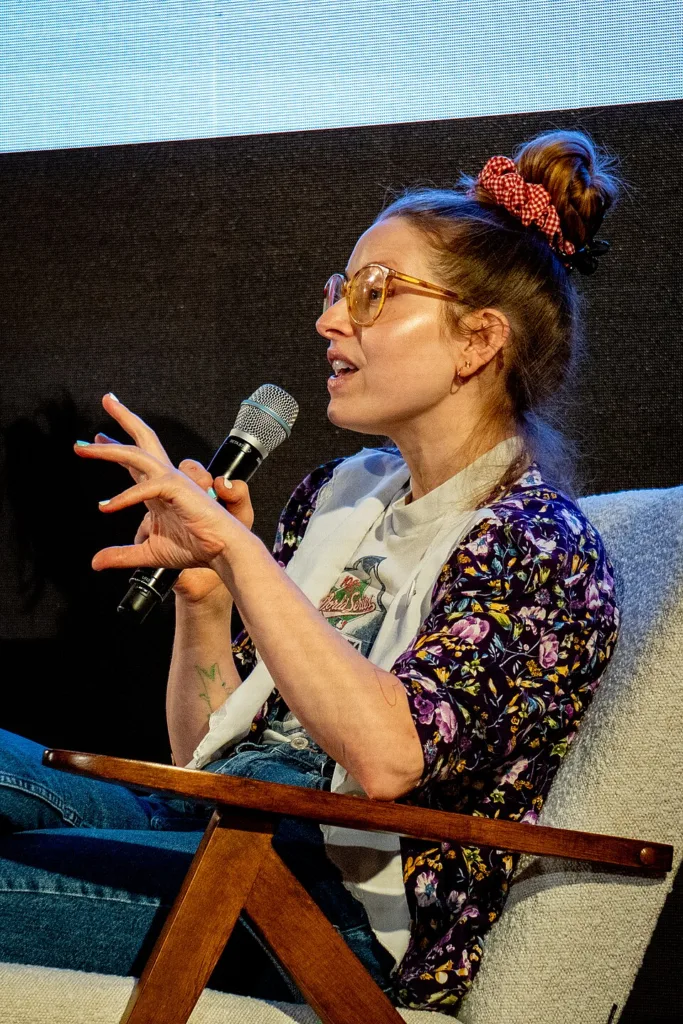
Her earnings reveal how unstable acting can be
Cave has said she made more through OnlyFans in roughly a year than she did across her acting career. She also disclosed that her first day on the platform brought in more than £15,000, although those numbers are self-reported and should not be treated as audited financial statements.
The comparison is striking because audiences often assume appearing in a globally successful franchise creates permanent wealth. In reality, actors are typically paid for specific jobs, and a famous credit from years earlier does not guarantee a steady stream of new roles.
Cave described struggling with the cost of childcare and the practical difficulty of taking conventional work while raising four children. That context helps explain why a platform that could be operated from home became more attractive than a job with fixed hours and lower flexibility.
Her comments also expose a wider tension in entertainment. Public recognition can make ordinary employment awkward while not necessarily producing enough creative work to support a family. A creator platform can bridge that gap because fame itself becomes something that can be monetized directly.

The stigma around OnlyFans did not disappear because her content is non-explicit
Cave has been open about feeling judged for joining a platform closely associated with adult content even though her own page is not sexual. That distinction did not protect her from every consequence. She has previously said the account affected at least one convention opportunity connected to Harry Potter.
That experience highlights how platform identity can matter as much as individual content. A creator may use OnlyFans for something completely different from its best-known category, but outside companies and audiences can still respond to the reputation of the site itself.
The issue is becoming more relevant as the platform broadens. Wowplus has tracked the age-verification changes reshaping OnlyFans in 2026, another sign that the service now sits inside a larger mainstream debate about digital identity, regulation and paid creator access.
Cave’s case shows another side of that debate: whether a platform’s reputation should define every person who uses it. Her business is based on hair, performance and personality, yet she still carries the same label attached to creators publishing very different material.

The account has become part income stream, part performance project
Cave has also described the work as creative. That matters because she is not simply posting photographs to cover bills. She uses costumes, visual ideas and character-based presentation in a way that connects the page to her background in comedy and performance.
The business therefore sits somewhere between fan club, niche fetish content and digital theatre. That hybrid form helps explain why it has survived beyond the short-term experiment Cave originally imagined.
She initially expected the account to buy her a few months of breathing room. Instead, it became a recurring income stream that allowed her to continue working on live shows and other creative projects without depending entirely on acting auditions.
The Jessie Cave OnlyFans income story is ultimately less about one surprising payday than about how artists now finance unstable careers. Her Harry Potter role gave her name recognition, but the subscription platform gave her something the franchise never guaranteed: a direct paying audience she could reach on her own terms.


Isiagu Tobby
Wowplus editorial contributor.