



Table of contents
Statue of Liberty at 140 is an anniversary with a specific starting point: the monument’s dedication in New York Harbor on October 28, 1886. That date falls exactly 140 years before October 28, 2026. Beyond the familiar silhouette, its history connects sculpture, engineering, public fundraising and changing ideas about who liberty includes.
The anniversary offers a reason to look more closely at an image seen on postcards, film screens and countless photographs. A raised torch is instantly recognisable, but the story did not begin with a completed statue arriving ready to stand on its pedestal. Its construction and reception unfolded across two countries and several distinct stages.
A French gift required an American foundation
UNESCO identifies sculptor Frédéric Auguste Bartholdi and engineer Gustave Eiffel as central figures in its creation. Thin copper sheets form the monumental exterior around a supporting framework. Richard Morris Hunt designed the pedestal. Seen together, those contributions explain why the landmark belongs to the history of engineering as well as to the history of public art.
The National Park Service’s chronology records the completed statue being formally presented in Paris in July 1884. A funding shortfall then stalled work on the American pedestal. Joseph Pulitzer’s newspaper campaign helped raise money in 1885, while the disassembled statue crossed the Atlantic aboard the French vessel Isère. Arrival and dedication were separate events.
The wider challenge of keeping cultural records accessible is explored in our feature on World Day for Audiovisual Heritage. Photographs and moving images can preserve different stages of a landmark’s life. Their dates matter: an archival view can reveal change without being presented as a photograph of today’s anniversary.
The dedication was more complicated than its famous image
The NPS records fog and rain during the October 1886 celebrations. A large city parade and a procession of vessels accompanied the unveiling on what was then Bedloe’s Island. President Grover Cleveland accepted the gift on behalf of the United States. The weather delayed the planned fireworks and illumination until November 1.

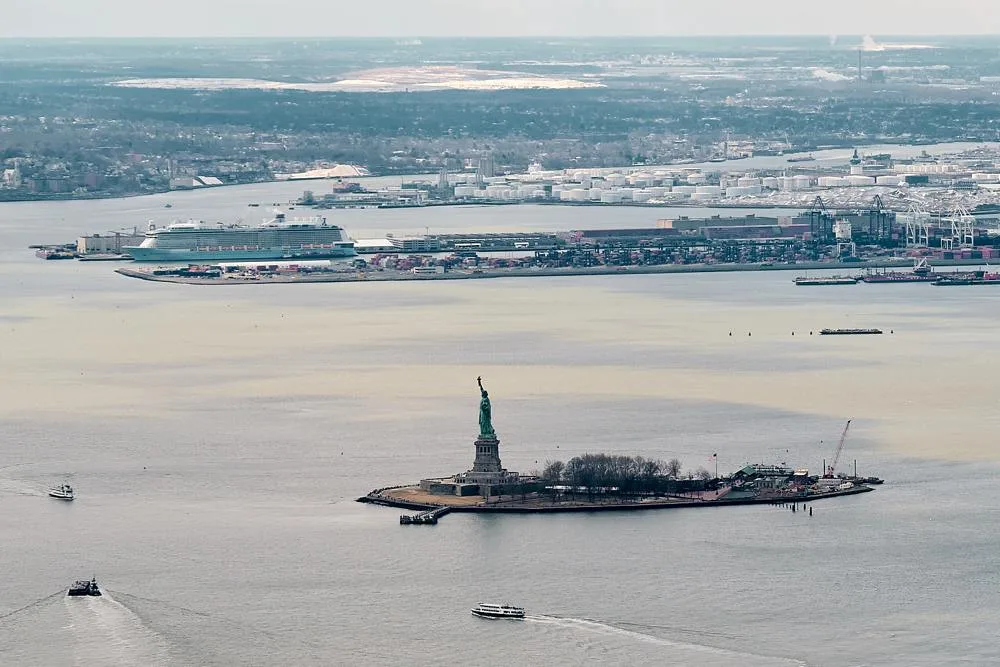
The same chronology preserves a less comfortable detail. Women from the New York State Woman Suffrage Association, unable to obtain tickets as unaccompanied women, chartered a boat to watch from the water. That account places the language of liberty alongside the limits on participation in its own dedication ceremony.
It is a useful detail to carry into an anniversary discussion. Public monuments can express an aspiration while the societies around them remain unequal. Remembering who stood on the island and who watched from outside gives the celebration more historical depth than treating the day as a single uncomplicated scene.
Emma Lazarus’s The New Colossus belongs to another stage of the story. The NPS dates the poem’s composition to an 1883 fundraiser for the pedestal and the installation of its plaque to 1903. The words associated with the monument today were therefore not first placed at its base on dedication day.
A museum visit can help separate these layers rather than compressing them into one legend. Our practical guide to planning a museum visit suggests choosing a few questions to follow. Here, those questions might concern the sculpture’s construction, the fundraising effort or the later association between the statue and immigration.
Restoration became part of the landmark’s history
The monument’s administrative history also changed. Fort Wood and the statue became a national monument in 1924; responsibility passed to the National Park Service in 1933. The island received the name Liberty Island in 1956. These dates help explain why older documents and photographs may use a different place name from the one familiar to visitors.
In the 1980s, a major restoration campaign prepared the statue for its centenary. The NPS records its World Heritage designation in 1984 and its reopening to the public on July 5, 1986. The reopening belonged to the centennial celebrations, while October 28 remained the anniversary of the original dedication.

Restoration is a reminder that a landmark survives through continuing care. The statue’s public meaning may feel permanent, but the physical structure still has a history of materials, repairs and management. The 140th anniversary can acknowledge that work alongside the artists and supporters involved in bringing the original project into being.
What to check before planning a visit
The NPS currently directs visitors to Statue City Cruises as the authorised seller for ferries reaching Liberty and Ellis Islands. General admission includes the museums on both islands, but entry to the pedestal or crown requires the appropriate reservation. A ticket for the islands should not be assumed to include every part of the statue.
As with our guide to planning a weekend walk, a comfortable outing begins by matching the route to the people taking it. Check access arrangements, time available and current official notices before setting off. An anniversary can be enjoyed from museum exhibits and harbour views without making every visitor follow the same itinerary.
The NPS also explains that the time printed on a ferry ticket is when to join the security-screening queue, rather than a reserved sailing time. Pedestal and crown access are limited, and the crown has no lift. Those distinctions are worth confirming before buying, particularly when travelling with someone whose access needs differ from your own.
For readers following the anniversary from elsewhere, the official chronology and historical photographs provide their own route into the story. The statue at 140 is more than an enduring outline against the water. Its history includes a transatlantic project, a contested celebration and generations of work to preserve the monument and interpret its promise.
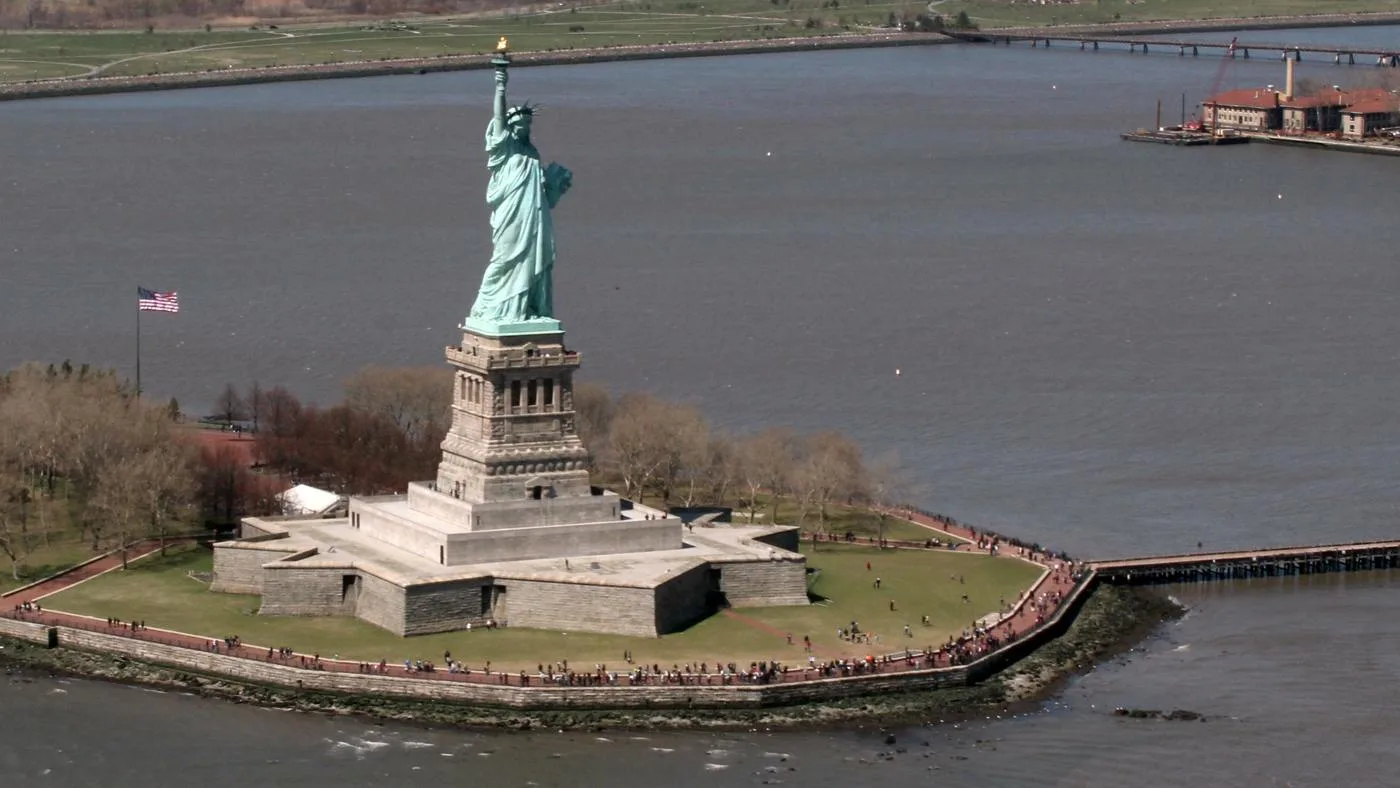
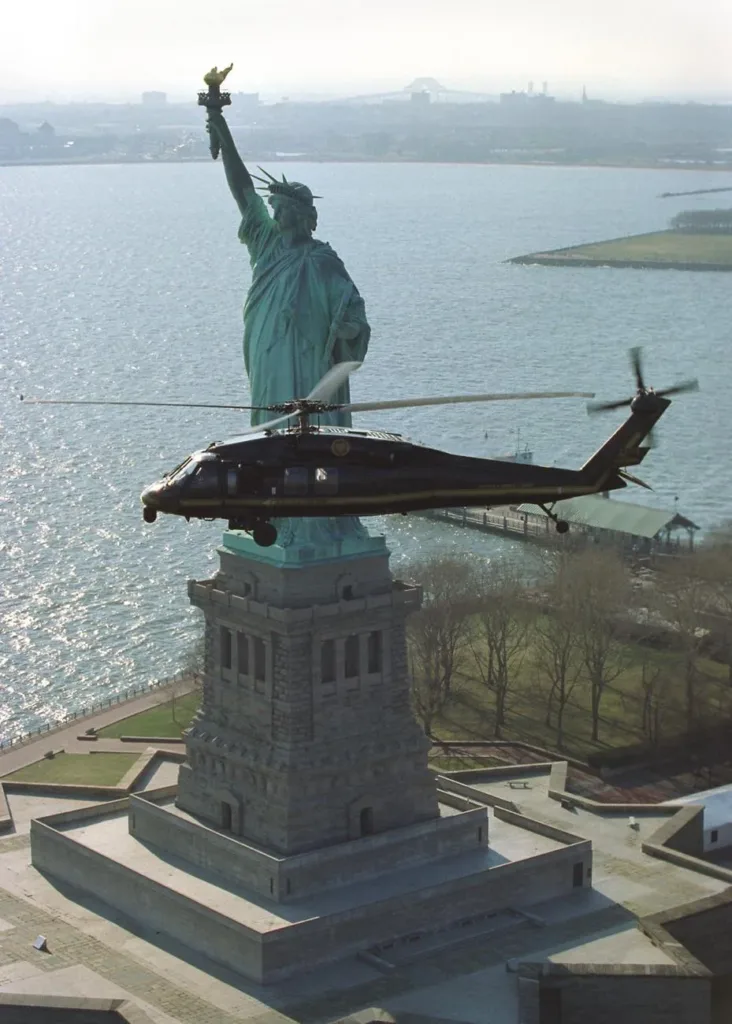
Featured archival photograph: Basil D Soufi / Wikimedia Commons, April 17, 2011. The Statue of Liberty and Liberty Island seen from a helicopter. CC BY-SA 3.0 (https://creativecommons.org/licenses/by-sa/3.0/). Resized; not a photograph of the 2026 anniversary.


Isiagu Tobby
Wowplus editorial contributor.