Table of contents
Back to the Future Day 2026 brings the original film back to U.S. cinemas on October 21, with the franchise’s official calendar advertising a one-night return in standard, D-Box and 4DX formats. The date has a particular place in the story: October 21, 2015, is the future destination associated with Marty McFly and Doc Brown in Back to the Future Part II.
That once-distant year is now eleven years in the past. The change makes today an opportunity to revisit both the films and the way they imagined tomorrow. The advertised theatrical event concerns the 1985 original, so viewers should distinguish the movie being screened from the sequel that gives the annual celebration its calendar date.
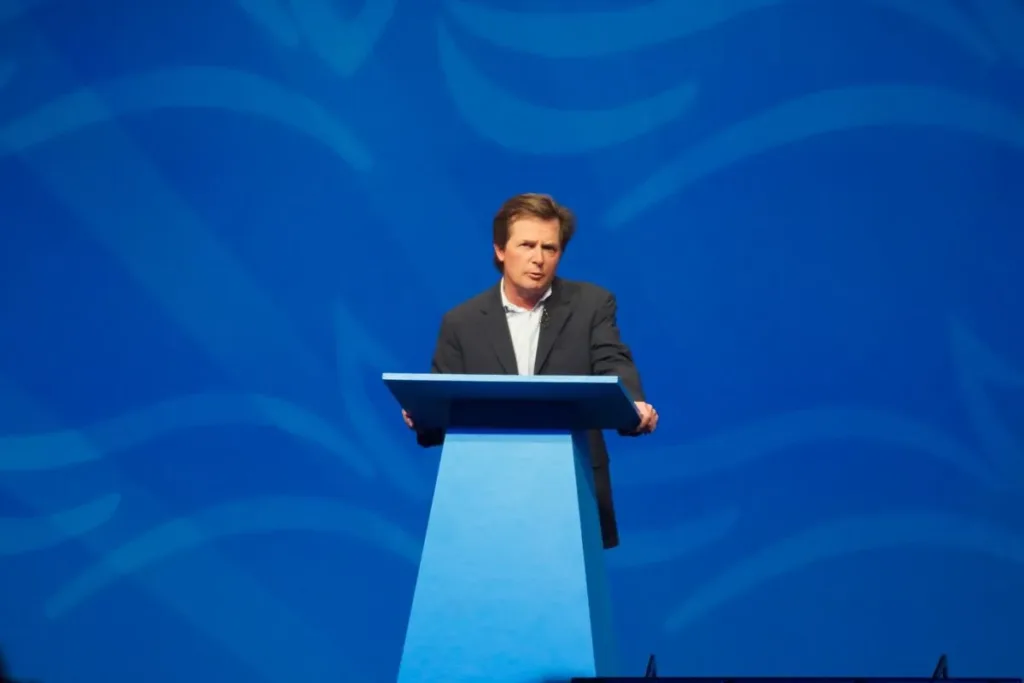
Michael J. Fox’s Marty remains central to that appeal. Our coverage of Fox’s 2026 Emmy honour follows another part of his public career. Returning to the film offers a separate perspective: an actor’s familiar screen character can remain a meeting point for audiences across decades, even as the performer’s later work takes other directions.
Why October 21 belongs to the sequel
The first film sends Marty from 1985 to 1955, where encounters with his parents threaten the future he expects to return to. The Library of Congress’s National Film Registry account identifies Robert Zemeckis and Bob Gale as the writing partners behind the story, with Christopher Lloyd playing Doc Brown. Its central problem is personal as well as mechanical: finding a route home means repairing events involving Marty’s family.

The 1989 sequel expands the timeline. Its official production notes describe the filmmakers developing an optimistic, playful version of 2015 rather than claiming they could accurately forecast the future. Bob Gale explained that earlier attempts to predict coming decades rarely unfolded as expected. That context is useful when a celebration becomes a checklist of which imagined gadgets did or did not arrive.
A fictional future has other jobs to do. It must help an audience understand the story, distinguish one period from another and create situations for the characters. Treating it only as a failed technology forecast misses that construction. A comic detail can be memorable because it fits the film’s world, even when real life develops in a different direction.
The same distinction helps when arranging a viewing night. Choose the film first, then decide whether to add its sequel or a discussion afterward. Our October movie-night guide offers a related approach to choosing a manageable programme. An anniversary does not require every participant to watch an entire franchise in one sitting.
The time machine needed real-world preservation
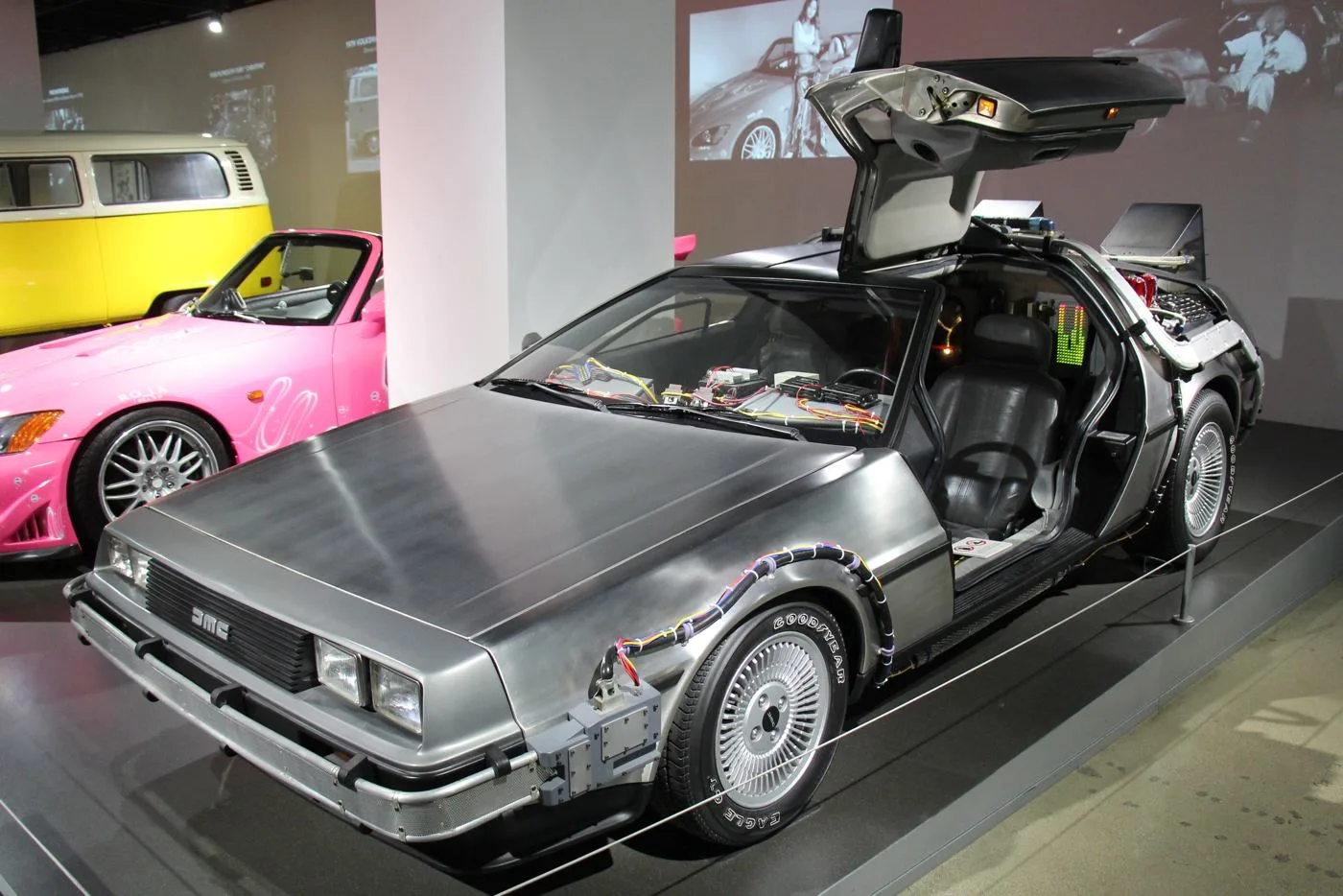
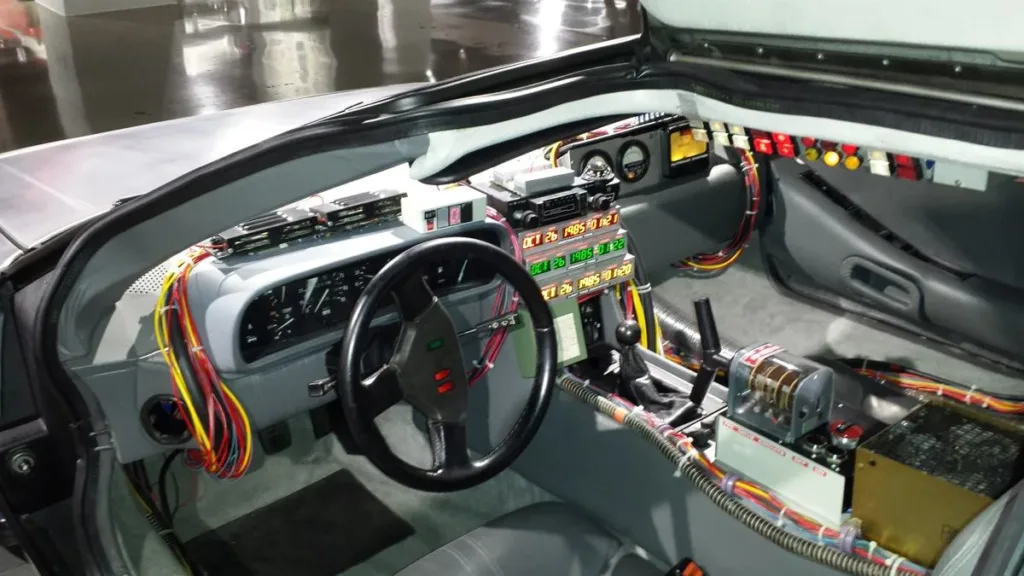
The DeLorean gives the series a physical identity that can be recognised even outside a film scene. The museum photograph accompanying this article records that constructed movie object on display, rather than a vehicle capable of travelling through time. Its wires, instruments and bodywork are part of the production’s visual language.
Preserving that object required work of its own. The official account of OUTATIME: Saving the DeLorean Time Machine describes deterioration from weather, damage and missing parts before a restoration involving Bob Gale, Universal Studios and a team of fans. Steve Concotelli directed the documentary, which follows the people restoring the original time machine rather than telling a new fictional adventure.
The restoration account identifies Joe Walser as the team’s leader and describes a year of work aimed at returning the car’s details to their screen appearance. That is a different sort of attention from recognising a prop at a glance. It requires deciding what belongs, finding evidence for how it looked and doing the practical work of repair.

The film itself also belongs to a preservation record. The original Back to the Future entered the National Film Registry in 2007, a date confirmed in the Library of Congress listing. Our report on preserving deteriorating archives provides wider context for why cultural familiarity alone does not keep physical material safe. Recognition and preservation serve different purposes.
What viewers should check for today’s return
The official BTTF listing identifies the October 21 cinema return with the United States. It does not establish a screening in every country or every town. Readers elsewhere should check their own cinema’s current programme rather than treating a U.S. nationwide announcement as a worldwide release notice.
Within the advertised territory, confirm the cinema, start time and format before making plans. A listing that mentions several presentation types does not mean each venue offers all of them. Check the title on the ticket as well: the announced return is the original movie, while October 21’s connection to 2015 comes from Part II.
The franchise also continues in another format. Its official events calendar lists the stage musical at the Bristol Hippodrome from October 8 to November 21, 2026. The production uses original music by Alan Silvestri and Glen Ballard alongside songs associated with the film. A stage adaptation is a separate production and booking, with its own performance schedule.
For anyone watching at home, the lasting attraction need not be whether the film got tomorrow’s inventions right. Notice how the original sets up a problem and lets a later scene change its meaning. Then consider how the sequel reuses familiar places at another point in time. Those are storytelling choices that can reward another viewing without requiring a new release or an elaborate event.
Today’s cinema return gives Back to the Future Day 2026 a concrete occasion, but the date also marks an unusual reversal: audiences are now looking back at a future the films once looked forward to. The story, the preserved car and the people who keep presenting the work all help explain why October 21 continues to bring viewers together.


Isiagu Tobby
Wowplus editorial contributor.