Table of contents
Kevin Kline at 79 has a career that keeps bringing theatre and screen acting back into the same conversation. Born on October 24, 1947, the actor reaches the birthday in a year that included American Classic, a television comedy built around a theatre family. The role makes a useful starting point for looking at a performer whose stage work never became merely a footnote to his films.
Kline’s record includes three Tony Awards and an Academy Award, spread across different kinds of performance. Those honours identify particular productions and years, while the longer career reveals repeated moves between musical theatre, dramatic roles and screen comedy. A biography built around only one celebrated film would leave out much of that range.
His 2017 Tony for Present Laughter was one later milestone, recorded in Wowplus’s contemporary Tony Awards winners list. It placed a new stage achievement alongside recognition earned decades earlier. The chronology matters: Kline did not simply begin in theatre, leave for movies and stop returning.
Kevin Kline at 79: music studies before a theatre career
Indiana University’s honours record traces his early change of direction. Kline studied music during his first two years at the university before switching to theatre, graduating with a degree in 1970. That year he received a scholarship to Juilliard’s Drama Division. The sequence describes a developing professional interest, rather than an acting career that arrived fully settled from the outset.
After Juilliard, he became part of the City Center Acting Company under John Houseman. The Hollywood Chamber of Commerce’s biography describes the group travelling across the United States with classical and other repertory work. Touring placed performance within a practical routine of productions, fellow actors and audiences, well before the familiarity that later films brought.
His first two Tony wins came in musicals: On the Twentieth Century in 1978 and The Pirates of Penzance in 1981. The 2017 award for Present Laughter was for a leading performance in a play. Taken together, those credits show why musical and spoken theatre both belong in an account of his career.


Music can remain part of an actor’s public identity in very different ways. Jeff Goldblum’s jazz work alongside his film career offers another example of an audience discovering a performer through more than one discipline. Kline’s own university history is a reminder to look beyond the professional label that becomes most familiar.
The Oscar belongs to a particular comic performance
Kline’s Academy Award came for A Fish Called Wanda, a film released in 1988. The Oscars record identifies him as the supporting-actor winner at the March 29, 1989 ceremony. Separating the film’s release year from the ceremony year avoids a small but common confusion in career summaries.
The award also places a comic performance within a filmography extending beyond one tone. Recognition for a specific role is not a complete description of an actor’s method, but it gives a clear point of reference. In Kline’s case, it sits alongside the musical and stage-play awards rather than replacing their significance.
There is a temptation to describe versatility as if it means having no recognisable identity. Another way to read a career is to notice the different demands placed on the same performer. A sustained stage role, a supporting film part and an ongoing television character each organise an actor’s work around a different production rhythm.
The importance of those stage connections also appears in Megan Mullally and Nick Offerman’s theatre history. For readers who first encounter performers on television, the earlier or continuing live work can explain parts of a career that a list of screen appearances alone leaves out.
American Classic brings a theatre story to television
In American Classic, Kline plays Richard Bean, a Broadway actor whose professional crisis sends him back to the small Pennsylvania town where his family runs a theatre. The MGM+ series also features Jon Tenney, Laura Linney and Len Cariou. Kline discussed the production with NPR’s Scott Simon in April 2026 and was identified as both its star and an executive producer.

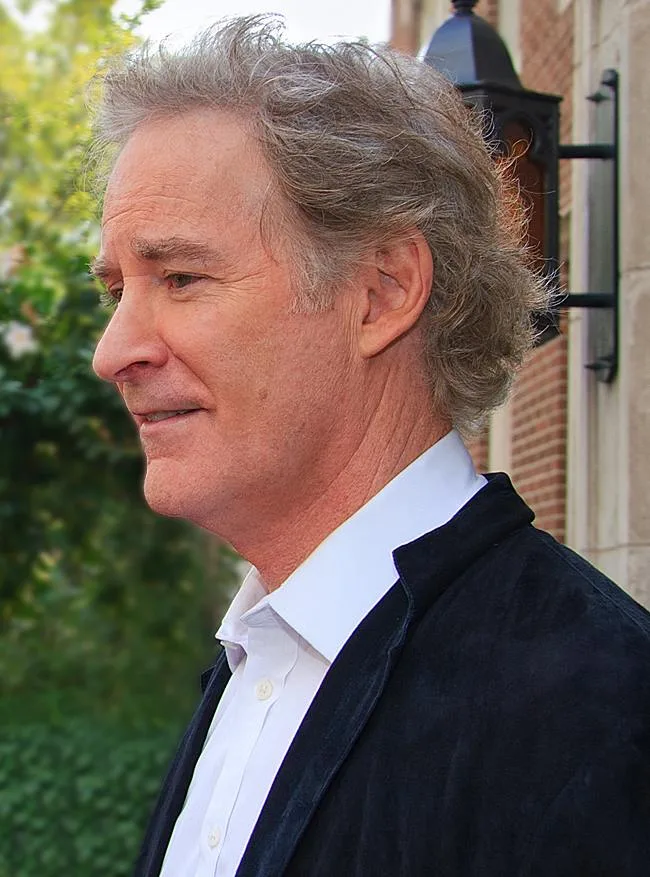
Richard’s plans revolve around staging Thornton Wilder’s Our Town. The premise creates a connection between a performer’s ambitions and the practical life of a local theatre. It is a fictional character’s attempt to recover a sense of purpose, not a claim that Kline experienced the public breakdown or family events depicted in the show.
In the NPR conversation, Kline described Richard as someone whose references are overwhelmingly theatrical and whose attempt to help his town is also an attempt to help himself. That account offers a more precise introduction to the role than treating the actor and character as interchangeable. A performer can explain a character’s limitations without confessing to them personally.
The interview also returned to Kline’s own early experiences of theatricality within his family. It is a modest but revealing connection: a career shaped by professional training can still draw on things a performer noticed before entering a classroom or rehearsal room. That observation does not reduce decades of acting to a single childhood explanation.
At 79, the most useful outline of Kline’s career keeps its different parts visible. Music studies led into theatre training; stage honours sit alongside a film Oscar; and a 2026 television role again makes the act of putting on a play central to the story. The continuity lies in the work across those settings, rather than in one medium becoming the final destination.


Isiagu Tobby
Wowplus editorial contributor.