



Table of contents
Organising your bookshelf can make a room easier to use and bring forgotten books back into view. The best starting point is a shelf you can reach, a clear table and enough time to finish one small section. A useful arrangement should help you find a title and return it without forcing it into a crowded gap.
Begin with the books already in your home. There is no need to buy matching decorations or create a display that works only in a photograph. A collection can look varied and still feel orderly. Its arrangement matters less than whether the books have proper support and remain comfortable to take down and read.
Start with one shelf and a simple sorting rule
Choose a manageable section instead of emptying every bookcase at once. Lay the books on a clean, dry surface, keeping fragile volumes apart from the main sorting pile. Take a quick photograph of the original order if you want to restore it, or make a short note of categories that already make sense to you.
Pick a way of finding things that matches your habits. Fiction might work by author, while cookbooks, reference works and children’s books could each have their own section. Sorting by colour is a visual choice; sorting by subject is a retrieval choice. Try the approach that makes a familiar title easiest for your household to locate.
Keep a small space for the book you are reading and the next one you want to start. Our guide to starting a book club offers another reason to make a current title easy to find. A temporary reading spot can sit alongside the permanent order without turning every shelf into an unfinished stack.
Give the books support and room to move
The Library of Congress recommends keeping upright books straight and grouping similar sizes together so neighbouring covers provide support. Oversized volumes can lie flat with their weight properly supported. A bookend can help a partly filled row remain upright. Leave enough room to grip a book comfortably rather than wedging each volume tightly against the next.

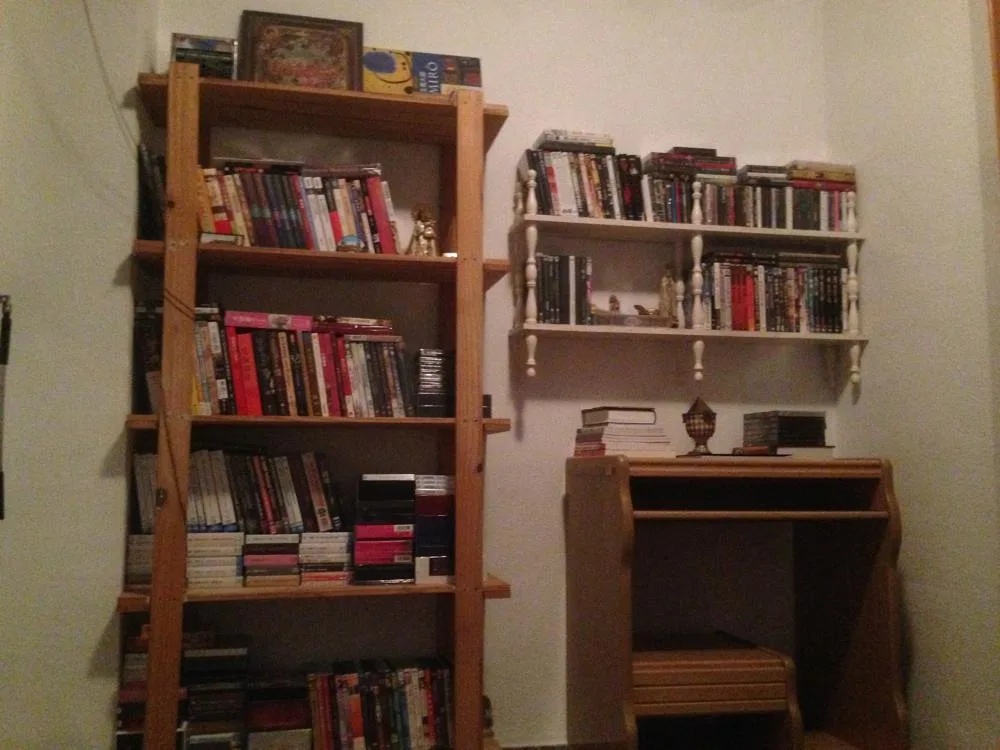
When taking a book down, its LOC handling guide advises holding the middle of the spine, making room beside it, instead of pulling at the top. Clean, dry hands and a prepared reading surface are simple precautions. Avoid forcing a resistant binding flat when the book naturally opens at a smaller angle.
Check the shelf itself while it is empty. NEDCC’s storage guidance warns that shallow shelving leaves books protruding and that inadequate strength can allow shelves to bow. Match the arrangement to the furniture’s stated capacity. Tall or heavy volumes should not become an excuse to overload a shelf whose safe limit you do not know.
Choose the location with the books in mind. The Library of Congress advises avoiding direct or intense light and places exposed to environmental extremes or leaks. A stable indoor space is preferable to an attic or garage. Moving a bookcase away from a difficult spot may do more for the collection than repeatedly rearranging its colours.
Different collections need different treatment. Our guide to caring for vinyl records applies the same broad habit of planning storage around the object. That does not mean books and records share every rule; it means each format deserves enough space and the handling method appropriate to it.
Clean gently and keep moisture away
NEDCC’s cleaning guidance begins with the condition of the collection. A sound everyday paperback presents a different problem from a brittle page or flaking leather binding. For light exterior dust, it recommends suitable untreated magnetic wiping cloths; a low-suction vacuum with a soft brush is another option described for general collections. Fragile material needs specialist judgment.
If cleaning a sound book, keep it closed so loosened dirt does not slip between the pages. NEDCC recommends working away from the spine, without rubbing back and forth. Keep cloths used on shelving separate from those used on books. If a shelf has been washed, allow it to dry completely before returning the volumes.

A small routine is easier to maintain than a huge annual rescue. Notice where dust collects, keep drinks away from the sorting area and deal with an awkward leaning row before it becomes the permanent arrangement. These are practical household habits, rather than a reason to handle delicate pages more often than necessary.
Keep fragile and sentimental volumes out of the repair pile
A loose cover or torn page can tempt a quick repair. The Library of Congress advises against self-adhesive tape, rubber bands, glue and leather dressings on collection items. A rare, valuable or deteriorating book may need a conservator. For an infrequently used item, protective housing and improved storage can be more appropriate than attempting a home restoration.
Family collections can hold several kinds of memory at once. Our guide to preserving family audio explores another format that needs its own care. Keep notes about a book’s inscription or family connection separately if useful, without attaching fresh labels or sticky notes directly to a fragile original.
Deciding which books to keep is a personal part of the process. Put uncertain choices in a clearly identified place for another day instead of rushing a sentimental decision. For books you hope to donate, check the recipient’s current acceptance rules first. A tidy shelf does not require discarding a volume simply because it has not been read recently.
Finish by returning the books, checking that the row stands securely and leaving your reading surface clear. Live with the order for a week before making another major change. A bookshelf earns its place in a room when it helps the books remain usable and makes the next reading session easier to begin.
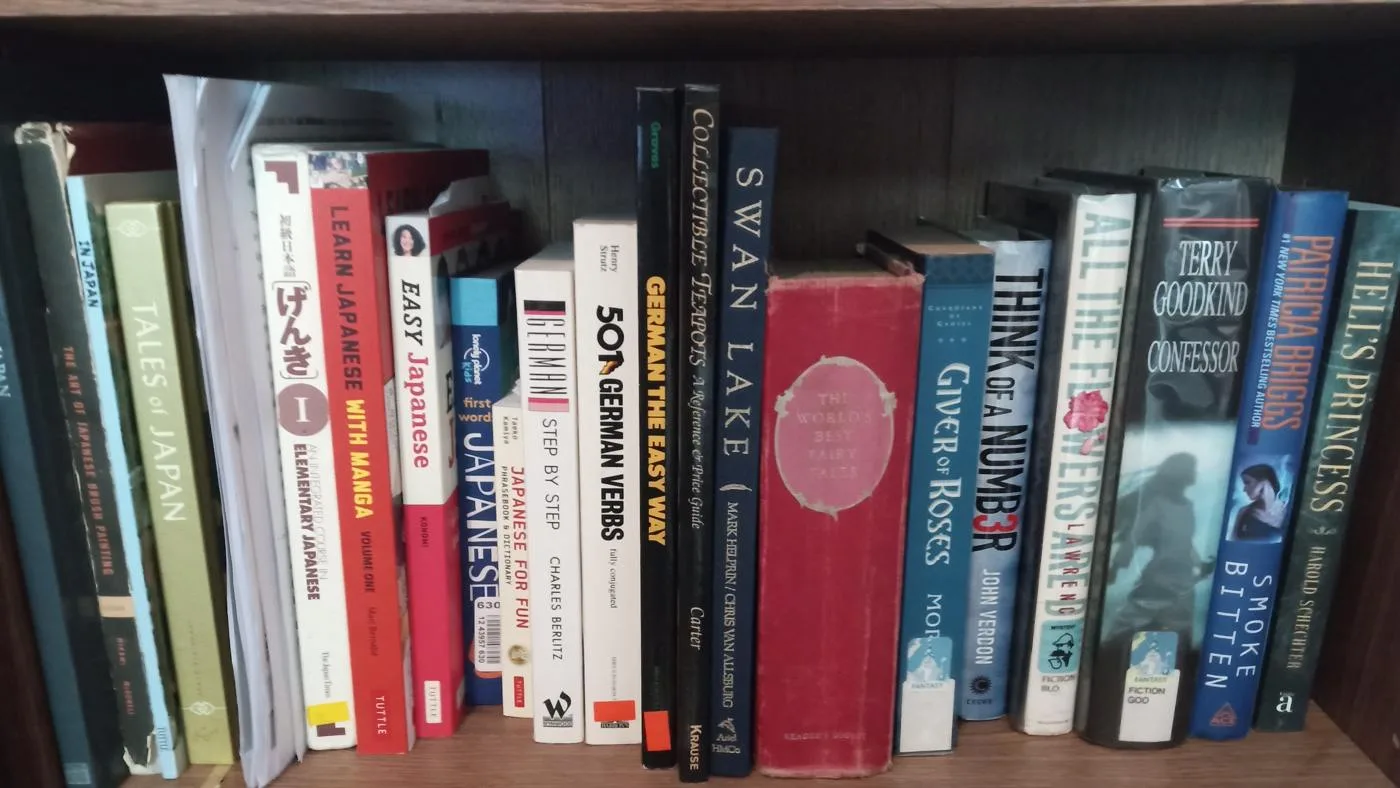
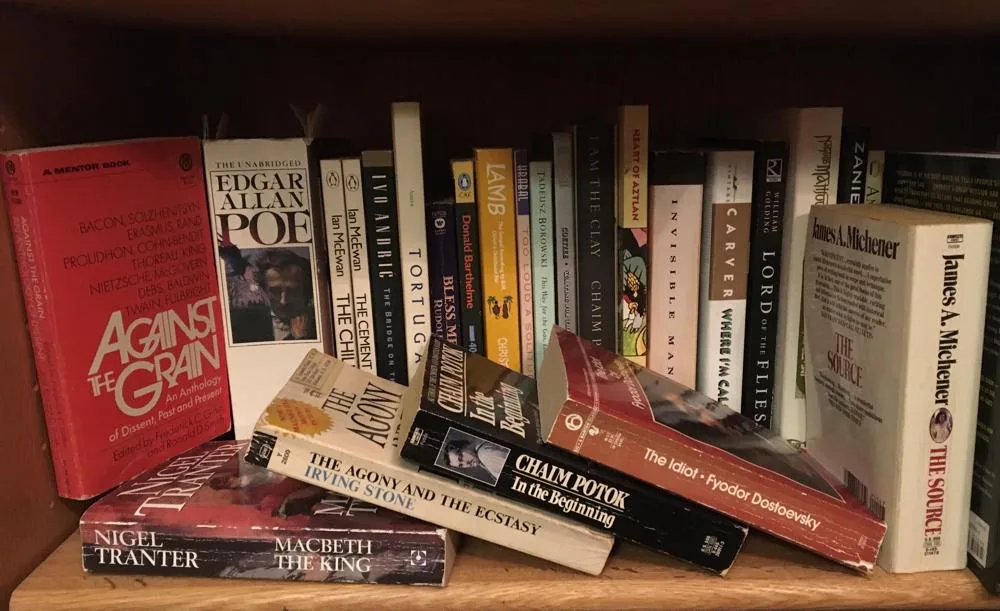
Featured illustrative photograph: C.Hartman23 / Wikimedia Commons, March 12, 2024. A section of a bookshelf. CC0 1.0 (https://creativecommons.org/publicdomain/zero/1.0/). Cropped and resized. The photograph illustrates a book collection, not an audited conservation setup.


Isiagu Tobby
Wowplus editorial contributor.