



Table of contents
John Cleese’s Holy Grail tour pairs a screening of the Monty Python film with something a normal cinema ticket cannot provide: a live conversation with one of its creators. The official tour site currently lists US dates for March and April 2027, giving audiences another chance to revisit a comedy whose original release was more than half a century ago.
The format gives the evening two parts. First comes the film, with its finished performances, editing and carefully constructed absurdity. Then comes Cleese’s account of the work and a moderated conversation involving audience questions. The attraction lies in putting a familiar screen experience beside the recollections of someone who helped make it.
What the announced dates involve
The official Cleese tour page describes a theatrical screening of Monty Python and the Holy Grail, followed by live discussion and an audience Q&A. Its listed itinerary begins at Louisville Palace on March 3, 2027, with Nashville’s Grand Ole Opry House following on March 4.
Live Nation’s own listings also show dates across the same period, including Indianapolis, Cincinnati and Washington, DC. Individual venues use slightly different versions of the show title. The consistent element is Cleese appearing in an event built around the film, with the dates still ahead at the time of writing.
Returning an older film to a shared auditorium creates a different occasion from watching it alone. Our coverage of Back to the Future’s cinema return explores another example of audiences gathering around a work they may already know. Familiarity can become part of the experience when reactions are shared across a room.
The comedy that anchors the evening
The British Film Institute identifies Holy Grail as a 1975 film directed by Terry Jones and Terry Gilliam. Its account describes the Python performers moving between several roles within an absurd version of an Arthurian quest. The group’s official work catalogue places it among films that also include Life of Brian and The Meaning of Life.

That collaborative history is part of the interest in hearing one participant speak about it. A film associated with a group has several creative viewpoints behind it. Cleese’s memories can add a perspective on the finished work, while the credits retain the names of the people whose different contributions made the production possible.
The BFI also notes the film’s later connection to Eric Idle’s musical Spamalot. That is another route by which the material reached an audience. A stage adaptation, a screening and a live discussion each place different demands on performers and give viewers a different relationship with a familiar story.
For someone seeing the film for the first time, the screening remains a complete work in its own right. A conversation afterward can supply background without replacing the experience of encountering the jokes, performances and visual ideas as they unfold. Long-time fans may notice details they previously missed when those same scenes are placed back in a theatre.
Fawlty Towers has its own stage life
Cleese’s current public work also includes the stage adaptation of Fawlty Towers. The official UK and Ireland tour site credits him with adapting the television series for the stage and names Caroline Jay Ranger as director. The original television writing credit belongs to Cleese and Connie Booth.
The tour’s listed performers include Danny Bayne as Basil and Joanne Clifton as Polly. That helps clarify Cleese’s role in this separate production: he is credited as its adapter, while a stage cast performs the characters. The production’s own listing is the appropriate place to check a particular venue’s cast and dates.
Moving material between screen and stage changes the task even when the words or characters are familiar. Wowplus’s feature on Andrew Scott’s stage and screen work considers that movement through a different performer’s career. A live room gives timing and audience response an immediate presence.

A career that also includes conversation and teaching
Cornell University’s account of Cleese records his time as an A.D. White Professor-at-Large from 1998 to 2006 and his later visiting role. Its archive includes public conversations and presentations involving comedy and film. That history offers context for an event in which speaking about the work is a substantial part of the programme.
There are other career landmarks beyond Python and Basil Fawlty. BAFTA’s archive records his 1989 Leading Actor win for A Fish Called Wanda. The award is a precise, documented achievement, rather than a general claim about how every part of his career was received.
Creative recollection can also take the form of a book, as our report on Michael Douglas’s memoir discusses. A live conversation offers a more immediate version of that encounter, shaped by the moderator, the questions and the room on the night.
The announced 2027 tour therefore brings together an enduring film and a present-day appearance. The screening supplies the work itself; the discussion offers a way to hear how one of its makers looks back on it. For audiences, the appeal is the opportunity to experience those two things together, with the film still at the centre of the evening.
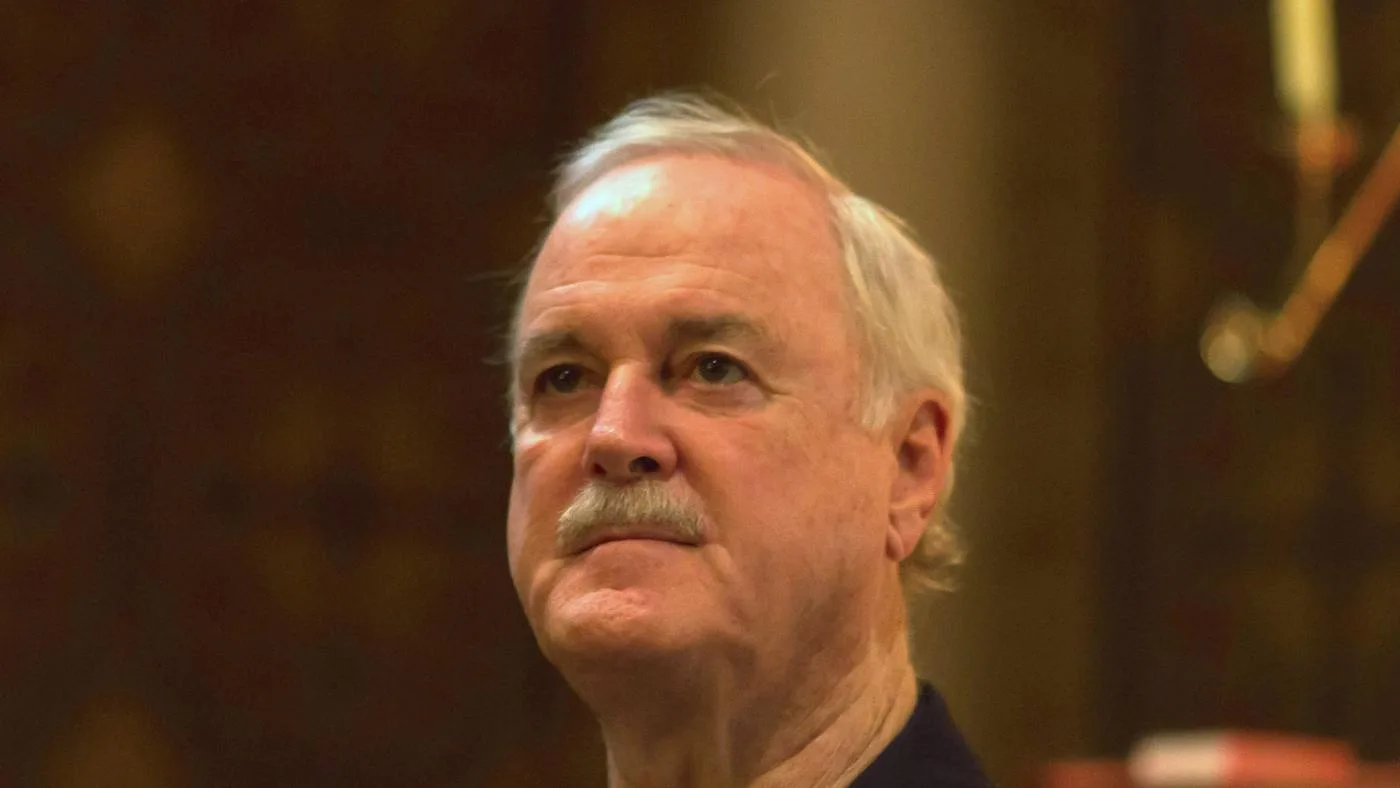
Featured archival photograph: Bruce Baker / Wikimedia Commons, Melbourne, March 2014. CC BY 2.0 (https://creativecommons.org/licenses/by/2.0/). Cropped and resized; not a photograph of the announced 2027 tour.


Isiagu Tobby
Wowplus editorial contributor.