



Table of contents
Madonna 2026 VMAs performance marked her first live appearance on the awards-show stage in 23 years, turning a familiar music-industry ceremony into a cross-generational pop event.
The singer opened the September 27 show in Los Angeles with Sabrina Carpenter and Charli xcx, using the comeback to connect her current Confessions II era with the MTV performances that helped define her public image in the 1980s, 1990s and early 2000s. It was less a nostalgia set than a reminder that Madonna still understands how to use television as spectacle.
The performance also completed a story Wowplus began before the ceremony. In August, Madonna’s 2026 VMA nominations put her back at the center of the awards conversation. By show night, the focus had shifted from how many trophies she might win to what she would do with her first VMA stage performance since 2003.
Why Madonna’s VMA return carried unusual weight
Madonna has been tied to MTV almost from the network’s earliest years. Her 1984 “Like a Virgin” performance became one of the ceremony’s defining images, while later appearances for “Express Yourself,” “Vogue” and “Ray of Light” reinforced the idea that a VMA performance could function as a major pop-culture reset rather than a routine live rendition.
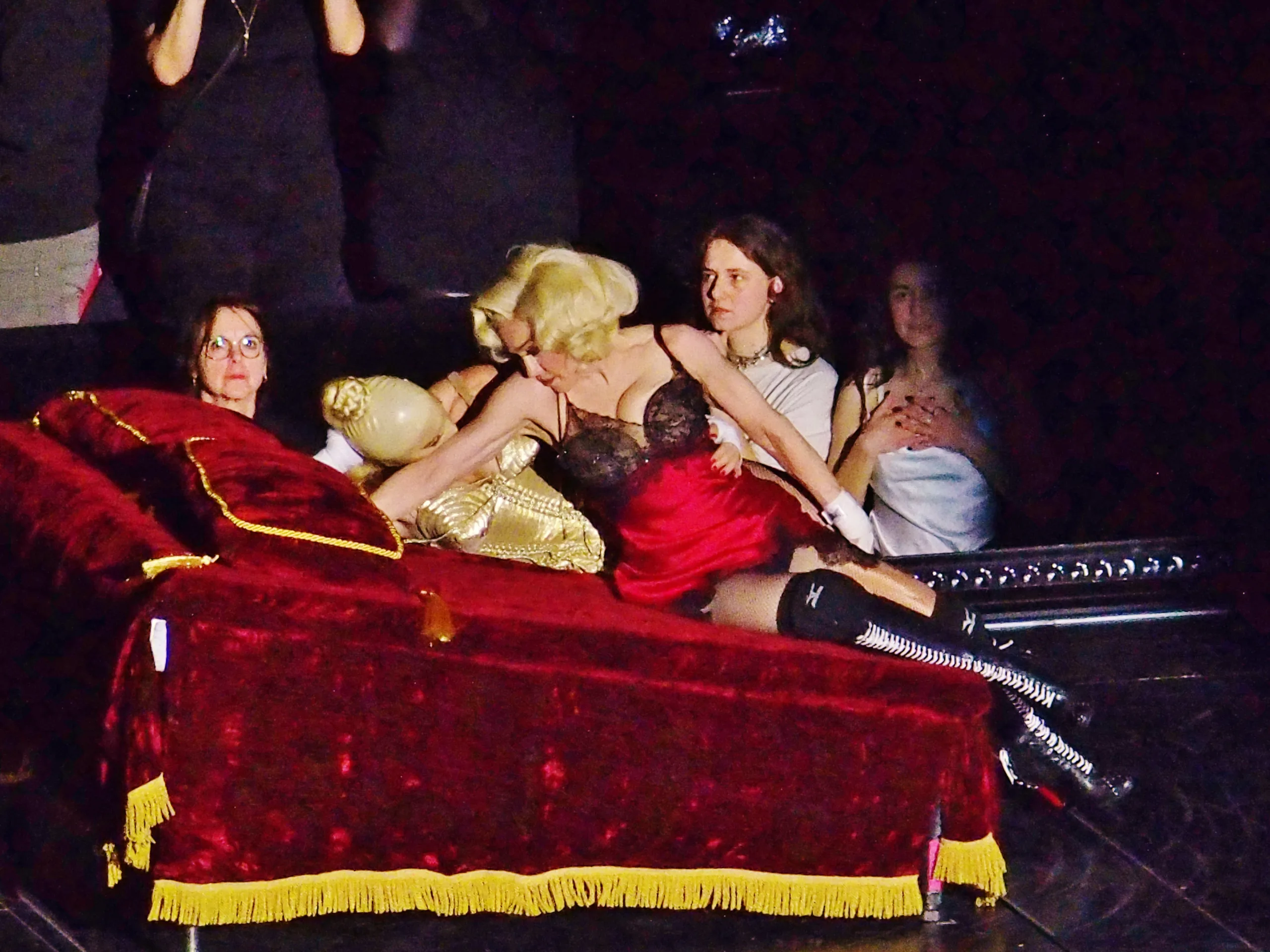
According to Variety, the 2026 opening began with Madonna positioned above a piano as Carpenter played, before the production expanded into dancers, a choir and a set referencing the visual world of her newer music. Charli xcx later joined for the “Danceteria Afterhours” remix, while Debi Mazar, Julia Garner and other guests appeared during the sequence.
That guest list was important. Carpenter represents a younger mainstream pop generation with a strong visual identity of her own, while Charli xcx has spent years pushing electronic pop toward more abrasive and experimental spaces. Bringing both artists into Madonna’s return avoided the feeling of a sealed-off career retrospective.


Charli’s appearance also made sense beyond the awards show. Wowplus recently examined how Charli xcx moved through music, fashion and film without simply repeating the “Brat” formula. Sharing the VMA stage with Madonna placed that restless approach beside an artist who built much of her own career on constant reinvention.
The performance linked several eras without copying them
A long-awaited comeback can easily become a checklist of famous old moments. Madonna’s set instead used references as part of a new production. The costume changes, theatrical staging and club imagery were recognizable pieces of her visual vocabulary, but the performance was built around current songs and current collaborators.
That choice mattered because Madonna had already spent much of 2026 reintroducing herself through Confessions II, her first studio album in seven years. The project returns to dance music, a space closely associated with her career, while still using contemporary production and collaborations to keep the material from sounding like a museum piece.
The VMA stage gave that strategy a television-sized frame. Carpenter at the piano created an immediate generational handoff, while Charli’s entrance made the club lineage more explicit. Instead of asking younger stars to imitate Madonna, the staging let each performer remain recognizable within the same sequence.
There was also a visual-fashion logic to the set. Madonna’s performances have always treated clothing, choreography and production design as part of the song rather than decoration added afterward. Wowplus explored a similar idea in its look at Bob Mackie’s fearless approach to stage glamour, where memorable performance style works because silhouette and character are inseparable from the entertainer wearing them.
Why a 23-year gap made the moment feel current
Madonna’s last full VMA performance before 2026 was the 2003 show with Britney Spears and Christina Aguilera, an appearance that became more famous with time because it captured several generations of pop stardom at once. Returning with Carpenter and Charli xcx created an obvious echo, but the gap between those appearances gave the new version more meaning.

In those 23 years, MTV stopped being the center of daily music-video discovery, streaming replaced scheduled television for many viewers, and artists learned to create viral moments across several platforms at once. Yet the VMA performance still works when it offers something audiences expect to discuss immediately after the broadcast.
Madonna’s return was built for that environment. The cameos created short clips, the styling produced still images, and the collaborative structure encouraged different fan communities to circulate their own part of the performance. An old television format was used with a very current distribution logic.
The night also reinforced why Madonna remains unusually suited to that kind of event. Her history gives every reference an extra layer, but history alone would not have made the performance matter. What made the return feel timely was her willingness to share the frame with artists who did not need her introduction to be relevant.
After more than two decades away from a full VMA performance, Madonna did not come back simply to replay an old highlight reel. She used the platform the way she often has: as a place to connect image, music, collaborators and timing into one event that could live beyond the few minutes it occupied on television.


Isiagu Tobby
Wowplus editorial contributor.