




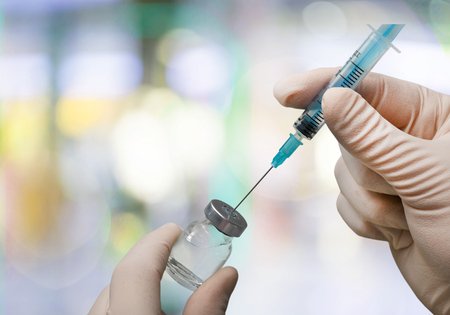
A cholesterol-lowering vaccine has shown promise in mice, said researchers Tuesday who announced they had started early-phase trials to see if it also works in humans.
Such a treatment could offer a welcome alternative to statins, the main pharmaceutical choice today for lowering cholesterol in people at high risk of heart attack or stroke.
The vaccine, dubbed AT04A, reduced cholesterol levels in trial mice by half, and reversed damage done to blood vessels due to plaque buildup by more than 60 percent, researchers said in a statement.
The mice were given the vaccine after they were fed a fatty diet to resemble the high-cholesterol intake of a human Western-style diet.
“Levels of cholesterol were reduced in a consistent and long-lasting way,” said study co-author Guenther Staffler of the AFFiRis biotech company developing the treatment.
This, in turn, resulted in “a reduction of fatty deposits in the arteries and atherosclerotic damage, as well as reduced arterial wall inflammation.”
Atherosclerosis occurs when a waxy compound lines the walls of blood vessels, limiting blood flow and potentially triggering dangerous blood clots.
Statins have been used for about 30 years to bring down “bad” LDL cholesterol blamed for such deposits.
But conflicting reports on statins’ benefits and harms have made headlines in recent years, prompting some people prescribed the drugs to stop taking them.
There is also uncertainty about the link between dietary fat and cholesterol, and even whether cholesterol in food is really unhealthy.
AT04A contains a molecule that causes the body to produce antibodies against an enzyme called PCSK9, which prevents the clearance of so-called “bad” cholesterol from the blood, according to a study published in the European Heart Journal.
The cholesterol-zapping antibodies persisted for months after vaccination, it said.
“If these findings translate successfully into humans, this could mean that… we could develop a long-lasting therapy that, after the first vaccination, just needs an annual booster,” said Staffler.
“This would result in an effective and more convenient treatment for patients, as well as higher patient compliance.”
A Phase I trial — the first step in a long, typically three-phase process to vet a drug for safety and effectiveness — has begun, its developers said.
In a comment on the study, cardiologist Tim Chico of the University of Sheffield, said “many questions remain about whether this approach could work in man.”


Terry Paul
Paul Terry is a publisher and an author in wowplus.net and other news channel