Table of contents
Bill Gates net worth is often reduced to a single number. The more useful story in the Microsoft co-founder’s public financial record concerns the difference between personal wealth, assets already donated to charity and a long-term promise to give more. Those figures describe separate things, even when they appear together in the same headline.
On October 28, 2026, a precise estimate would need a valuation date, an explanation of the assets included and an allowance for liabilities. The foundation’s published accounts do not provide that personal balance sheet. They do, however, explain the charitable structure through which Gates intends to spend much of his remaining fortune.
What the giving commitment actually covers
In May 2025, the Gates Foundation announced an accelerated timetable ending in 2045. Its statement described spending around $200 billion over twenty years, drawing on the existing endowment and Gates’s future contributions. It also said the eventual total would depend on markets and inflation. That is a forward spending plan, rather than a certified personal fortune today.
The distinction changes how the headline should be read. Money already held by a charitable organisation belongs within that organisation’s accounts. A promise to make future donations describes an intention and a timetable. Neither figure can simply be substituted for the amount an individual could personally own on a particular October morning.
Gates’s original association with Microsoft can make the numbers especially confusing. Our report on Microsoft’s Azure earnings and AI spending concerns the company’s business. Company revenue, stock-market value, a founder’s shareholding and the founder’s overall wealth are separate measures. A large corporate result does not establish a matching personal payday.
Microsoft’s founder and Microsoft’s management
Microsoft’s March 2020 announcement records Gates stepping down from its board to devote more time to philanthropy. The same statement says he had left day-to-day management in June 2008 and served as chairman until February 2014. Those dates help place his wealth story within a career that moved beyond an operating executive role.

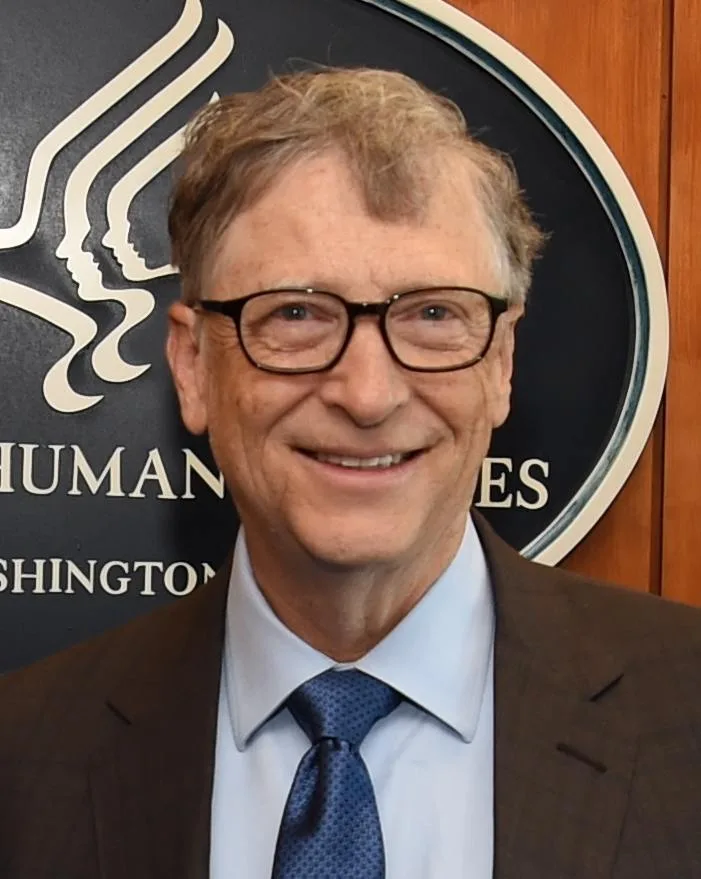
The announcement described a continuing technology-adviser relationship at that time. It should be read as a record of the 2020 arrangement. It does not, by itself, prove the exact duties he holds in October 2026 or identify every investment he owns. A dated corporate biography is useful evidence when its date remains attached.
This is also why estimating someone’s wealth solely from the company they founded can mislead. A reliable calculation would need to establish their actual holdings and other assets, rather than assume a founder still owns the whole enterprise. Where that information is incomplete, a neat headline total can conceal more uncertainty than it resolves.
Two charitable entities with different jobs
The foundation’s financial-information page describes a two-entity structure established in 2006. The Gates Foundation conducts the charitable work; the Gates Foundation Trust holds donated investment assets and transfers proceeds to support it. The published explanation identifies contributions from Bill Gates, Melinda French Gates and Warren Buffett. These are institutional resources with a charitable purpose.
A business profile needs the same care with ownership and valuation. Our explainer on ASML’s business model considers how an enterprise creates value. Reading a founder’s finances asks a different question: which assets belong to that person, what are they worth at a stated date and which obligations must be deducted?
The foundation lists audited statements for itself and the trust, including 2025 reports. Its guidance says financial statements generally appear in the following summer, with annual tax returns usually arriving in the autumn. That publication cycle is another reason an annual report should not be described as a live, daily personal-wealth tracker.
For readers, the practical step is to check the entity named on a document before using its total. A trust’s investment assets, a foundation’s grants and an individual’s remaining wealth may all appear in the broader Gates story. Adding them together without checking ownership can count resources in a misleading way.

The annual spending figure answers another question
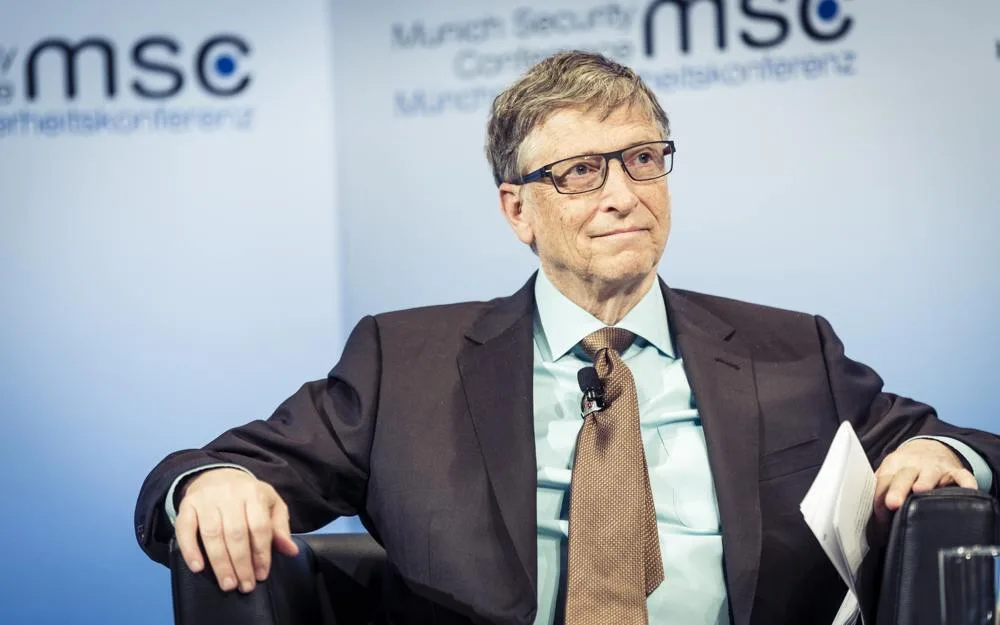
The foundation reports $8.47 billion in charitable support for 2025. Its definition includes grant payments, direct charitable contracts and operating expenses, while excluding programme-related investments. It also describes grants as its main funding method, alongside strategic investments. The figure explains a year of organisational activity, rather than an individual’s annual earnings or cash balance.
CEO Mark Suzman’s February 2026 Foundation letter sets out the road towards the 2045 closure. It discusses priorities in maternal and child health, infectious diseases, education and agricultural innovation. These are the organisation’s stated ambitions. They remain goals to pursue and assess, rather than outcomes that a financial commitment guarantees in advance.
The distinction between expenditure and wealth also appears in technology coverage. Our report on Amazon’s AWS growth and investment plans deals with business spending. An announced investment budget answers where resources may be deployed; it does not describe the private net worth of every person associated with the company.
How to read the next estimate
Any new Gates wealth estimate is more informative when it explains its date and method. Readers can ask whether the number concerns personal assets, an organisation’s endowment, annual charitable support or a future pledge. If those categories are mixed together, comparing the resulting headline with another year’s estimate becomes difficult.
The strongest documented theme is the decision to accelerate giving and set an institutional endpoint. The public financial pages provide a way to follow that process over time. They support a discussion of resources committed to philanthropy, while leaving the exact value of Gates’s private balance sheet on October 28 unverified here.
Featured archival photograph: Simon Walker / No10 Downing Street, February 15, 2023, via Wikimedia Commons. Bill Gates meets Rishi Sunak at Imperial College London. Contains public sector information licensed under the Open Government Licence v3.0 (https://www.nationalarchives.gov.uk/doc/open-government-licence/version/3/). Cropped and resized; not a 2026 photograph.


Isiagu Tobby
Wowplus editorial contributor.