




Table of contents
Amazon AWS growth accelerated sharply in the second quarter of 2026, giving the company a stronger argument for one of the largest technology spending plans in corporate history.
Amazon Web Services revenue rose 37 percent to $42.2 billion in the quarter ended June 30, its fastest expansion in 18 quarters. The result comfortably exceeded market expectations and helped push Amazon shares higher after the report.
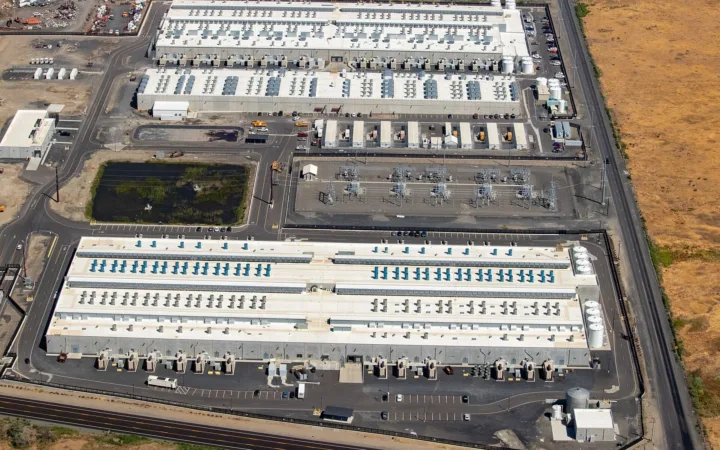
The cloud division’s performance mattered because Amazon also raised its expected 2026 capital spending to about $220 billion. Much of that money will go into artificial intelligence infrastructure, data centres, custom chips, robotics and satellite systems. Investors have repeatedly questioned whether spending at that scale can produce enough profit, but the latest AWS numbers made the investment case easier to defend.
The market’s response reflected the same forward-looking behaviour seen when share prices rise on expectations rather than present conditions. Amazon is being judged less on the size of today’s spending than on whether cloud and AI demand can keep expanding quickly enough to absorb it.
AWS returned to the centre of Amazon’s growth story
For years, AWS has been Amazon’s most important profit engine. The retail business produces enormous revenue, but cloud computing generally carries stronger margins and gives the company a deeper relationship with large corporate customers.
AI demand lifted cloud usage and chip sales
Chief executive Andy Jassy said AWS was booming, while the company disclosed that its AI and chip businesses had each moved beyond annualised revenue run rates of $25 billion. That suggests Amazon is earning money not only from renting computing capacity but also from the tools, processors and services customers use to build AI systems.
AWS benefits from offering several types of technology under one roof. Customers can rent servers, store data, train models, use ready-made AI services and buy access to Amazon’s own chips. The broader the relationship becomes, the more difficult it may be for a customer to move everything to another provider.
The latest quarter also showed that the cloud market is not a simple winner-takes-all contest. Microsoft Azure is growing rapidly, Google Cloud continues to expand, and specialist providers are trying to win customers with cheaper or more flexible services. Amazon’s 37 percent growth nevertheless demonstrated that AWS remains capable of accelerating despite its size.
That matters after a period in which the technology sector was defined by cost cutting. Wowplus previously noted how technology layoffs exposed pressure even at powerful companies. Amazon has continued making selective job reductions, including within its artificial general intelligence group, while simultaneously committing more money to infrastructure.
The spending plan is designed to remove capacity limits
Jassy said demand may continue to exceed available capacity through 2028. In practical terms, Amazon believes it could sell more cloud and AI services if it had more data-centre space, chips and power available.
That creates a difficult management choice. Building slowly could protect short-term cash flow but allow customers to move to competitors. Building too quickly could leave Amazon with expensive facilities if demand cools. The company has chosen the more aggressive path.
The $220 billion capital-spending plan is about 10 percent higher than previously expected. It is larger than the annual economic output of many countries and shows how the AI race has transformed the scale of corporate investment.
Strong earnings did not remove every concern
Amazon reported total second-quarter sales of $200.6 billion, while net income rose sharply. However, a substantial portion of the profit increase came from non-operating gains linked to the company’s investment in Anthropic. That means investors still need to separate recurring business performance from valuation changes in outside investments.
Cash flow will become a more important test
Heavy infrastructure spending can reduce free cash flow even when revenue and accounting profit are rising. Amazon must pay for land, buildings, chips and electricity before those assets produce years of service revenue.
The company’s negative free-cash-flow figure therefore deserves attention. It does not necessarily signal weakness, because rapidly growing businesses often spend ahead of demand, but it shows why AWS growth must remain strong.
Amazon’s broader business also faces pressure from delivery costs, tariffs, labour expenses and competition in online retail. The company has improved logistics and delivery speeds, yet retail still requires warehouses, transportation networks and a large workforce.
Business owners watching Amazon’s expansion can find a useful parallel in Wowplus’ earlier discussion of how successful companies connect investment with long-term strategy. The scale is different, but the principle is similar: spending only creates value when it improves a product customers are willing to keep paying for.
Amazon is betting that AI becomes ordinary infrastructure
The strongest argument for Amazon’s strategy is that cloud computing has already become a normal operating expense for many organisations. If artificial intelligence follows the same path, companies will need more computing capacity every year rather than only during a short experimental phase.
AWS is positioned to benefit because it already serves businesses, governments and developers around the world. Its challenge is to keep those customers while proving that Amazon’s own chips and AI services are competitive with products built around Nvidia hardware and rival cloud platforms.
The second-quarter results do not guarantee that every dollar of the $220 billion plan will earn an attractive return. Technology cycles can change quickly, and infrastructure built for one generation of chips may need expensive upgrades sooner than expected.
Still, Amazon AWS growth has changed the discussion. A 37 percent increase at a business already generating more than $42 billion in quarterly revenue is evidence of substantial demand, not merely enthusiasm. Amazon is spending at a breathtaking pace, but the latest quarter suggests that customers are arriving nearly as quickly as the company can build capacity for them.


Isiagu Tobby
Wowplus editorial contributor.