



Table of contents
Rúben Dias’s Villa response focused on improvement after Manchester City’s 2-1 defeat at Villa Park on October 24. The defender acknowledged the difficulty of the game while praising his team’s persistence. His reaction leaves City with a practical challenge: turn possession and promising attacks into a result without leaving the openings their opponents used.
A defeat after a strong start can encourage sweeping verdicts. The more useful questions are smaller. How quickly did the side adjust to its opponent? What happened immediately after the equaliser? Which parts of the performance should be retained, and which moments need changing? Dias’s comments point toward that kind of review.
A reaction that separates effort from execution
The official match commentary from City records Nicolas Jackson’s two goals either side of Erling Haaland’s equaliser. Dias said City took time to adapt early on, then identified the two transitions Villa converted. His short assessment was direct: “Room to improve, we need to do better.”
That is a narrower message than suggesting the team lacked effort. A side can work hard and still make decisions that leave it exposed. Recognising the distinction matters because the remedies are different: demanding greater commitment does not by itself resolve positioning, passing choices or the speed of a defensive adjustment.
The result also changes the context of City’s opening weeks. Our earlier report on Enzo Maresca’s seven-win league start described the momentum before the AEK fixture. Villa represents a later development, not a reason to erase those wins or pretend the same questions apply to every match.
What the numbers can and cannot explain
City’s published match figures show 63 percent possession and seven shots on target, against Villa’s two. Those figures establish that the losing team had more of the ball and more attempts that tested the goal. They do not explain every decision leading to a chance, or make the final score disappear.


Possession is a measure of control of the ball, rather than a promise of control over the result. To understand a particular attack, the sequence matters: where the ball was lost, how many players were ahead of it and what options the opposition had. A percentage alone cannot answer those questions.
The same caution applies to shots. Two attempts counted in the same statistical category may involve very different positions, pressure and difficulty. The sensible reading is to use the numbers alongside the match, not turn a count of chances into a claim that the result should be rewritten.
For a defender, a useful review can begin before the final tackle. A misplaced pass or an unprotected area may create the problem earlier in the move. That is a general tactical point rather than a claim about an unseen team meeting. The precise adjustments remain the responsibility of City’s players and coaching staff.
A familiar idea under a different manager
Dias had already discussed continuity and change in a September club interview before the Coventry fixture. He described Maresca’s approach as recognisable in its use of the ball, while noting different details in attacking and defending. That earlier explanation offers context for why a team can retain a broad identity while learning new instructions.
He also spoke about arrivals and departures as part of football’s normal cycle. It is useful to distinguish that account from an assumption that every new combination will immediately operate the same way. Familiarity is built through repeated situations, including the less comfortable moments when an opponent interrupts the intended plan.
Workload belongs in the wider season picture too, but it should be reported with dates and attribution. Wowplus covered the earlier October discussion of Haaland’s workload. That account is background to a busy period, rather than evidence of an unannounced injury or a current medical diagnosis.

City’s team announcement for Villa identified Dias as captain in a back four with Abdukodir Khusanov, Marc Guéhi and Joško Gvardiol. Those named roles provide a concrete starting point for discussing the side. They are more useful than assigning blame to a player who was not on the pitch or assuming a different season’s line-up.
Two meetings with Brighton bring separate decisions
The club’s post-match schedule identified home games against Brighton in the Carabao Cup on Wednesday and the Premier League on Saturday. Even against the same opponent, the competition and match circumstances differ. Selection and preparation for one game should not be assumed to determine every choice in the other.
Brighton have also featured in our recent Liverpool team-news coverage. That earlier preview supplies recent opponent context, while the upcoming City fixtures require their own confirmed updates. A previous line-up or availability report should not be carried forward automatically as fresh news.
For supporters, the next useful evidence will come from those matches: whether City protect the spaces behind attacks, respond quickly when possession changes and turn pressure into better finishing opportunities. Dias’s Villa response establishes an intention to improve. The response on the pitch will show how effectively that intention becomes part of the next performance.
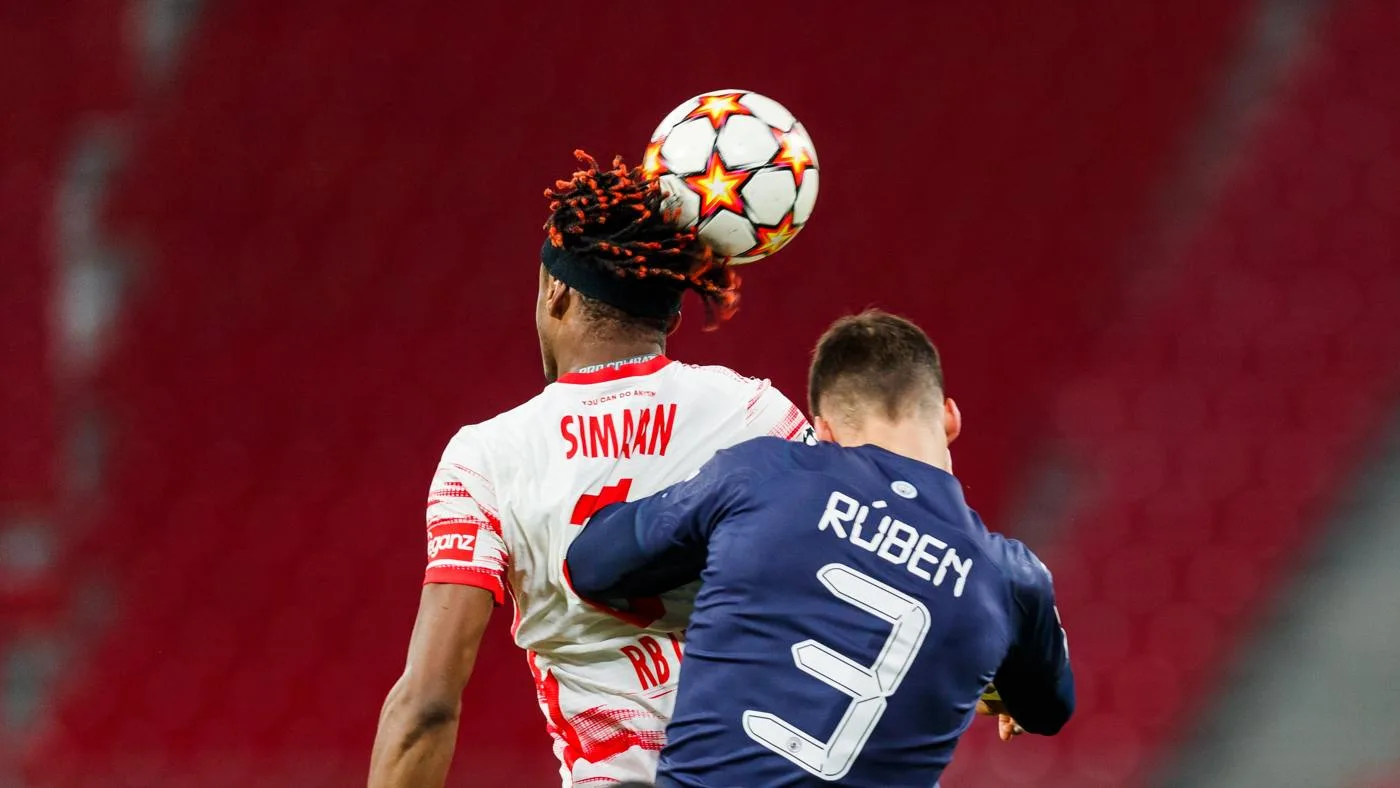
Featured archival photograph: Steffen Prößdorf / Wikimedia Commons, December 2021. Rúben Dias, right, challenges Mohamed Simakan. CC BY-SA 4.0 (https://creativecommons.org/licenses/by-sa/4.0/). Cropped and resized under the same licence; not a photograph of the Villa match.


Isiagu Tobby
Wowplus editorial contributor.