



Table of contents
New York City Marathon 2026 brings a particular anniversary to Sunday’s streets: 50 years since the race first travelled through all five boroughs. On 1 November, the sporting contest shares attention with a larger city story about neighbourhoods, public space and people showing up for one another.
There is a familiar entertainment name in the celebrations. New York Road Runners announced on 30 October that comedian and actor Tracy Morgan would serve as grand marshal. The role is ceremonial, supporting and celebrating participants; it does not mean Morgan is entered as a competitive runner.
That distinction captures the appeal of marathon day. Some people arrive to race, others to volunteer, and many simply to applaud a friend or a stranger. You do not need an elite finishing time to have a meaningful part in the occasion.
For the competitive side of the conversation, our earlier coverage of Sifan Hassan’s New York Marathon return explores the demands behind a headline performance. This anniversary looks at the setting around those performances, rather than offering predictions or unconfirmed results.
Why the five-borough anniversary matters
The race’s first five-borough edition took place on 24 October 1976. Its origins go back further, so the 2026 milestone marks the expansion of the course, rather than the first running of the marathon itself. The present route covers 26.2 miles across New York’s five boroughs.
NYRR’s Trailblazers campaign recognises Ted Corbitt, George Hirsch, Fred Lebow, George Spitz and Percy Sutton for their contributions to that change. The organisation says the campaign drew on historical research involving archival material, public records and oral history interviews. Naming several contributors gives the anniversary a more useful shape than a single-founder legend.


A route across a city also changes what an audience sees. The background becomes part of the event: residential streets, bridges, shopfronts and neighbours watching from familiar corners. A televised race can briefly turn an ordinary address into a place recognised by viewers far beyond it.
The relationship between preparation and spectacle also appears in Michelle Khare’s approach to making training the story. Marathon day offers a different version: thousands of separate preparations converge on one shared route, without becoming the same personal experience.
Tracy Morgan’s role in a much bigger cast
In its NYRR announcement, the organiser places Morgan alongside the people cheering runners towards Central Park. His presence connects the entertainment world to a community occasion. The attraction is recognisable, but the runners remain the reason for the day.
Celebrity involvement works best when it directs attention outward. A supporter may notice a famous face first, then stay with the ordinary runner taking a careful final step towards a long-planned goal. That change of focus is part of what makes a public sporting celebration feel different from a red-carpet appearance.
It is also worth keeping announcements separate from outcomes. A named participant, planned appearance or fundraising ambition is not proof of a completed race or money already received. This article is an anniversary guide, not a live results report, and makes no claim about today’s eventual winners or finish totals.
Build a cheering plan around people
For spectators, the most useful plan begins with the runner rather than a list of famous sights. Agree where you hope to stand, which side of the street you will use and what you will be wearing. A simple, recognisable sign may be easier to spot than a phone raised above a crowd.


NYRR advises spectators to use the subway and check current transport information before travelling. Its viewing guidance excludes the start and the Verrazzano-Narrows Bridge, and says spectators should remain behind barriers. Access around the finish can be limited by capacity and screening, so an attractive map location is not a guarantee of entry.
The same spirit of practical participation runs through our guide to bringing people together for a community singalong. Large occasions become more welcoming when the small arrangements work: a clear meeting point, realistic expectations and room for someone attending for the first time.
Choose fewer viewing stops than you think you can manage. Rushing between distant locations can leave a supporter underground while their runner passes above. Treat an additional stop as a possibility, rather than a promise, and make a separate meeting plan for after the race.
Let the city have its day
Watching from home can be just as deliberate. Check the organiser’s current broadcast guidance and your local provider before making plans; coverage and access differ by territory. Following a runner’s official progress can give a long broadcast a personal thread without relying on rumours in social feeds.
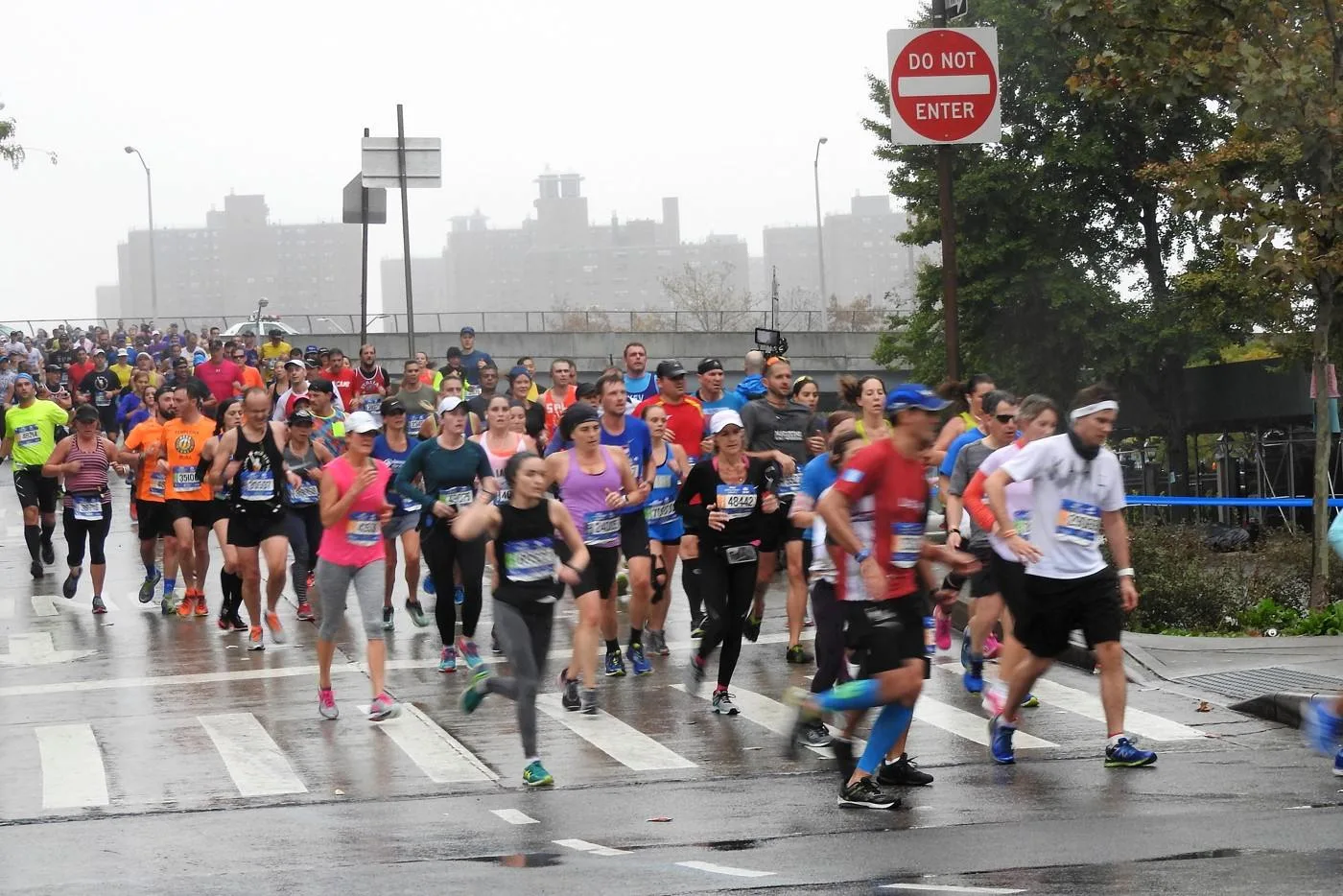
For anyone photographing the occasion, place and context matter. A wide view can show how spectators and runners share a street, while a smaller detail might preserve a handmade sign or a moment of recognition. Archive images accompanying this guide show earlier marathons, not scenes captured at the 2026 race.
The anniversary’s strongest invitation is to look beyond the stopwatch for a moment. Fifty years of the five-borough course is a story about people making space for a shared event. Whether you are running, cheering or watching from another country, that human scale is what gives the route its lasting meaning.


Isiagu Tobby
Wowplus editorial contributor.