



Table of contents
- Higher prices are doing more of the recovery work
- US movie attendance has not returned to old habits
- Premium formats are becoming a larger part of the business
- Original films still matter to a healthy box office
- Streaming and theaters are no longer simple enemies
- The current model still carries risk
- Revenue growth does not mean the recovery is finished
US box office 2026 revenue is delivering one of the strangest recovery stories in entertainment: theaters are collecting more money than they did a year ago even though far fewer people are buying tickets than before the pandemic.
Domestic box-office revenue reached about $6.2 billion through August 2, up roughly 15% from the same point in 2025. Yet attendance remains well below 2019, when more people were going to theaters and the industry had a broader base of regular moviegoers.
The gap helps explain why Hollywood is treating premium formats, higher ticket prices and event-scale releases as increasingly important. A smaller audience can still produce strong revenue when more customers are paying extra for IMAX, large-format screens, luxury seating and premium concessions.
Reuters reported that U.S. theaters generated about $6.2 billion through August 2, compared with roughly $7 billion at the same point in 2019, while ticket sales remained sharply lower than pre-pandemic levels.
Higher prices are doing more of the recovery work
The easiest way to understand the 2026 box office is to separate revenue from attendance. Revenue measures how much money theaters collect. Attendance measures how many tickets are sold.
Those two numbers can move in different directions when ticket prices rise. The average ticket price cited in the Reuters analysis was about $13.46 by July, while premium screenings averaged much more.
That shift means one customer attending an IMAX or luxury screening can generate significantly more revenue than a customer attending a standard showing several years ago.
Wowplus previously looked at the business mechanics behind how movies are financed and monetized, and the current theater recovery shows why exhibition economics matter as much as headline grosses.
US movie attendance has not returned to old habits
US movie attendance 2026 remains the weaker side of the story. Through the middle of the year, ticket sales were far below comparable 2019 levels.
That suggests theaters have not rebuilt the habit of frequent moviegoing. Many consumers now reserve cinema trips for films that feel large enough, visually distinctive enough or culturally important enough to justify leaving home.
Streaming changed expectations permanently. Audiences know that many films will become available at home relatively quickly, which makes the theatrical trip a more deliberate purchase.
That is why studios increasingly need movies that create urgency. A title must feel like an event, not simply another option in a crowded entertainment schedule.
Premium formats are becoming a larger part of the business
premium movie formats are helping theaters turn that selectivity into revenue. IMAX, Dolby Cinema, large-format screens and luxury auditoriums give customers a reason to pay more for the same film.
The 2026 performance of large releases such as Spider-Man: Brand New Day and The Odyssey shows how studios and exhibitors can benefit when audiences believe a movie deserves the biggest available screen.
That premium strategy also connects to older battles over who controls blockbuster economics. Wowplus covered the business dispute between Disney and Sony over Spider-Man, a reminder that major franchises carry enormous financial value far beyond a single opening weekend.
The more theaters rely on expensive event movies, the more power shifts toward intellectual property that can justify premium pricing.
Original films still matter to a healthy box office
The 2026 improvement is not coming only from established franchises. Reuters also pointed to successful original films as evidence that audiences will still respond when a movie feels distinctive enough.

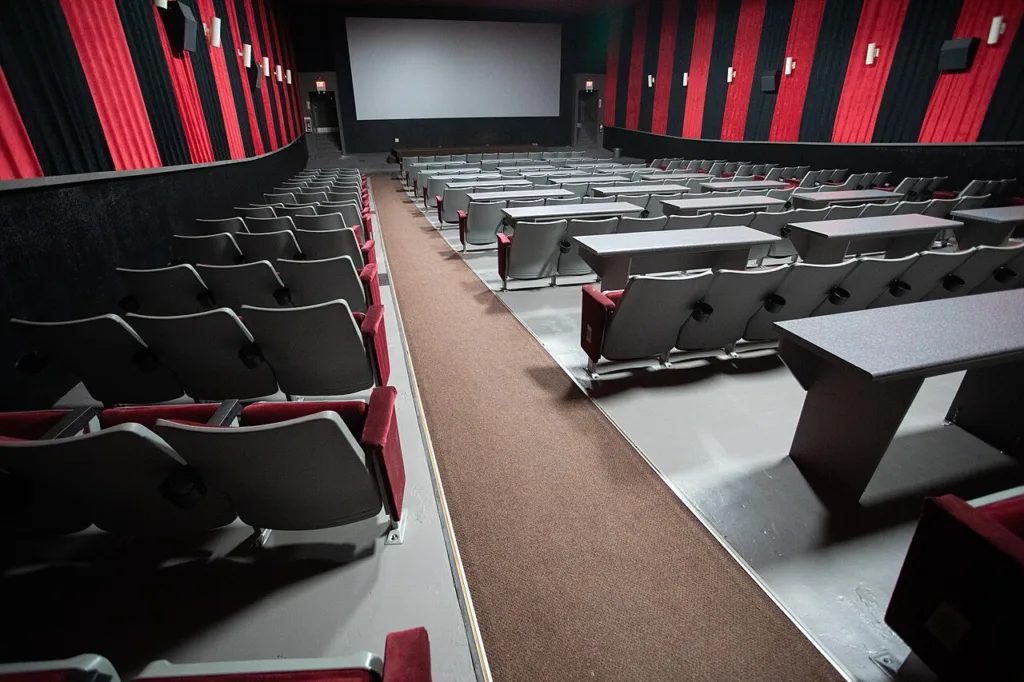
That is important because a box office built entirely around sequels and recognizable brands becomes vulnerable. If one or two major releases disappoint, there may not be enough mid-sized films to stabilize the calendar.
Original hits also help create future franchises. Every long-running property began as something audiences had not seen before.
The theater business therefore needs a balance: giant releases that drive premium revenue and smaller or original titles that give audiences more reasons to return between tentpoles.
Streaming and theaters are no longer simple enemies
The old assumption that streaming would replace movie theaters has become less useful. The two businesses now coexist, but they serve different audience needs.
Streaming is built around convenience and volume. Theaters are increasingly built around occasion, scale and communal experience.
Wowplus previously examined Netflix’s interest in using theaters for blockbuster-scale films, an early sign that even streaming companies understood the marketing and cultural value of theatrical exposure.
The 2026 numbers reinforce that idea. Theaters may not recover by persuading every customer to return as often as they did in 2019. They may recover by making fewer visits more valuable.
The current model still carries risk
Relying on higher prices and premium formats can support revenue, but it also creates a ceiling. If regular moviegoing becomes too expensive, theaters may narrow their audience even further.
That can make the industry dependent on wealthier customers, blockbuster franchises and a small number of must-see releases.
It also puts pressure on theaters to improve service. Customers paying premium prices expect comfortable seats, strong projection, good sound and a cleaner, more reliable experience.
When those expectations are not met, the price difference becomes harder to justify.
Revenue growth does not mean the recovery is finished
The most encouraging part of the 2026 box office is that revenue is moving in the right direction. Studios are releasing more varied films, premium formats are generating additional value and several titles have shown that audiences will still turn out in large numbers.
But the attendance gap shows that the business has changed rather than simply returned to normal.
Theaters are earning more from each visit while receiving fewer visits overall. That can be a workable model, but it is not the same business Hollywood had before the pandemic.
The next phase of the recovery will depend on whether theaters can keep premium pricing without making ordinary moviegoing feel like a luxury purchase.
For now, the 2026 box office is proving that fewer customers can still produce more revenue. The harder question is whether that formula can keep working for an entire industry.


Isiagu Tobby
Wowplus editorial contributor.