



Table of contents
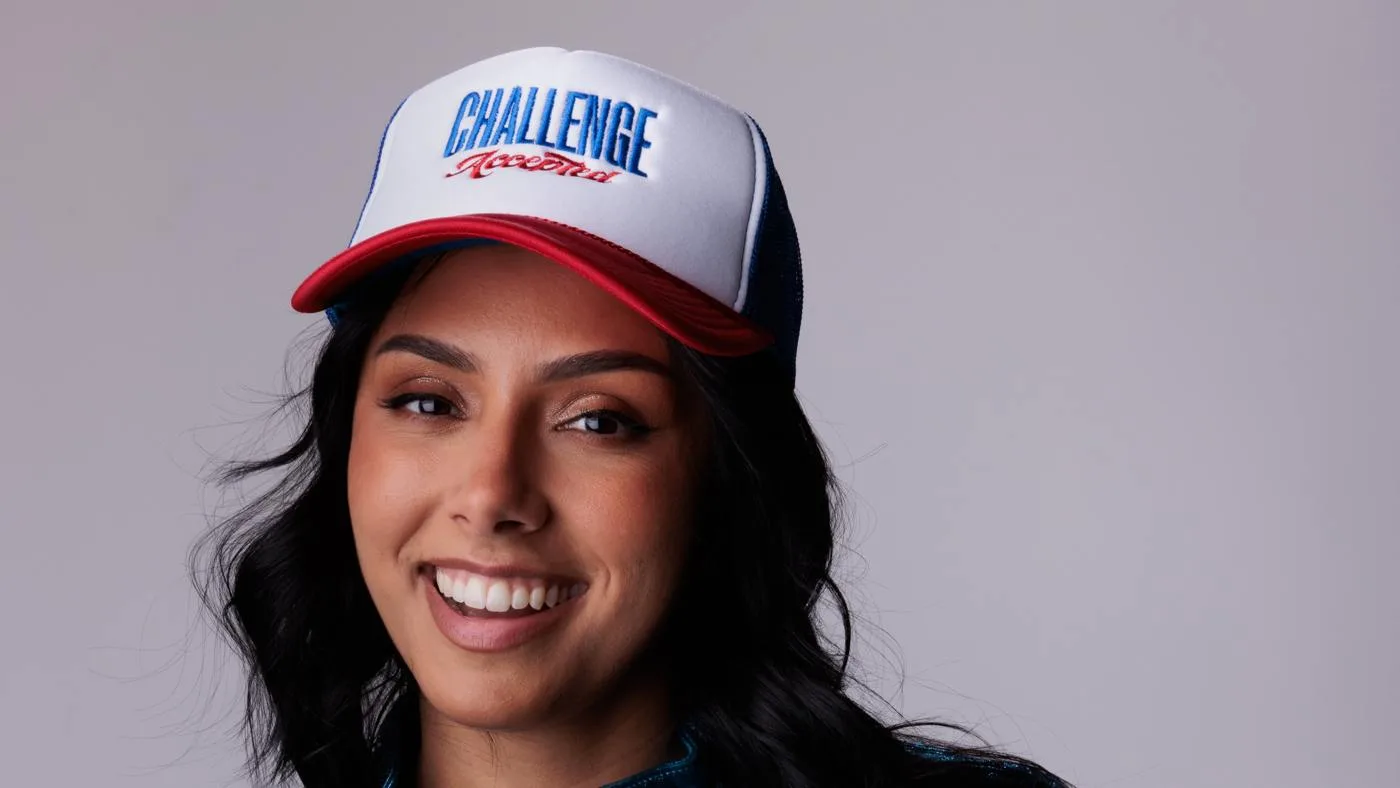
Michelle Khare’s Challenge Accepted builds its identity around a demanding question: what happens when a creator commits herself to learning something difficult? Her official account of the series ranges from a Houdini escape to an aircraft stunt and seven marathons across seven continents. The subjects vary, but the person facing the unfamiliar task gives the programme a continuing centre.
The premise has room for more than a final attempt. Preparation creates a story about progress, limits and the people who understand a discipline. That is a useful way to consider Khare’s work as a nonfiction format, alongside its more immediately eye-catching achievements.
The creator and the challenge belong together
In its May 2026 overview of creators submitting work for Emmy consideration, YouTube described Challenge Accepted as immersive nonfiction built around Khare entering demanding environments. Its account emphasised access to expertise, cinematic production and the host’s personal involvement. Those are the platform’s descriptions of the show, rather than independent audience measurements.
A recurring host gives very different subjects a recognisable connection. Viewers may arrive because of an unusual title, then return because they are interested in how that person responds to the next challenge. The format can therefore change its setting while retaining a familiar point of view.
There are other ways to connect a creator’s personality with learning. Our feature on Mark Rober’s Class CrunchLabs examines the move from filmed builds toward classroom lessons. Khare’s approach places the host’s own attempt at the centre, giving instruction and personal experience different roles within the story.
That distinction matters when watching an achievement on screen. An episode can introduce a discipline and its specialists without offering the equivalent of professional training. The entertainment comes partly from entering an unfamiliar world; the skills and judgement of people who work there remain important to understanding what the challenge involves.

A background in media and competitive sport
Dartmouth’s admissions profile identifies Khare as a member of its class of 2014 who pursued a self-designed course of study combining digital arts and media technology. The college also records her earlier work as a BuzzFeed video producer. These details place filmmaking and digital production within her career before the current series’ public profile.
A June 2013 Dartmouth report supplies a separate sporting chapter. It described Khare joining the college cycling team despite having no previous competitive cycling experience. In that season, the team won the Ivy Cup. The report names other riders as its individual national champions, so that team result should remain distinct from an individual title.
That early account is interesting because it describes somebody becoming involved in a demanding activity before it became part of a widely recognised entertainment format. It does not prove that one experience caused the later programme. It does provide documented context for the combination of physical commitment and media work in her public career.
Creator-led programmes also need an identity that survives beyond a single successful upload. Our look at Rhett and Link’s Mythical world follows another long-running format into books and museum objects. Both examples invite attention to the body of work, even though their subjects and presentation differ.
What the awards record actually establishes
Khare’s official biography says Challenge Accepted successfully petitioned to appear on the 2025 Primetime Emmy ballot in the hosted nonfiction category. YouTube’s May 2026 feature again listed it among programmes seeking consideration. Those statements concern eligibility and submission; they do not, by themselves, establish a nomination or a win.
The Television Academy’s 2026 nonfiction picture-editing ballot also lists a Challenge Accepted episode about attempting the plane-hang stunt associated with Mission: Impossible. It names Ryan Gonzales as editor. That is a specific production credit in an official record, and a reminder that a programme identified with one host involves other creative contributors.


Editing is particularly consequential for any story about preparation. The finished programme has to choose which stages to show, how to explain elapsed time and when to introduce the final attempt. These are general storytelling decisions, rather than claims about undocumented events inside Khare’s production.
The most useful discussion of recognition keeps those separate pieces of evidence intact. A ballot entry shows a work being put forward in a category. A named credit identifies a contributor. Neither requires an inflated claim about having already received the award.
A public identity built around trying
Her official biography presents the work as a mixture of perseverance, failure and demanding ambitions. It lists the Houdini escape, the aircraft challenge and the marathon project as examples. Together, those projects explain why the series can be recognised by its approach even when the physical task changes.
Our coverage of Khaby Lame’s UNICEF role considers a different use of an established creator identity. Khare’s defining vehicle remains a programme in which her participation is part of the subject. The connection with the audience depends on that continuing involvement as well as the scale of a particular attempt.
The appeal of Challenge Accepted is therefore easy to describe without reducing it to a list of stunts. It offers a familiar person facing unfamiliar demands, with a finished story built around the encounter. The strongest reason to follow that work is the opportunity to see what learning, persistence and collaboration look like within its particular form of entertainment.
Featured archival portrait: User9501XX / Wikimedia Commons, November 2024. CC BY 4.0 (https://creativecommons.org/licenses/by/4.0/). Cropped and resized.


Isiagu Tobby
Wowplus editorial contributor.