



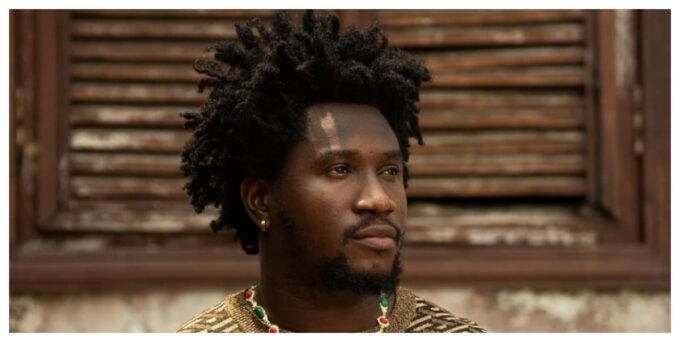

























There’s something both honest and quietly tired in the way Denrele Edun talks about love. He doesn’t dramatize it; he just lays out a sequence of small disappointments, the kind that pile up until you start to expect them. In a recent interview on The Moraya Show he spoke plainly about his love life and sexuality — not in the way people shout headlines, but like someone recounting a string of missed connections. It’s not theatrical; it’s real. Or at least, it felt that way to me when I listened.
Unreturned affection, again and again
He says he’s not been lucky at love. That line could be shrugged off as a casual complaint, but he follows it with specifics: he gives a lot, he commits, and more often than not the feeling isn’t returned. That pattern — of offering clarity and receiving confusion — repeats through his stories. He described relationships where his effort met excuses. He described attachments that “did not come out the way” he wanted. Those words carry a modest kind of grief: there’s disappointment, yes, but there’s also a resigned accounting of facts. He’s cataloguing what isn’t working.
Also read: The Subtle (and Sometimes Noticeable) Changes to Tomi Lahren’s Look Over the Years
What struck me is how the hurt is framed less as a moral failing and more as a mismatch. He insists he isn’t the problem. “I am the easiest person to love,” he says. He believes he has “so much love to give,” and from the way he speaks you can tell he means it. That insistence — it feels defensive, perhaps — but also necessary. When you’re repeatedly let down, you start to question your own role in the story. Denrele pushes back against that doubt. He claims his heart is full, even if the returns are empty.
A turn inward: loving himself, for now
There’s a pivot in what he shares: after several unmet expectations, he decided to love himself. Not in a flashy, social-media-self-care way, but in a quieter, practical sense. If relationships aren’t reciprocating, better to invest in the one person who won’t duck out. That’s sensible, and a little sad. It’s sensible because self-reliance prevents more hurt; it’s sad because the decision feels forced by repeated disappointment. He says he’s found love “in different people and places,” but ultimately chose to shift focus inward. I think many of us know that feeling — you patch the holes you thought others would mend, and then you notice how the patches stick.
Confusion versus clarity: different currencies of affection
One of the more human things he says is about clarity. He offers it freely: clear commitment, visible effort. In return, people give “confusion” and “convenience.” That phrasing is sharp and telling. Convenient relationships are a common modern malaise — people who are around when it suits them, absent when not. He seems to have the patience to keep trying, but also the growing awareness that effort without reciprocity is a dead-end. That realization is both protective and wearying. I heard the weariness as much as the wisdom.
Identity and openness: “the best of both worlds.”
Denrele also addresses his sexuality in a way that’s straightforward but not performative. He says he’s experienced “the best of both worlds.” That line is simple but layered — it acknowledges a fluidity or openness without turning the conversation into a spectacle. He isn’t drawing attention to labels. Instead, he’s making a personal observation: he’s lived through relationships with different kinds of partners and learned from the variety. It’s the kind of remark that invites fewer questions and more acceptance. Or maybe it invites curiosity, but he chooses calm clarity over drama.
Also read: New Twist on the Joe Alwyn Rumor That’s Got Swifties Heated
Small contradictions that feel real
There are moments in his account where feelings shift or lightly contradict each other — and that’s okay. One minute he insists he’s easy to love; the next he says people didn’t reciprocate his commitment. One moment he seems hopeful about finding love in unexpected places, and the next he retreats to self-love. That toggling back and forth is exactly what makes his story human. People are rarely neat. We hold opposing ideas: trust and caution, generosity and self-preservation. That friction is part of the texture.
Why this resonates
I think what resonates is how ordinary it all sounds. Not glamorous, not a public spectacle. Just someone who keeps trying and keeps getting the short end of the stick. And rather than demand pity, he maps it out — the efforts he made, the ways people let him down, the decision to love himself for a while. There’s a level of calm in that honesty that I appreciate. It’s not all healed up, though. You can hear traces of hurt under the steady words.
Also read: Celeb Parents Accused of Inappropriate Behavior by Their Kids
A tentative hope, left open
He doesn’t close the book on love. He doesn’t say he’ll never try again. Instead, he rearranges priorities: for now, self-love; later, perhaps, something different. It’s a practical pause. That openness — not to be dramatic, but to protect himself — feels reasonable. Maybe love will surprise him. Maybe not. Either way, he’s learning to value his own steadiness, which is something we can all learn from, I suppose.





![Seyi Law makes U-turn, apologizes for saying Nigeria is safer than 10 years ago [Video]](https://wowplus.net/wp-content/uploads/2026/02/seyi-law-makes-u-turn-apologizes-for-saying-nigeria-is-safer-than-10-years-ago-video-200x200.jpg "Seyi Law Backtracks on “Safer” Nigeria Comment 135")
![Older men allow you get away with a lot of things – Joke Silva [VIDEO]](https://wowplus.net/wp-content/uploads/2026/03/older-men-allow-you-get-away-with-a-lot-of-things-joke-silva-video-200x113.jpg "Why Older Partners Sometimes Make Life Easier 140")



Leave a comment