Table of contents
Gillian Jacobs’s career moves between places that do not initially look alike: a community-college study group, a troubled modern romance, an animated superhero story and a documentary about teenage robotics teams. The connections become clearer when the work is placed in sequence. Acting made her familiar to several audiences, while directing created another way to choose which people and stories would receive attention.
Britta Perry in Community remains a useful starting point. Sony’s official material identifies Jacobs with Britta and places her in the Greendale study group alongside performers including Joel McHale, Alison Brie, Danny Pudi and Donald Glover. The ensemble structure matters because much of the comedy depends on how a character reacts to the others, rather than on an isolated performance that can be separated from the group.
Our Donald Glover career profile follows another member of that ensemble into different work. The comparison is useful without making their later paths identical. An enduring comedy can remain a shared reference for viewers while its actors develop separate interests, and Jacobs’s later work supplies several examples of how broad those interests became.
A familiar comedy role opened onto different formats
Netflix’s Love offered a different kind of recurring role, with Jacobs playing Mickey opposite Paul Rust’s Gus. The service describes the series as a relationship comedy and lists three seasons. Its premise puts an evolving relationship near the centre of the story. That gives a career retrospective a contrast with Community’s larger study group, while leaving room for viewers to decide which style of comedy connects with them.


Directing was already part of the record during that period of recognition. FiveThirtyEight released The Queen of Code in January 2015 and credited Jacobs as its director. The short documentary concerns computing pioneer Grace Hopper. It placed her behind the camera telling someone else’s story, rather than using the documentary form to explain her own fame or extend a fictional character’s life.
That distinction is central to the directing strand. A performer works within a role, a script and a production’s shared decisions. A documentary director also helps determine which voices and experiences a viewer encounters. Those are broad differences between the jobs, not a claim that any director controls every element alone. In Jacobs’s case, the credited projects show the two practices existing alongside each other.
Film acting continued too, with our 2022 archive listing for The Contractor recording another screen project. A selected biography cannot reproduce every credit, and one title should not be made to represent an entire phase. It can, however, show that a move into documentary directing did not mean abandoning appearances in scripted feature films.
Documentary directing brought other people’s stories forward
In 2022, Disney+ announced More Than Robots as Jacobs’s feature-length documentary directing debut. The film follows four teenage teams preparing for the 2020 FIRST Robotics Competition, including teams from Los Angeles, Mexico City and Chiba, Japan. Its announced SXSW premiere was March 14, followed by a March 18 streaming release. Those dates belong to the film’s original launch.


The official description follows the teams through design work, resource constraints and disruption from the pandemic. It gives the competition a human context without making the machines irrelevant. Alongside The Queen of Code, the project establishes a recurring documented interest in people working with technology. That is a connection between the subjects of two films, rather than proof that every future directing choice will follow the same theme.
Marvel’s 616 adds another nonfiction credit. Disney’s announcement identified Jacobs as director of Higher, Further, Faster, an episode about women working in the comics industry and questions of representation. The project extends the directing record beyond the two technology-focused titles. It also demonstrates why a biography benefits from naming the actual episode or film instead of treating all nonfiction work as one undifferentiated category.
Our archive guide to different approaches to music documentaries offers a wider comparison of the form. These are separate productions by other filmmakers. The useful connection is structural: nonfiction can follow a competition, reconstruct a life or examine a creative field, and the choice of approach changes what an audience learns about the people involved.
Historical drama and animation widen the record
Jacobs’s dramatic work includes Mary Jayne Gold in Netflix’s 2023 limited series Transatlantic. The service explains that the series draws on historical people and a historical novel while also fictionalising parts of the story. A biographical account should preserve that distinction. Playing a person in a dramatised rescue story is different from directing a documentary about a real person, even when both invite viewers to explore history afterward.
Voice acting provides a further contrast. Amazon’s current Invincible guide identifies Jacobs as Atom Eve and confirms that all episodes of season four are available, with fifth and sixth seasons announced. The character reaches viewers through animation, so the voice is one component of a performance built with artists and other production teams. The credited role belongs in the same career record as the live-action work.
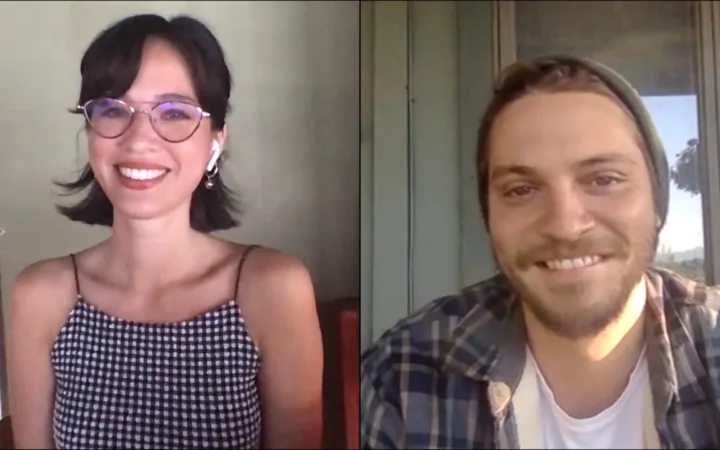
Taken together, Community, Love, Transatlantic, Invincible and the directing projects show a career that is easier to understand by following the work than by attaching one label. The archive photographs here record individual public appearances rather than scenes from those productions. For anyone starting with a single familiar role, the rest of the record offers several different routes into Jacobs’s acting and filmmaking.


Isiagu Tobby
Wowplus editorial contributor.