




Table of contents
Orionid meteor shower 2026 viewing plans need one detail beside the peak date: a bright Moon will share the sky. The shower reaches its peak overnight on October 21–22, according to NASA’s October guide. Fainter meteors may be difficult to see while moonlight brightens the background, making the hours after local moonset a more useful possibility than an entire night spent waiting outside.
The Orionids are an annual event caused by debris from Halley’s Comet. Earth moves through that material, and small particles produce streaks of light as they enter the atmosphere. Halley itself is not returning for this week’s display. The recurring shower comes from material the comet left behind, so an Orionid sighting does not require the comet to be nearby.
That is a different kind of story from an unexpected bright visitor, such as the meteor reported over Vancouver in 2022. A shower gives observers a period of increased activity to plan around. It still cannot promise that a particular person, standing in a particular garden, will see a streak at a specified minute.
Read the peak date alongside local conditions
The American Meteor Society lists October 21–22 as the peak night and October 2 to November 7 as the 2026 activity period. Its calendar describes the Orionids as a medium-strength shower. Typical maximum rates are around 10–20 shower meteors per hour under suitable conditions, rather than an assurance that each observer will count that many.
The same calendar identifies a waxing gibbous Moon at the peak. The practical effect is straightforward: a brighter background makes faint streaks harder to distinguish. Cloud, haze, nearby lighting and the height of the shower’s radiant add further differences between locations. A published rate should therefore be read as context for the event, rather than a result to measure your evening against.


Check a location-specific sky calendar for moonset, sunrise and the position of Orion before choosing an alarm time. A clock time quoted for another city may not describe your own dark-sky window. Check the weather again before leaving home, too. If the sky is covered, changing a viewing position within the same cloudy area will not restore a clear view.
Our 2023 coverage of December meteor watching belongs to a different shower and season. It is a useful reminder to check the year as well as the event name. An old guide’s darkness, weather or Moon conditions should not be carried forward automatically into a new observing plan.
A comfortable view needs very little equipment
In its current monthly guide, NASA recommends a dark location, time for the eyes to adjust and looking up. The meteors appear to radiate from Orion’s direction, but they can cross other parts of the sky. There is no need to keep your gaze fixed on one small point as though waiting for an object to emerge from a telescope.
A reclining chair or somewhere comfortable to sit can make a short session easier. Bring layers suited to the actual local weather, a drink and whatever lighting is needed to reach and leave the spot safely. Choose a location where you have permission to be. An open view from a familiar place may make a better outing than a difficult journey to an unfamiliar dark site.
Give the evening a manageable shape. Decide who is coming, how long you can comfortably stay and what will make you head home. Children or first-time observers may enjoy identifying a few stars even if the meteors are sparse. A plan that allows for an ordinary quiet sky is more enjoyable than one built around an expectation of continuous shooting stars.
Cameras sometimes record events their owners did not notice at the time, as in the 2024 report of a meteor captured in New Brunswick. Those striking clips are selected moments. They are not a guide to how busy the sky will look during an unaided-eye session, and filming is an optional extra rather than a requirement.
Know what the photographs are showing
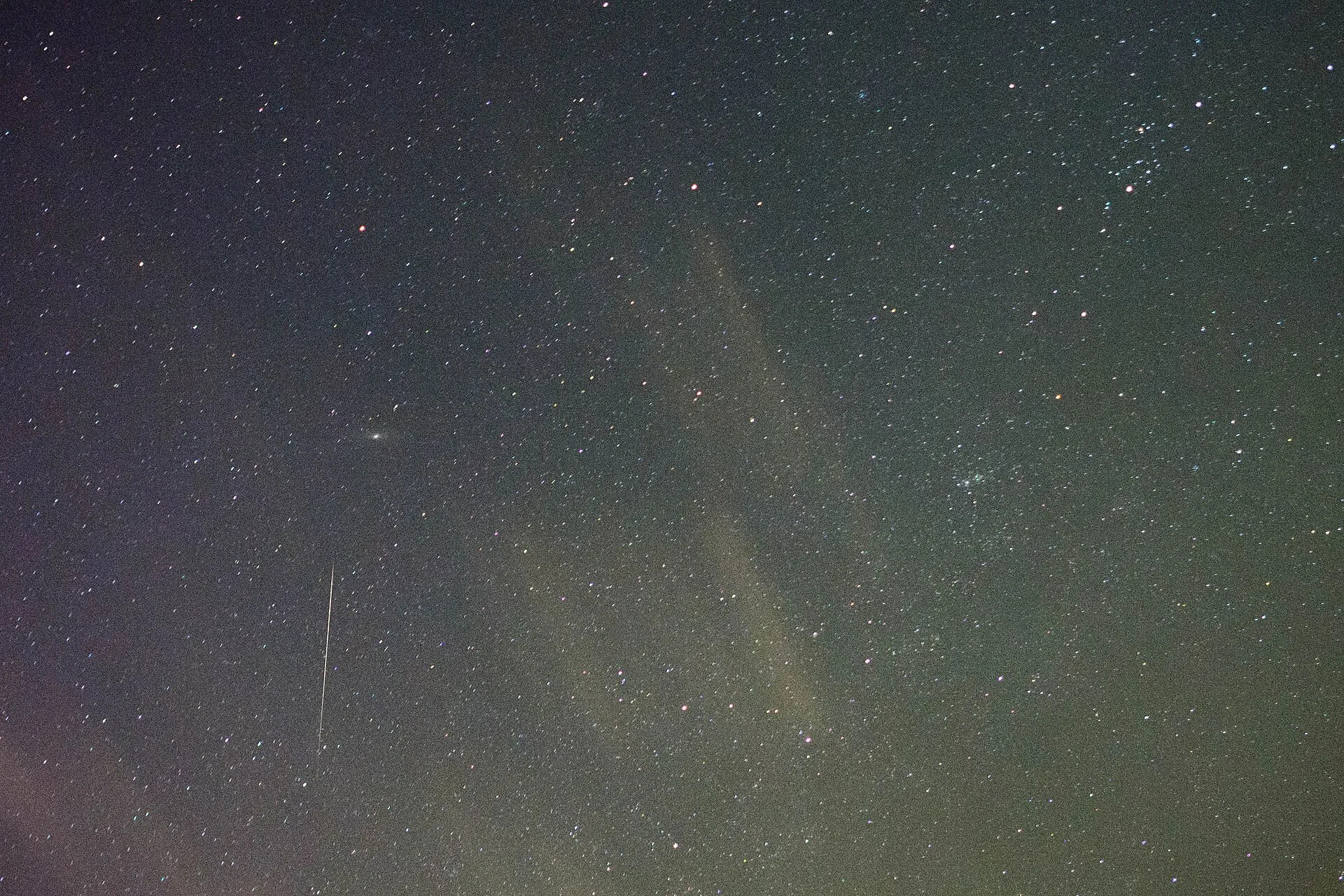
Images illustrating meteor stories can come from earlier years, long exposures or several combined frames. The archive photographs accompanying this article are identified as older Orionid observations. They do not show an event that has already happened in October 2026, and they should not be read as a prediction of the number or brightness of meteors a viewer will see this week.


The Planetary Society’s guide explains that the shower can be seen from both hemispheres, with local conditions determining the experience. It also points observers towards the late-night and predawn hours. That broad advice is a starting point for a local plan, not a reason to ignore cloud, access restrictions, fatigue or the need to return home safely.
For the week ahead, put October 21–22 in the calendar, check your own moonset and weather, and keep the outing simple. A few clear streaks would be a rewarding result. Even a brief look at Orion can make the early start worthwhile, provided the night is planned around what the sky can realistically offer rather than a dramatic image on a screen.


Isiagu Tobby
Wowplus editorial contributor.