







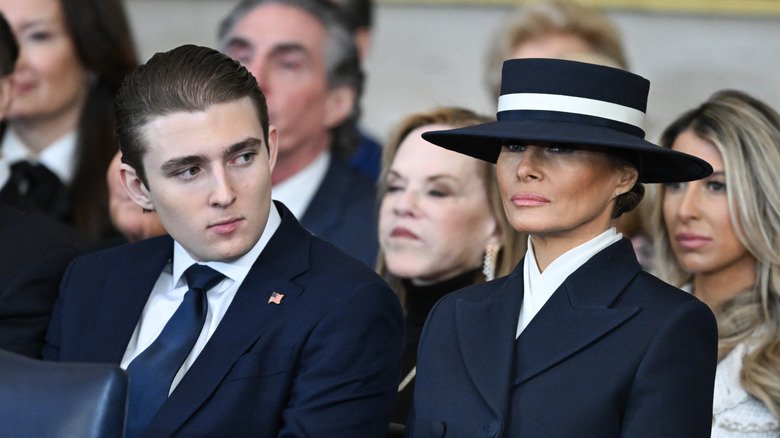
The Mar‑a‑Lago Christmas dinner was supposed to be low‑key, hush‑hush — private family time with a clear rule: no photos, no videos. And yet, in a way that feels typical for our era, the moment didn’t stay private. A couple of short Instagram clips put Barron Trump at the center of attention, and suddenly the dinner table became a small scene of conflict over boundaries, etiquette, and how much of a public life a teenager should have.
A boy in the doorway
If you watched the clip shared by Russian model Valeria Sokolova (who also goes by Valeria Berkland), the image is simple and a little telling: Barron walking through the dining area behind his father, President Trump, taller than many of the adults around him, drawing eyes the way young people sometimes do. It’s awkward, and not in a staged way — more like a real instant that someone caught because they couldn’t help themselves. Another model and influencer, Abla Sofy from Morocco, reportedly posted similar footage, and that drew the ire of Melania Trump.
According to insiders, the first lady was blunt: Barron’s privacy is off limits. Guests were warned before the event — “no cameras, no leaks” — and the consequence for crossing that line, the story goes, could be an immediate ban from the club. That’s the kind of boundary a parent sets when they want a moment to stay, well, a moment. I get that. But of course, social media exists to rupture those boundaries. People post what feels noteworthy, and for many, a president’s teenage son is that.
Also read: Karoline Leavitt’s Pink Moment — Pretty, Perplexing, and a Little Petty
Moments and consequences

Now, were either of the influencers punished? It’s murky. Sokolova kept her Christmas post up, and Sofy still has multiple photos from other Mar‑a‑Lago events on her account, including clips from the Trumps’ New Year’s celebration. So, either Melania ultimately decided not to enforce a ban — or enforcement is harder than simply issuing a threat. We live in an age where policing what someone posts is often like trying to hold water in your hands. Once content exists, it spreads; once it’s on someone’s phone, it can be shared a dozen ways before a host even knows.
Still. I can see both sides. From Melania’s perspective, a rule was set and a family matter was exposed. From the influencers’ perspective, they were at a high‑profile event where people expect to be photographed — and some of them probably felt the posts were harmless. That tension is normal, messy, and, well, human.
A pattern, not a one‑off
This wasn’t the first time Melania reacted sharply to someone sharing private moments involving her son. Earlier — not long before the Christmas dinner — a pastor named Stuart Knechtle posted about a private phone conversation with Barron, claiming he’d been trying to convert him. He told a podcast host that the call went late and that he thought conversion was possible. Public reaction aside, Melania reportedly felt that the pastor had betrayed a confidential exchange and was furious. The word “betrayal” comes up in the accounts, and that fits because parents often respond to perceived breaches of trust more emotionally than we might expect.
Melania’s repeated insistence on discretion is consistent. She has publicly emphasized the importance of keeping family life away from the spotlight. That’s not just image control; it reads like a real desire to shield a child from the relentless glare that comes with his family name. Barron spent a recent semester close to the White House, at NYU’s D.C. campus, which suggests the family wanted him near home — a practical move, maybe, but also protective.
Why it matters, a bit
You can read the story purely as celebrity drama: influencers, social posts, and a first family reacting. But there’s a slightly deeper beat here about modern privacy. We often pretend privacy is a choice we make and that rules posted at an event are simply instructions, easily obeyed. Yet the contemporary blur between public and private complicates that: people attend high‑profile events with phones glued to their hands; audiences expect content; influencers rely on posts to maintain relevance. So even strict household rules collide with social media economies and instincts.
And then there’s the human element: a mother getting protective, a teen wanting some normalcy, and attendees torn between politeness and the social pressure to post. None of this is tidy. It’s noisy, contradictory, and sometimes petty — but also relatable in a way. Many people have had the uneasy feeling of seeing a private photo shared without consent, or of watching someone cross a boundary you care about. That discomfort is what makes the story land beyond the tabloid headline.
Also read: The Erika Kirk Story — Fame, Grief, and the Questions Left Hanging
A family line drawn
Ultimately, the episode shows lines being drawn and then tested. Melania’s messaging was clear: Barron’s privacy is non‑negotiable. The apparent posting of videos suggests either a lapse in judgment or a deliberate choice to flout that rule. Whether consequences were applied is unclear, but the clash itself tells us something about modern life: boundaries matter, but enforcing them is getting harder. I don’t know anyone who thinks that privacy should be dead; most of us — including public figures — try to carve out protected spaces. Yet those spaces are fragile these days.
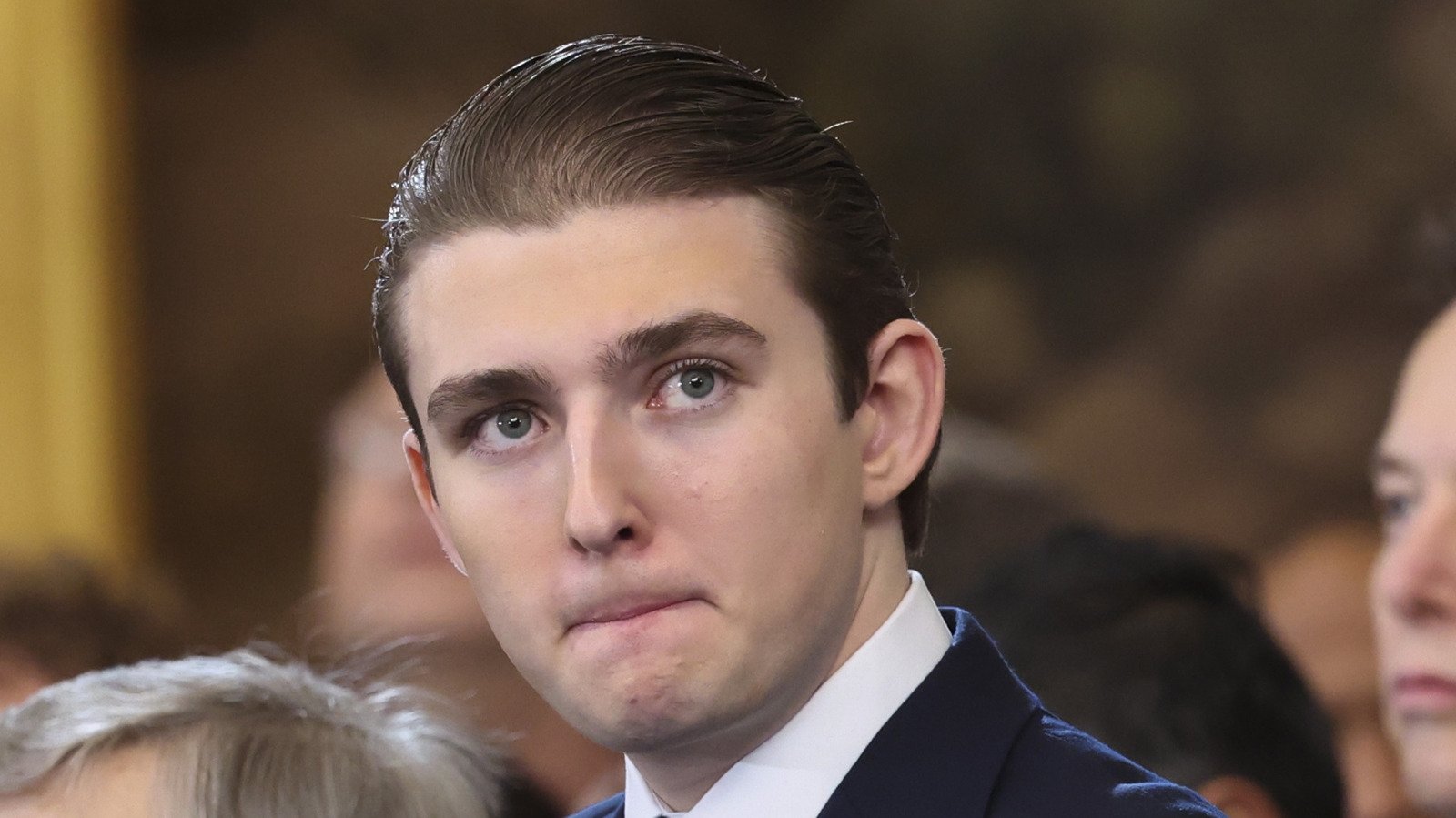
There’s also an odd poignancy in watching a teenager become a focal point for this kind of debate. Barron isn’t a politician; he’s a kid. And seeing him in those brief clips — awkward, tall, maybe a little self‑conscious — reminds you that real people, with complicated lives and ordinary needs, sit inside these public moments. That’s worth remembering, even as the social media cycle churns on.

![Seyi Law makes U-turn, apologizes for saying Nigeria is safer than 10 years ago [Video]](https://wowplus.net/wp-content/uploads/2026/02/seyi-law-makes-u-turn-apologizes-for-saying-nigeria-is-safer-than-10-years-ago-video-680x680.jpg "Seyi Law Backtracks on “Safer” Nigeria Comment 136")
![Seyi Tinubu is threatening my life – VeryDarkMan cries out [VIDEO]](https://wowplus.net/wp-content/uploads/2026/02/seyi-tinubu-is-threatening-my-life-verydarkman-cries-out-video-200x120.jpg "“I’m Scared — VeryDarkMan Says Seyi Tinubu Threatened Him” 137")



![Seyi Law makes U-turn, apologizes for saying Nigeria is safer than 10 years ago [Video]](https://wowplus.net/wp-content/uploads/2026/02/seyi-law-makes-u-turn-apologizes-for-saying-nigeria-is-safer-than-10-years-ago-video-200x200.jpg "Seyi Law Backtracks on “Safer” Nigeria Comment 145")


Leave a comment