Table of contents
Denise Richards has a familiar face, but familiarity can obscure the work happening behind it. A film character, a soap role and an appearance as herself each require a different kind of preparation. Her interviews offer a useful way into that working life: follow the scene, the collaborators and the choices she can actually explain.
In a May 25, 2026 interview with PEOPLE, Richards, 55, discussed reprising Shauna Fulton on The Bold and the Beautiful, with an appearance announced for May 28 after four years away. Her enthusiasm centred on the people and the practical demands of the set.
Her public career also includes a documented OnlyFans account, which she discussed directly with ABC News in March 2025. Our earlier look at Richards’ subscription work alongside television examines that wider career mix. Here, the focus is the craft that makes those different kinds of screen presence possible.
Denise Richards breaks a demanding day into scenes
Richards recalled an original first day involving more than 50 script pages. Rena Sofer advised her to approach them one scene at a time. She described soaps as valuable training, with substantial dialogue and a quick production rhythm.
That advice is practical because a scene has a manageable shape. A performer can ask what a character wants, who is listening and what changes before the scene ends. A large stack of pages becomes a sequence of smaller encounters. Preparation supports the performance without needing to become visible in it.
The challenge also belongs to a group. A scene depends on the other actors being ready, the technical work happening around them and everyone understanding the pace of the production. Experience can help a performer recognise those demands, while a new setting can still require learning its particular rhythm.


Film work leaves room for different kinds of courage
In a STARBURST interview, Richards recalled screen-testing with Pierce Brosnan in London for The World Is Not Enough. She also described nerves before a first scene with Judi Dench, despite having only a small amount of dialogue. During the submarine action sequences, the familiar presence of Vic Armstrong, whom she knew from Starship Troopers, helped her through difficult work.
The account makes the finished film look less effortless in a useful way. Confidence can grow through preparation and through trust in the people around you. A short scene can feel demanding because there is little room to settle into it. A complicated action sequence creates a different challenge, with movement and timing shaping the performance.
Richards also discussed Carmen Ibanez, her Starship Troopers character, as a young woman who chooses a career when faced with a decision involving her relationship. That is a specific way of reading the role: through what the character values and chooses, rather than simply through how she appears.
Different genres make different demands on an actor. Our profile of Toni Collette’s work across screen genres follows that question through another career. In Richards’ case, her recollections draw attention to the people, decisions and practical circumstances inside individual productions.
Dark humour offered another way to play a role
Speaking at a press conference reported by UPI in March 2024, Richards explained that the dark humour attracted her to Hunting Housewives. She played Karla Dodds in a story about friends whose planned getaway becomes a struggle for survival. The tone gave her something different to explore from the more dramatic Lifetime projects she had known.
She also described a connection with Karla’s background: both had experience of a more modest upbringing than the character’s later circumstances might suggest. Richards spoke warmly about the cast bonding, a connection she considered important for a story built around the women’s relationships.
Those details show two routes into a performance. One begins with the script’s tone: how funny, tense or uncomfortable a moment should feel. The other begins with a recognisable experience that helps make a fictional person less abstract. Neither requires the actor and the character to share an entire life.
Appearing as herself changes the assignment
At the same press conference, Richards said reality television could feel more challenging because appearing as herself left her feeling vulnerable. A script and a character created a different environment. She also said she enjoyed both forms. Her account allows for interest and discomfort to exist within the same choice.

That distinction becomes especially useful when an audience knows a performer through several formats. A fictional scene asks viewers to believe in a character for its duration. A reality programme invites them to interpret the person on camera. The expectations change, even when the face remains immediately recognisable.
In a March 2025 conversation with Interview magazine, Richards recalled people associating her with her Wild Things character. She also described Alex Baskin approaching her about a family reality series and wanting participants to have their own voices. These are dated explanations of how she thought about presenting public life, without establishing complete control over a programme’s final edit.
Public access still has a context
Richards’ March 2025 ABC News interview directly addressed her OnlyFans participation. She said support for her adult daughter after public criticism influenced her decision to join. That is her stated explanation for a public choice. It does not require speculation about private finances, or assumptions about what her account offers now.
A creator’s explanation can change how an audience reads a familiar image. That principle also informs Neyleen Ashley’s account of choosing personal boundaries. The circumstances differ, but each story becomes more precise when the subject’s own public statements carry more weight than an audience’s assumptions.
Richards’ STARBURST conversation also described enjoying conventions, meeting people who value her work and reconnecting with fellow actors. That is another defined setting for access: a public event organised around shared memories of films and television. Recognition becomes an opportunity for a conversation about the work.
Across these interviews, a coherent portrait emerges from small professional decisions. Learn the scene in front of you. Listen to the people who know the set. Find the character’s reason for making a choice. Decide how to speak when the person on camera is yourself. The interest lies in those actions, and in the care a familiar performer continues to bring to them.
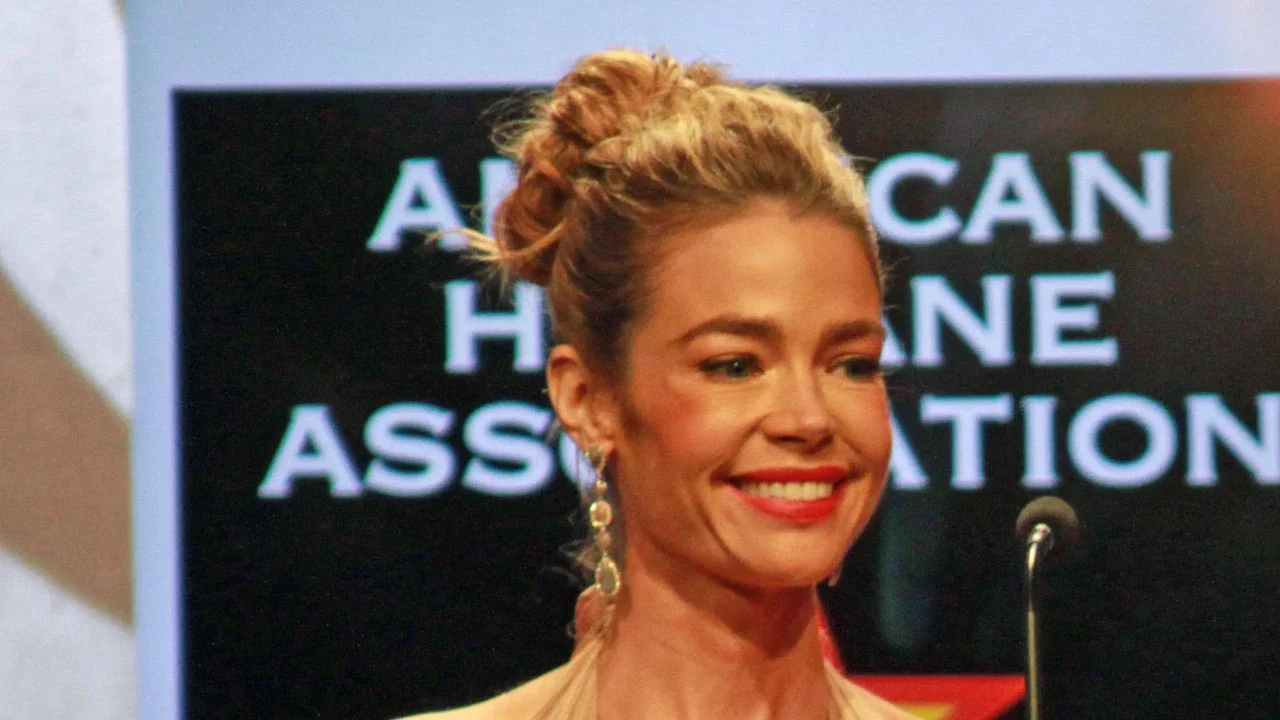
Featured archival portrait: Denise Richards at the American Humane Association Hero Dog Awards, October 6, 2012. Photograph: State Farm, CC BY 2.0, via Wikimedia Commons. Cropped from a photograph with Kellie Martin, resized and converted to WebP. Source: commons.wikimedia.org/wiki/File:Denise_Richards_and_Kellie_Martin_2012.jpg. License: creativecommons.org/licenses/by/2.0/.


Isiagu Tobby
Wowplus editorial contributor.