


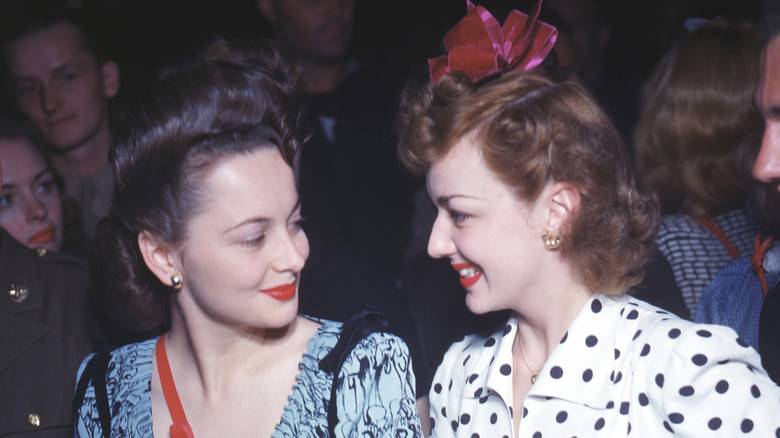
Long before celebrity feuds filled social media timelines, Olivia de Havilland and Joan Fontaine were already living through one of Hollywood’s most brutal family rivalries. Their feud lasted for decades, stretching across childhood, fame, marriages, Academy Awards, and even old age.
Honestly, calling it “sibling rivalry” almost feels too soft for what happened between them.
The sisters, born just 15 months apart, became legendary actresses during Hollywood’s golden era. Olivia de Havilland starred in classics like Gone with the Wind, while Joan Fontaine became famous for Alfred Hitchcock films including Rebecca and Suspicion.
But despite both becoming screen icons, their relationship behind the scenes was reportedly filled with jealousy, resentment, competition, and emotional wounds that never truly healed.
Also read: Carol Burnett Admitted One Painful Habit Slowly Damaged Her Marriage To Joe Hamilton


According to Joan Fontaine’s memoir, the tension began almost immediately during childhood. She claimed they were raised in an environment where competition between them was practically encouraged.
As children, they reportedly fought constantly — physically and emotionally.
The stories from their younger years honestly sound shocking even now.
Also read; Sarah Ferguson’s Spending Habits Reportedly Frustrated Royal Staff, Explosive Book Claims
Their Childhood Fights Became Surprisingly Violent
Both sisters later described chaotic fights while growing up together. Since they shared a bedroom, they spent enormous amounts of time around each other, and apparently the tension only grew stronger over the years.
Olivia de Havilland once admitted she tried frightening Joan by dramatically reading Bible passages about crucifixion out loud. In return, Joan reportedly copied and mocked everything her sister said.
But the rivalry didn’t stop at childish teasing.


The sisters allegedly pulled hair, slapped each other, wrestled, and destroyed belongings. Joan Fontaine even claimed Olivia would ruin clothes before passing them down so they couldn’t be reused.
One of the most disturbing stories came from Joan herself, who once admitted she imagined killing her sister as a child after repeated fights between them.
Thankfully, nothing like that ever happened, but the story shows just how deeply the hostility had already developed at such a young age.
And honestly, it’s hard not to wonder how much of that bitterness followed them directly into adulthood and Hollywood fame.
Hollywood Success Only Made The Rivalry Worse
When Olivia de Havilland entered Hollywood first and began building a successful acting career, Joan Fontaine soon wanted to follow the same path.
But instead of supporting her younger sister completely, Olivia reportedly tried discouraging her from becoming an actress.
Later, when Joan finally entered the industry anyway, Olivia allegedly insisted there couldn’t be “two de Havillands” in Hollywood at the same time.
That decision pushed Joan to use her stepfather’s surname professionally, creating the famous name Joan Fontaine.


Ironically, both sisters sometimes claimed they helped each other land important roles.
Joan said she recommended Olivia for “Gone with the Wind,” while Olivia later claimed she helped Joan secure opportunities too.
Still, competition between them never really disappeared.
Things reached another level at the 1942 Academy Awards when both women received nominations for Best Actress at the same ceremony.
Joan Fontaine ended up winning for “Suspicion,” becoming the first sister to take home an Oscar.
According to Fontaine, the moment felt deeply uncomfortable because decades of resentment instantly came flooding back while Olivia watched from nearby.
The tension between them reportedly became even colder afterward.
Their Personal Lives Also Became Battlegrounds
The sisters didn’t only compete professionally.
Also read: Cher and Chaz Bono’s Relationship Has Been Loving, Complicated, and Deeply Personal
At one point, Joan Fontaine married actor Brian Aherne, who had previously dated Olivia de Havilland. Later, when Olivia married author Marcus Goodrich, Joan reportedly mocked him publicly with a sarcastic remark about his marriages and writing career.
That comment reportedly upset Olivia deeply.
Even during moments that should have brought them closer, problems somehow resurfaced.


There were short periods where they became somewhat civil again, especially during the 1950s and 1960s. They occasionally visited each other, spent holidays together, and even helped each other professionally at times.
But peace between them never lasted very long.
One of the most painful moments reportedly came after their mother died in 1975. Joan later claimed Olivia informed her through a telegram rather than a phone call, and she said she almost missed the memorial because of it.
After that, the distance between them seemed permanent.
Even Their Final Years Carried Lingering Tension
As they grew older, the sisters still occasionally discussed each other publicly, often in ways that sounded polite on the surface but carried sharp undertones underneath.
Joan Fontaine once joked that Olivia would probably be furious if Joan died first because she would have “won” one final competition.
And strangely enough, that’s exactly what happened.


When Joan Fontaine died in 2013 at age 96, Olivia de Havilland released a respectful statement, though many people noticed it remained somewhat formal and restrained.
Years later, Olivia continued speaking carefully but critically about their relationship. She insisted she had never personally initiated hostility, though countless stories from both women suggested the feud was much more complicated than that.
Their rivalry even inspired part of Feud, the drama series produced by Ryan Murphy, which explored famous Hollywood conflicts.
In a way, the story of Olivia de Havilland and Joan Fontaine feels almost tragic because it lasted so long. Two incredibly talented sisters achieved extraordinary success, yet so much of their lives remained overshadowed by anger, comparison, and old emotional scars that neither fully escaped.
And honestly, maybe that’s why people still find their story fascinating decades later.