


















There’s something oddly distracting about seeing five rings stacked on a single finger. Not because they clash — they don’t; someone clearly knows how to match metals and stones — but because the visual reads loud and complicated at a moment when simplicity might have been the wiser move. Kate Middleton has long worn the sapphire engagement ring she inherited from Princess Diana, and for years that single stone did most of the talking. Recently, though, she added four more rings to create a five-ring wedding stack. The result is elegant, yes. Also, to a not-small number of people, it looks tone-deaf.
A few details: the additions were reportedly made by G. Collins & Sons, and the new pieces include a sapphire-and-diamond eternity band plus a plain diamond eternity band among others. The rings sit neatly together; the styling is obviously deliberate. From a purely fashion perspective, it’s hard to argue — the stack is tasteful. But there’s a wider context here that muddies the waters and makes what should be a personal accessory something that will be read as a public statement, intended or not.
Also read: The Intake Photo That Made Everyone Do a Double Take
Why this matters (and why people care)
There’s a simple rule in public life: appearances carry messages, whether you mean them to or not. When you’re a member of the royal family — or close to it — your choices, even jewellery choices, get interpreted as signals. And right now, the monarchy is facing questions about cost and relevance. Many people are uneasy about headlines and numbers they see attached to the royals: big valuations, reports of personal wealth, and recurring stories about taxpayer burdens. That backdrop shapes how something like a five-ring stack is received.
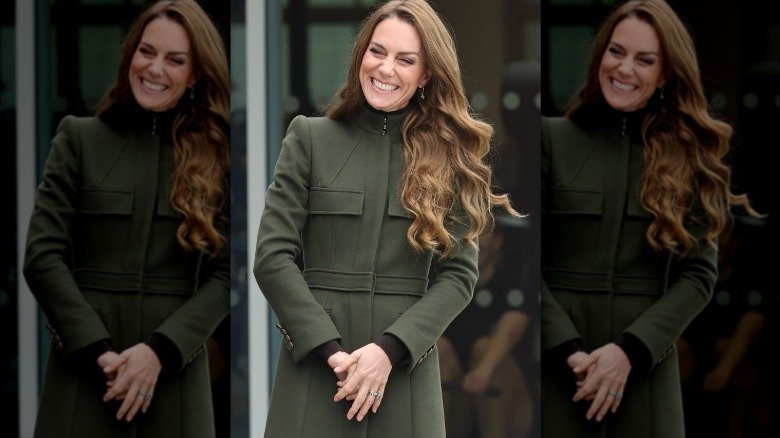 Chris Jackson/Getty
Some facts that feed into the reaction: there’s growing criticism in parts of the U.K. about the public cost of sustaining the royal household. Reports have placed the monarchy’s combined wealth at very high figures, and commentators point to a hefty taxpayer contribution toward official duties and properties. In that climate, a small cluster of diamonds — tasteful though they are — can be read as a display of excess. People notice. They compare. They judge. And social media amplifies the reaction: a look meant to be intimate becomes a flashpoint.
Not everyone is angry, of course. Plenty of people still admire the royals and see Kate’s new rings as a pretty update to a beloved heirloom. There’s an affection for tradition and continuity; some feel reassured to see the Diana sapphire still front and center. But others see the accumulation — ring upon ring — as unnecessary when questions about public spending and visibility remain unresolved.
Workload vs. image: another sore point
The debate over jewellery taps into a broader argument many critics make: the balance between the royals’ public image and the actual measure of their work. Some campaigners and commentators have accused members of the family of doing too little, while still enjoying substantial private income and public support. Quotes from Republic and other groups have been blunt: they say the palace favors a curated image of tireless service that doesn’t always match the reality.
Also read: The Intake Photo That Made Everyone Do a Double Take
Whether those claims are fair probably depends on who you ask. For instance, Royal engagements do happen, and the family does support charities and patronages. On the other hand, calls for more transparency and clearer accounting of how public money is used aren’t going away. When you add a high-profile display of jewellery into that mix, it’s easy to see why tensions flare. A ring stack becomes shorthand in some arguments: proof of privilege, or simply a distraction from the bigger picture — depending on your vantage point.
A note on fashion, personal choice, and sympathy

I don’t want to pretend this is only about economics. Fashion is personal. We make choices for reasons that don’t always line up with what the public thinks we should do. Maybe Kate added the bands to secure the heirloom ring, or to mark an anniversary, or simply because she liked the look. It’s plausible. People change their style. I’ve done it. You probably have too. But when your life is lived partly in public, those private choices overlap with public meaning.
At the same time, I get why some people are touchy. If families across the country are tightening belts and worrying about services, a sparkling stack on a public figure’s hand can feel like a small but pointed reminder of inequality. It forces an awkward comparison: what is appropriate display for someone whose role is publicly funded, at least in part? There’s no tidy answer, and that’s what makes the conversation messy — in a real way, not the curated kind.
What this moment shows us
Two simple takeaways, I guess. One: jewelry isn’t neutral for public figures. It reads as a statement, intentional or not. Two: context changes reception. In calmer times, a new ring or two might only attract fashion pages and polite interest. Now, with debates about cost and value swirling, the same rings are likely to be discussed in terms of fairness and optics.
Also read: New Chapter, Uncertain Rooftops: What Comes Next for Sarah Ferguson
Still, it’s worth remembering nuance. The stack looks well put together. It’s not vulgar, and it honors a sentimental heirloom. But that doesn’t erase the public’s right to weigh that image against broader questions about the monarchy’s role and funding. People will disagree — and they should be allowed to. The jewellery choice itself won’t settle anything, but it will continue to be a small, shining piece of a much larger conversation about visibility, privilege, and public life.









Leave a comment