



Advocates for justice system reform are welcoming new proposals from the federal government to address the overrepresentation of Black and Indigenous individuals and other racialized groups in the criminal justice system.
In the recent federal budget, the government pledged $216.4 million over five years, and $43.3 million each year after that, to divert Black and Indigenous youth and young people of colour from the courts.
The government also is proposing to give $21.5 million over five years to organizations that offer free public legal education and services to racialized communities, and to spend $26.8 million to help provinces maintain immigration and refugee legal aid support for asylum seekers.
Raphael Tachie, president of the Canadian Association of Black Lawyers, said he’s encouraged by Ottawa’s approach. The key, he said, will be how the measures are implemented.
“You worry that these are just election promises and after elections, they might not come through,” Tachie said.
“But for the most part, the conversations that we’ve had have been promising.”
Advocates say the funding will help chip away at the disproportionate number of Black and Indigenous individuals and other people of colour in Canada’s corrections system.
Indigenous people make up more than 30 per cent of the prison population, according to the Correctional Investigator of Canada, but account for only 5 per cent of the wider Canadian population. Black Canadians comprise seven per cent of federal offenders but only represent three per cent of the general population, according to government statistics.

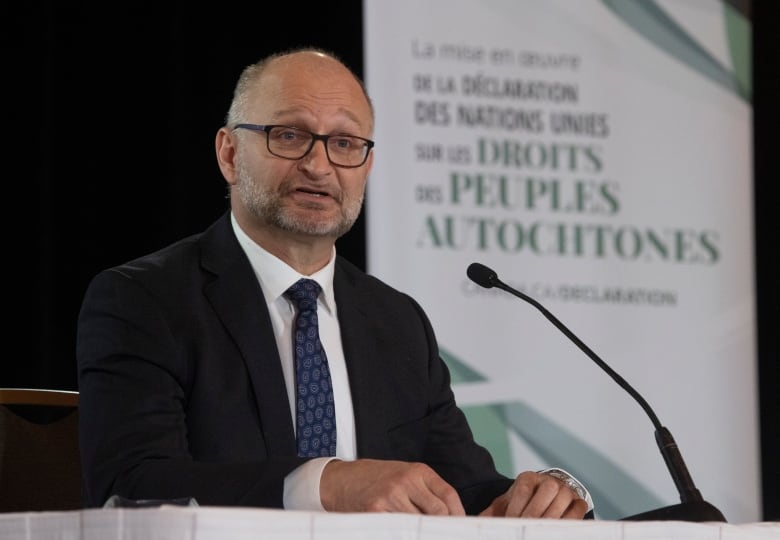
“The fundamental goal is to make the system fairer and more just for all Canadians,” Justice Minister David Lametti told CBC News.
Aaron Bains, president of the South Asian Bar Association of Toronto, also praised the budget measures but said Ottawa should not act alone. He said municipal, provincial and territorial governments also need to step up.
“It will take a multi-tiered and multi-party approach to completely eradicate racism, if that’s even possible,” Bains said.
Access to justice, pardons
For Indigenous people specifically, the budget sets aside $74.8 million over three years to improve access to justice and create a national Indigenous justice strategy, which would be modelled after a similar plan in British Columbia.
The $74.8 million includes:
- $27.1 million to help Indigenous families navigate the family justice system and community family mediation services.
- $24.2 million for Justice Canada to consult Indigenous communities and organizations about an Indigenous justice strategy and possibly other legislation.
- $23.5 million for the Public Prosecution Service of Canada to increase prosecutorial capacity in the territories.
Drew Lafond, president of the Indigenous Bar Association, said he hopes Ottawa’s approach leads to an increase in the number of Indigenous courts and better representation for Indigenous people in all levels of the justice system.
“What the current budget is reflective of, I think, is a commitment on the part of the justice minister and shows there are people within his staff who are very alive to the issues,” Lafond said.
The budget also sets aside $31.5 million over two years to co-develop an action plan with Indigenous partners for Bill C-15, proposed legislation to implement the United Nations Declaration on the Rights of Indigenous Peoples.
The budget includes $88.2 million over five years and $13 million each year following that period to create an online application portal for pardons, to reduce pardon application fees and to support community organizations helping people with the pardons process.
Ottawa also plans to set aside $40.4 million over five years, and $10 million each year after that, for 25 new drug treatment courts, which help non-violent offenders access addiction services instead of facing charges for simple drug possession.
John Struthers, president of the Criminal Lawyers’ Association, said he would have liked to see the government offer a complete pardon for simple possession.
“There are some things missing, but it is some excellent first steps,” he said.


Terry Paul
Paul Terry is a publisher and an author in wowplus.net and other news channel