
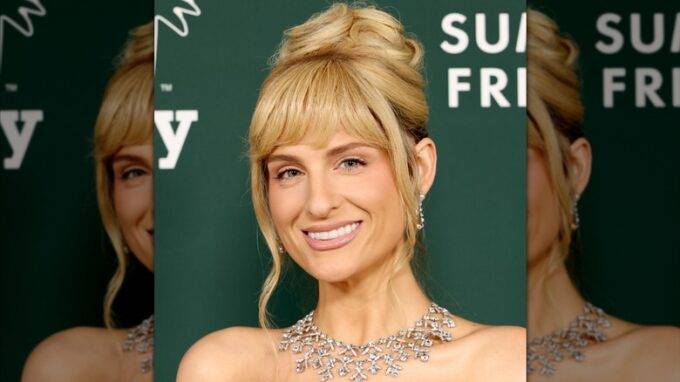








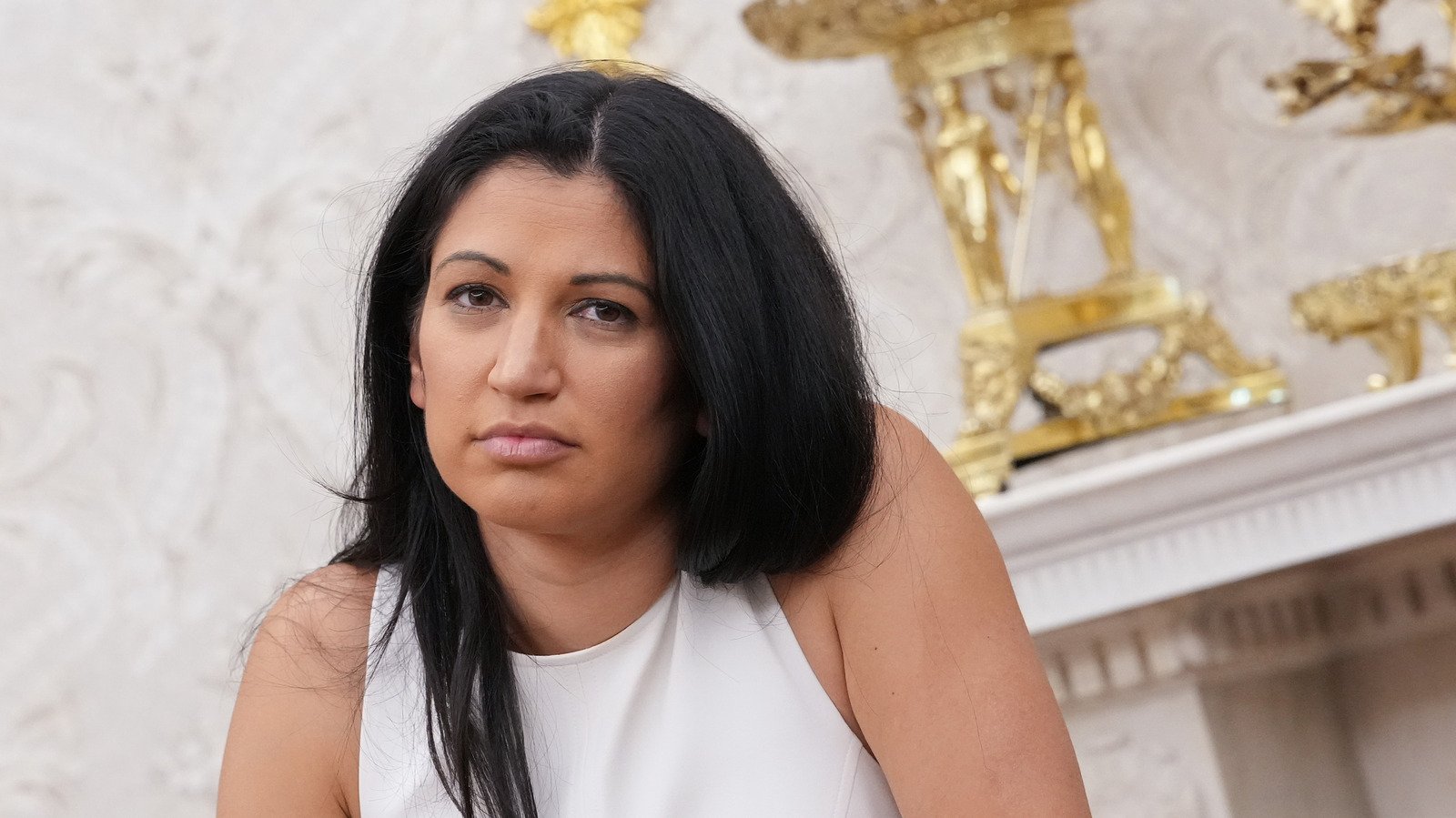
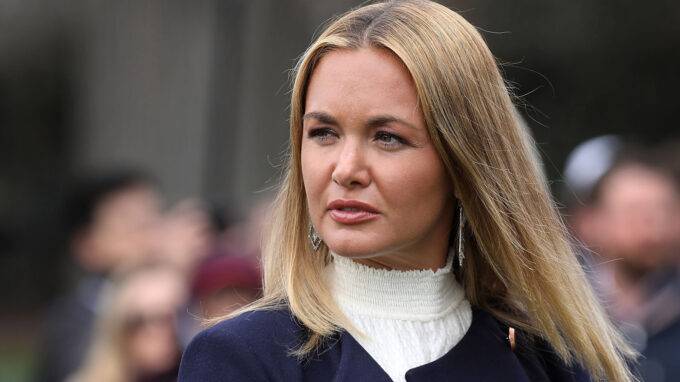
Katie Miller’s makeup has become, well, a bit of a running joke among people who follow political figures and celebrity beauty alike. It’s not savage mocking—more like a puzzled stare: why does it so often look heavy, dry, or just off? I’ll admit I find it oddly fascinating. Maybe that’s a little petty, but also — makeup is supposed to be fun, right? So when a public figure wears it in a way that consistently reads as muddled or overly made-up, it’s hard not to notice.
A familiar pattern
If you scroll through photos from different events and months, the pattern shows up again and again. The foundation looks thick in many shots, sometimes settling into fine lines and pores so that the skin feels less like skin and more like a painted mask. You can see the same telltale signs: dryness around the cheeks, a flaky finish in the corners of the nose, or a heavy dusting of powder that makes the whole face read a little stiff. Those are tiny things, sure, but repeated often enough, they form a distinct style.
Also read: Why I Stepped into Politics — Olumide Oworu’s Reasoning
There are several reasons this happens. It might be a skincare step missed — not enough moisture under the makeup, or using a product that doesn’t play nicely with her skin type. It might be shade choices that don’t exactly match her skin tone, causing a patchy, “muddy” look in certain lights. Or it might simply be over-application: too much foundation, too much powder, too many layers. The result is cakey, which ages and flattens the face rather than brightening it.
Eyes and lips that don’t quite land
Beyond the base, her eye and lip choices don’t always help. The pale pink lip shade she favors can be lovely on the right day, but when layered over a heavy base it tends to read powdery—almost like it’s trying too hard to be fresh and youthful. At the same time, occasional smoky or under-blended eye looks weigh things down. Unblended shadow or a harsh crease line makes the eyes look smaller, and yes, tired. I don’t think she intends to look sleepy; still, makeup can change how you appear more than you’d expect.
There’s also a trend among some conservatives—call it “Republican makeup”—where the finish is notable for being too matte, too powdered, or slightly mismatched in color. That trend shows up around her circle: other politicians and influencers who opt for heavy coverage, strong contour lines, and bronzer that can look unnatural in daylight. Sometimes it’s subtle, sometimes it’s full-on theatrical. Either way, it creates a visual shorthand: you start to recognize the look across different faces.
Context matters, though. Lights, cameras, and events play a role. Harsh camera flash and stage lighting are unforgiving. People working with makeup teams at public events often go heavier to combat glare or to make features read on camera. That doesn’t excuse a flaky finish, but it does help explain why some looks skew more dramatic than they might in person.
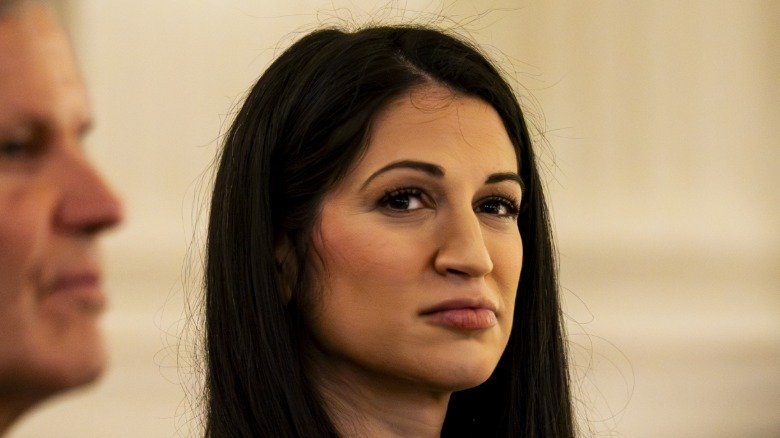 Al Drago/Getty
A style that’s shared — and not flattering
Katie’s approach isn’t unique within her crowd. You see similar results on other high-profile figures aligned with the same political sphere. Some opt for heavy contouring and vivid bronzer; others go for stark lip colors or intense, dark-lined eyes. Often, the shared aesthetic turns into a kind of group identity—uniform in its makeup choices. I find that interesting: makeup as a kind of branding, intentional or not.

Still, to be frank, that branding can misfire. Instead of appearing polished, a person can look overdone or exhausted. An orange-toned spray tan, too much bronzer across the cheeks, or a foundation a shade (or three) off will all work against the goal of looking natural and lively. Small adjustments — better hydration beforehand, lighter coverage, closer shade matching, softer eye blending — could change the whole effect. Not that it’s my job to give a beauty tutorial, but you can see how minor tweaks would help.
Also read: DNA Tests Approved Abroad to Settle Mohbad’s Son’s Paternity
Subtle signs of change
There’s also chatter about cosmetic tweaks—subtle changes around the lips or nose that hint at procedures. People notice these things, naturally. I’m not here to speculate wildly, but it’s worth noting that even small procedures alter the way makeup sits. A tweaked lip shape, for example, may change how lipstick sits at rest, or how much product is needed to get the look someone wants. That, in turn, can push someone toward a heavier application to fill or define new contours.
Why it matters (a little)
Why do any of us care how a political figure does their makeup? Partly because public figures are, well, public. They are photographed, commented on, and sometimes judged on their appearance in ways private people seldom are. Makeup becomes shorthand for the choices people make about how they present themselves—intentional or not. It can reflect an aesthetic, a team of stylists, or just a habit. I’m not saying makeup defines competence or character. But presentation is part of messaging, and so it gets noticed.
I’m not immune to enjoying the occasional beauty flop; it’s human. Yet there’s also room for a more flattering, less heavy-handed approach. Katie Miller’s look would benefit from softer blending, less powder, and perhaps a foundation closer to her natural tone. Skincare that hydrates properly under makeup could smooth out the flaky bits, too. Whether she wants that change? I don’t know. Maybe she’s fine with the look. Maybe it’s deliberate. Or maybe it’s just easier to keep doing what’s been done.
Final thought
Makeup can be expressive, strategic, or simply habitual. In Katie Miller’s case, the consistent muddy, cakey finish suggests a style choice—one that fits a broader pattern among some conservative figures—but it also leaves room for improvement. A few small swaps and a touch less product could make her appear fresher and more natural, while keeping whatever aesthetic she prefers. It’s possible to keep the polish without the mask; I think she — like anyone—could pull that off if she wanted to.








Leave a comment