























Dakota Johnson Marilyn Monroe transformation offers a first look at a new screen project that aims to explore the famous actress beyond the familiar images that have defined her for decades.
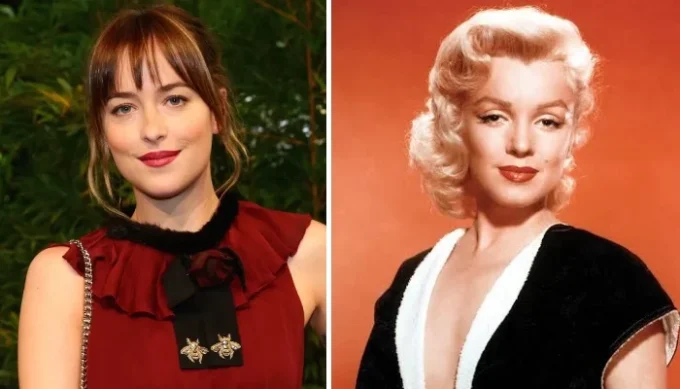
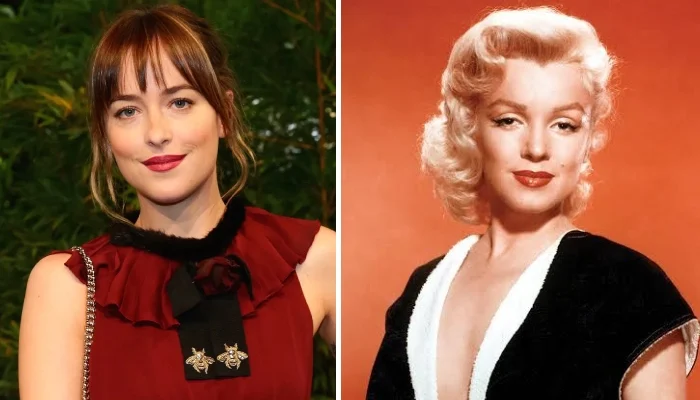
Johnson appears as Monroe in Flesh Impact, a film directed by Maggie Gyllenhaal and timed around the centenary of Monroe’s birth. Early images show Johnson with platinum hair, red lipstick and styling clearly inspired by the screen icon, but the project is being presented as more than a visual imitation.
The film also features Ellen Burstyn as an imagined older version of Monroe, alongside Sepideh Moafi and Peter Sarsgaard. That casting choice suggests the story will consider who Monroe might have become rather than simply retelling the events that ended with her death at 36.
Why playing Marilyn Monroe remains difficult
Monroe is one of the most recognisable figures in film history. Her public image has been repeated through photographs, costumes, advertising and celebrity tributes so often that any new portrayal risks feeling familiar before audiences see a full scene.
The look is only the beginning
Johnson’s transformation includes the visual details audiences expect, but copying hair and makeup cannot explain Monroe’s complexity. Her appeal came from the tension between the confident persona she performed and the vulnerability that appeared in interviews, private correspondence and accounts from people who knew her.
A successful performance therefore needs to show the work behind the image. Monroe was not simply a passive symbol created by others. She studied acting, understood the value of publicity and fought for greater control over her career. At the same time, she faced studio pressure, intrusive attention and personal struggles that were often simplified by the press.
Johnson has previously played characters whose calm appearance hides uncertainty or emotional conflict. That quality may help her avoid turning Monroe into a collection of famous gestures.
A modern audience brings different expectations
Recent films and documentaries about Monroe have received mixed reactions, especially when they focused heavily on trauma. Viewers have become more critical of stories that claim to honour a woman while repeatedly presenting her suffering as entertainment.
Flesh Impact will need to show that it understands this concern. The inclusion of an imagined older Monroe could provide a way to restore possibility to a life usually discussed through its tragic ending. It may also allow the film to ask what fame prevented her from becoming.
Maggie Gyllenhaal’s perspective may shape the difference
Gyllenhaal has said she initially hesitated before taking on the project because Monroe’s legacy is complicated and heavily interpreted. That hesitation may be useful. It suggests the director understands that another film about Monroe must justify why it exists.
The film is being framed as a love letter
Rather than promising a definitive biography, the production has been described as a contemporary reflection on Monroe. That leaves room for imagination, memory and emotional truth without pretending every scene is a documented fact.
Burstyn’s role is especially important in this structure. An older Monroe creates a conversation between the woman who lived and the life she never reached. It also shifts attention away from the familiar question of how she died and toward the less commonly explored question of how she might have continued.
This approach carries risk because imagined scenes can blur the line between tribute and invention. Clear storytelling will be necessary so audiences understand when the film is interpreting rather than reporting history.
Johnson’s casting avoids an exact physical copy
Johnson does not naturally resemble Monroe in every detail, and that may help the film. A perfect visual duplicate can encourage audiences to judge only the accuracy of the imitation. A looser resemblance places more pressure on performance, mood and emotional understanding.
The first images show that the production is using recognisable styling without completely erasing Johnson’s own face. That balance can be more effective than prosthetics or digital alteration when the goal is interpretation rather than impersonation.
What the transformation says about celebrity culture
Monroe’s image remains commercially powerful because it is simple to recognise and easy to reproduce. Her actual life was much less simple. She was ambitious, politically curious, professionally frustrated and often more self-aware than the roles assigned to her suggested.
Famous women are still reduced to a visual brand
The attention around Johnson’s hair, makeup and costume demonstrates how quickly public discussion returns to appearance. That response mirrors the way Monroe herself was often treated. Her looks opened doors, but they also made it difficult for audiences and studios to see her as a serious artist.
A thoughtful film can use that contradiction rather than repeat it. Showing the construction of the image, the cost of maintaining it and the person working behind it would give the transformation purpose.
Johnson’s participation also connects two generations of Hollywood fame. She grew up around the film industry and understands the way public identity can become separate from private experience. That background does not guarantee insight, but it gives her a relevant perspective on the pressures the role examines.
The project will be judged by more than resemblance
Flesh Impact is expected to premiere at the 2026 Venice International Film Festival. The first look has created curiosity, but the final response will depend on whether the film offers a clear reason to revisit Monroe now.
The strongest version of the project would treat her not as a mystery to solve or a tragedy to repeat, but as an artist whose public image became larger than her own voice. Johnson’s transformation can attract attention, yet the performance will matter most when the famous styling disappears into a believable person.
That is the challenge facing every new Marilyn Monroe portrayal. The audience already knows the photograph. The film must show them something the photograph cannot.









Leave a comment