
















A senior Ottawa police officer who helped oversee operational plans in the early days of what became known as the “Freedom Convoy” says the number of people and vehicles in the downtown core “exceeded expectations.”
Insp. Russell Lucas, the incident commander managing the convoy’s impacts, made those remarks while testifying on the second day of the criminal trial for two of the main convoy organizers.
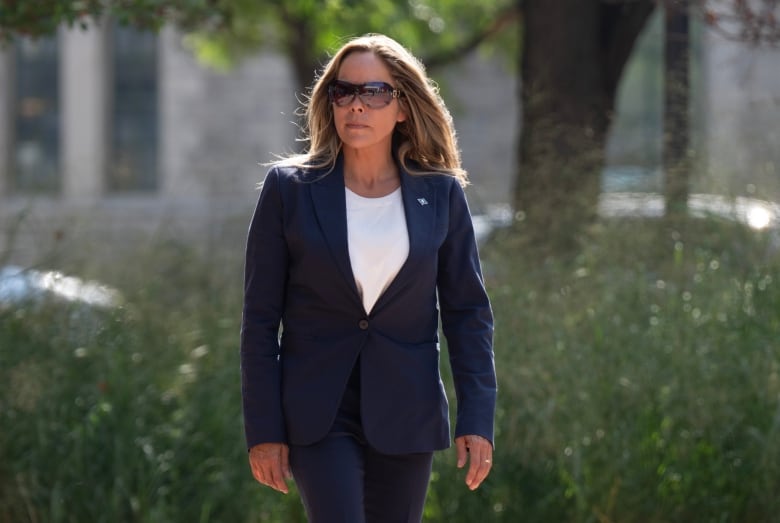
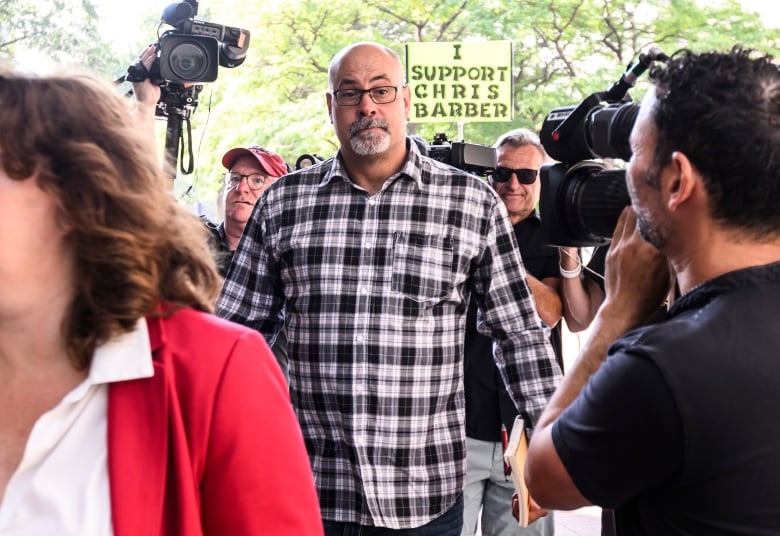
The charges against Tamara Lich and Chris Barber include mischief, counselling others to commit mischief, intimidation and obstructing police.
The second day of their trial saw a smaller group of supporters in the courtroom than on Tuesday.
Lucas told court that in the early days of the protests — which started at the tail end of January 2022 — the focus was on keeping public order and mitigating the impact on the community.
Protesters were approved to park on Wellington Street in front of Parliament, he said, because “that’s where they wanted to be, that’s the epicentre.”
While the demonstration was initially expected to last just one weekend, Lucas said police knew a core group of protesters could remain.
But they soon realized the size and scope of the convoy protests was larger than anticipated.
Police had originally predicted about 100 vehicles would arrive from each province, but Lucas said numbers “well exceeded that.” Roughly 5,000 vehicles had congested the downtown core by the end of the protest’s first weekend, he said, with the number of protesters swelling to around 10,000 people.
Resources ‘stretched so thin’
Thousands of people, big-rig trucks and private vehicles ended up gridlocking Ottawa for several weeks to protest COVID-19 public health measures and the federal Liberal government, which eventually used the Emergencies Act to end the demonstrations.
Lucas told court that as numbers swelled, the force’s plans were changing by the hour and resources were “stretched so thin”.
Although about two-thirds of the protesters left after the first weekend, the footprint of the remaining vehicles was sprawled across the downtown core, Lucas said.
Lucas was the incident commander managing the convoy’s impacts, told the court as the convoy lingered it became more “volatile”, with officers were more likely to be “swarmed” by crowds if they tried to take enforcement action.
He said he approved a plan to allow more vehicles onto Wellington to shrink that footprint and provide nearby neighbourhoods some relief, while concentrating police enforcement in one location.
But that plan was rejected by then-chief Peter Sloly, Lucas testified, saying he was told by superior officers that “we’re not giving them one inch.”
The inspector said that rejecting the approved plan undermined the work of liaison officers who’d negotiated it with the protesters.
It also made it harder for police to carry out enforcement, Lucas said, given the large geographic area protesters continued to occupy.
During cross-examination from Lich’s lawyer Lawrence Greenspon, Lucas said he didn’t go to the protests himself or have any contact with the two leaders on trial.
Lucas is the second Crown witness called in the highly-anticipated trial, which is expected to last about 16 days.
The Crown’s case will hinge less on the actions of Lich and Barber and more on whether those actions were criminal.








Leave a comment