
![King Mitchy’s apology decoy to attack me – VDM raises alarm [VIDEO]](https://wowplus.net/wp-content/uploads/2026/03/king-mitchys-apology-decoy-to-attack-me-vdm-raises-alarm-video-680x408.jpg "VeryDarkMan Raises Alarm Over King Mitchy Apology, Says Something Feels Off 3")







![Shola Allyson finally reveals why she refuses to reference Jesus in her songs [VIDEO]](https://wowplus.net/wp-content/uploads/2025/12/shola-allyson-finally-reveals-why-she-refuses-to-reference-jesus-in-her-songs-video.jpg "Why Shola Allyson Chooses Not to Name Jesus in Every Song Video 127")
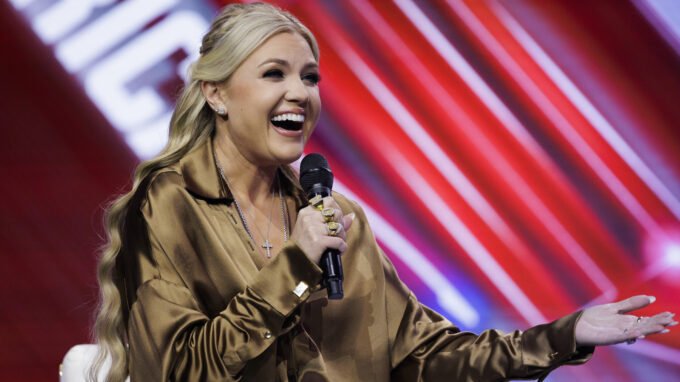
Shola Allyson has been quiet about this matter for a while, maybe intentionally so. But recently she spoke up — not in a sermon, not in a formal statement, but in an interview that sounded more like a conversation. She explained, plainly, that she doesn’t feel obligated to name Jesus in every single song she writes. That’s the headline. But the reasons she gives, and the reaction around them, reveal something more complicated about faith, music, and public expectation.
A tense moment online
Back in March 2025, some people on social platforms took issue with the fact that Allyson — widely respected as a singer who performs spiritual material — doesn’t always use the name “Jesus” in her lyrics. The criticism quickly spread, loud enough to be noticed. It’s one of those social-media flares that can either fade or escalate. For a time, it looked like the latter: posts, replies, and shares piling on with moral certainty. You could almost see the pile-on forming. She responded, briefly, on X (formerly Twitter), with a line that was pointed: “No one can bully me into joining their darkness that looks like light because indolent souls find comfort in it.” Strong words. A bit dramatic, maybe — but also revealing. She felt pushed, and she pushed back.
Also read: From Pancake Shifts to Project Houses: Nicole Curtis’ Unfinished, Honest Rise
What she actually said — in her own voice
More recently, in an interview on Oyinmomo TV, Allyson took a more patient tone. She explained that she’s not interested in doing PR for anyone — even Jesus, and even though many people assume that’s what gospel singers do. “I’m not a religious singer,” she said. “As I am, I have never introduced myself as a gospel singer. My name is Shola Allyson. I’m a singer.” That’s a small but important distinction. It’s not about disrespect. It’s about identity and the kind of work she wants to do.
Then the interviewer brought up the familiar complaint: “Some people said you don’t mention ‘Jesus’ name in all your songs.” Allyson’s reply was succinct and a little startling in its plainness: “Jesus did not instruct us to mention his name in songs nor did Jesus ask us to do PR for Him.” She didn’t say it to shock; she said it to remind. To remind people that the core of faith, to her, isn’t a marketing exercise. It’s… something else. Less performative, I guess; more personal, maybe.
Think about the tension here
There’s a tension between public expectation and private conviction. Fans and critics often have neat boxes. Gospel singer — therefore X, Y, and Z. But life and art refuse to be tidy. Allyson is navigating that mess: she’s being an artist, and she’s also being watched as a representative of a community and a faith. That’s not fair, really. People often treat artists like billboards for ideas. You might be talented, or devout, or both — but once you’re visible, some will expect you to be consistent with the easiest, loudest expressions of your identity.
I found that part interesting. It’s an old argument, but with modern social media it becomes sharper. You don’t just disagree with someone; you tag them, screenshot them, gather their words into evidence. The result is pressure. She responded with a line about “darkness that looks like light.” It’s poetic in a defensive way. She was saying: I won’t fold because of an easy moral performance.
A creative choice, not a doctrinal slip
To be clear, Allyson isn’t rejecting Jesus or diminishing faith. She’s making a statement about how she approaches songwriting. Many artists write about spiritual themes without naming specific figures. Sometimes it’s metaphor, or feeling, or a scene that points toward faith without spelling it out. That can be deliberate. It can also be because a song is meant to be broad, or intimate, or open-ended. Not every lyric needs to carry a label.
That doesn’t satisfy everyone. Some listeners want direct references because that’s how they experience devotion — naming the figure is an act of love or obedience for them. But others — perhaps like Allyson — feel that invoking a name is not the only way to honor what they believe. This is where people get into conversations about authenticity. What looks like omission to one person looks like artistic choice to another.
Also read: Farrah Fawcett’s Most Iconic Outfits
Public response and why it matters
Why does this argument persist? Because language matters in religious communities. Names hold power; references mark belonging. For many, hearing a singer name Jesus in a song is reassurance: a public, clear statement. For others, the lived expression of faith might be shown in tone, intention, or how a song comforts listeners. So the debate around Allyson became a proxy for a larger cultural question: is faith measured by words or by witness? Or — more awkwardly — by performance?
There’s also something about how women in public religious roles are policed differently. It’s not the focus of every comment, but I’ve noticed that female singers often face a double set of standards — for piety and for creative freedom. Allyson’s calm insistence that she is simply “a singer” felt like a small but brave boundary-setting. She named herself first, before any label.
A short, careful verdict
Allyson’s explanation is simple and, in a way, honest. She doesn’t feel obligated to do promotional work for any religious figure through her art. That might read as cold to some people, and to others it reads as integrity. I tend to think it’s both — and maybe a little messy, as real life usually is. She spoke up to reclaim the terms of her work and to say: I make music. I do it as me. If that unsettles some, well — perhaps that’s part of being an artist.







Leave a comment