






















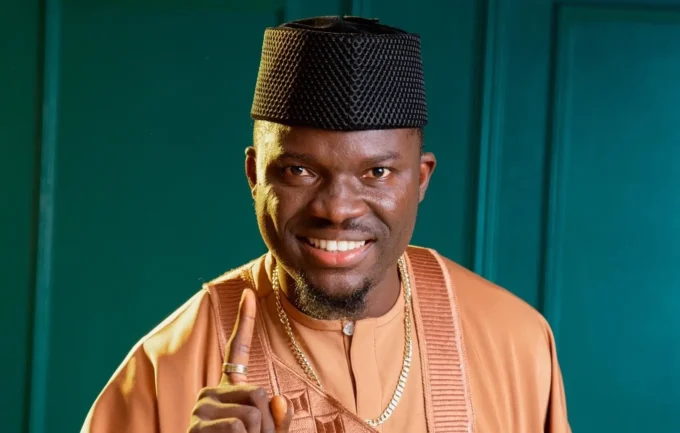
There’s something quietly strange about watching people you grew up admiring step into a world you never expected them to join. For me—well, for Olumide Oworu—it wasn’t an abrupt shift so much as a slow, nagging realization that things were slipping. He talks about it in a way that’s simple, a little impatient, and, yes, a bit unsure. That’s the part I liked: he doesn’t pretend to have fixed everything. He just says, plainly, “this isn’t working for me, and I want a hand in changing it.”
Why it mattered to him
Olumide tells the story from a personal angle. He remembers how Nigeria felt when he was younger—how the streets, the rhythms, the possibilities seemed different. That memory is at the center of his decision. It’s not some grand ideological manifesto. It’s practical and domestic: he wants to start a family here, raise children, have them enjoy the same or better chances he once had. There’s a small, human urgency to that. If the rules are being written by people who seem out of touch, then maybe someone like him should be in the room where decisions get made.
Also read: DNA Tests Approved Abroad to Settle Mohbad’s Son’s Paternity
He’s worried about what he calls “poor policymaking.” That phrase is blunt but loaded: it suggests policies that don’t fit people’s lives, or laws made by folks who don’t feel the consequences of those choices. And of course, he’s right to point out the obvious—policy affects everyone. Maybe that sounds obvious to us, but it’s worth repeating because too often those who make the rules are insulated from them. Oworu’s point is simple: if you’re going to live under the rules, why not help make them?
The generational angle
One detail he keeps returning to is age. Not age as a moral failing, exactly, but age as a practical problem. He notices that a lot of current political leaders are, frankly, older. And when older people write policies, they do so from a vantage shaped by different experiences—different fears, different priorities. Oworu sees this and worries about the long-term effects. He imagines a future where his generation—and his friends—are the ones left to deal with policies that never really considered them. That’s a fair worry. I think many people feel it, even if they haven’t said so in public.
It’s also personal: he’s 31, still young in many ways, and aware that the decisions made now will follow him for decades. So, he did something that isn’t purely symbolic. He actually ran for office.
The run and the reality
He contested the Surulere 1 House of Assembly seat in Lagos State, under the Labour Party banner during the 2023 elections. He didn’t win. Desmond Elliott, someone he knows from the same industry, took the seat. There’s a kind of awkwardness in that—two actors, both in the public eye, competing for the same political role. It could make you think the whole thing was a vanity project. But from the way Oworu speaks, I don’t get that. He sounds disappointed, sure, but not defeated.
Losing an election can teach you a lot. It teaches humility, obviously, but it also sharpens resolve—if you take it the right way. Oworu’s tone suggests he’s learned something about the system, its rhythms, and its resistance to newcomers. Yet he doesn’t sound bitter. He simply says, in effect, that the fight isn’t over. That matters because far too often people step forward, get discouraged, and retreat. He seems to be doing neither.
Also read: When Joy Turns to Quiet — Shanko Rasheed’s Sudden Loss
Not polished — and that’s okay
What struck me in his conversation is the lack of polish. He doesn’t deliver a tidy, rehearsed speech. He lets a thought trail off sometimes. He uses qualifiers—“perhaps,” “I think”—and that reads more like a person thinking aloud than a politician reading talking points. I like that. It makes the reasons feel less manufactured and more human. He’s not an expert in every field, he admits. He’s learning, which is, frankly, what you want from someone stepping into public service.
What he’s really pushing against is complacency. Not just among the electorate but among those who run for office. If the same kinds of people keep making the same kinds of laws, the result is predictable—stagnation or slow decline. He frames it in terms of retrogression: things getting worse, not better. That’s blunt, and for many, painfully familiar.
A small but important motivation: family and future
The promise to start a family and raise children in Nigeria is more than a personal wish. It’s a political statement. It implies a belief that this place can be made livable again—safer, more prosperous, at least more predictable. It’s a modest goal, really. He’s not promising to fix everything, not claiming to be a savior. He wants a voice in shaping a future where his kids can thrive. I respect the restraint in that. It feels realistic, not grandstanding.
The oddities and contradictions
Of course, there are tensions in his story. He criticizes current leaders for being out of touch, yet he went into politics via a celebrity route. That can look contradictory: how do you combat privilege by leveraging another form of privilege—public fame? But people are messy. Celebrities are citizens too. Their visibility can open doors for issues that otherwise get ignored. Maybe that’s pragmatic rather than hypocritical.
Also, running and losing exposes the gap between wanting change and making it happen. He knows that. He isn’t claiming otherwise.
Also read: Asake Becomes Most-Streamed Artist of All Time on Spotify Nigeria
Where this might go next
He hasn’t given up. That’s clear. He remains invested, and he’ll likely keep looking for ways to influence policy—whether through another run, grassroots work, or advocacy. What feels most striking is that his reasons are personal, sometimes tentative, and oddly ordinary. Maybe that’s why it resonates. Being in politics doesn’t have to come from a place of ambition alone; it can come from simple wants—safety for your family, better roads, more reliable schools. Those are modest, and in a sense, they’re the kind of practical concerns that move societies forward.
He stepped in, he tried, he lost, and he’s still there. That persistence, I think, is worth watching.






![Armed robbers evade Adegbodu Twins’ home days after Taiwo’s burial [VIDEO]](https://wowplus.net/wp-content/uploads/2026/04/armed-robbers-evade-adegbodu-twins-home-days-after-taiwos-burial-video-680x408.jpg "Adegbodu Twins Robbery Scare Leaves Family Shaken Days After Taiwo’s Burial 145")

![‘I had crush on Tiwa Savage, she introduced me to Backy’ – Crayon reveals [VIDEO]](https://wowplus.net/wp-content/uploads/2026/04/i-had-crush-on-tiwa-savage-she-introduced-me-to-backy-crayon-reveals-video-680x383.jpg "Crayon Opens Up About Tiwa Savage Crush and a Moment That Changed His Habits 147")





Leave a comment