
![Blessing CEO auctions her properties to raise funds for cancer treatment [VIDEO]](https://wowplus.net/wp-content/uploads/2026/03/blessing-ceo-auctions-her-properties-to-raise-funds-for-cancer-treatment-video-680x680.jpg "Blessing CEO Cancer Fundraising Takes New Turn as She Auctions Personal Belongings 1")
![Blessing CEO solicits financial help amid battle with breast cancer [VIDEO]](https://wowplus.net/wp-content/uploads/2026/03/blessing-ceo-solicits-financial-help-amid-battle-with-breast-cancer-video-680x389.jpg "Blessing CEO Breast Cancer Appeal Sparks Concern as She Asks for Public Support 2")
![King Mitchy’s apology decoy to attack me – VDM raises alarm [VIDEO]](https://wowplus.net/wp-content/uploads/2026/03/king-mitchys-apology-decoy-to-attack-me-vdm-raises-alarm-video-680x408.jpg "VeryDarkMan Raises Alarm Over King Mitchy Apology, Says Something Feels Off 5")
















![‘I was under pressure’ – Chris Okafor makes U-turn, withdraws apology to Doris Ogala [VIDEO]](https://wowplus.net/wp-content/uploads/2026/03/i-was-under-pressure-chris-okafor-makes-u-turn-withdraws-apology-to-doris-ogala-video.jpg "When an Apology Backtracks: Chris Okafor, Doris Ogala, and the Messy Middle 127")
There’s something oddly familiar about public apologies that get pulled back. They arrive with a lot of fanfare — carefully staged, heartfelt-sounding — and then, sometimes, vanish as quickly as they appeared. That pattern shows up again in the recent back-and-forth between Pastor Chris Okafor and actress Doris Ogala. It’s messy, it’s human, and, well, it raises more questions than it answers. I’ll try to lay it out plainly, with the bits that matter and a few thoughts that don’t quite settle neatly.
A brief recap (because a lot happened) A while back, a video surfaced online showing Pastor Chris Okafor with a young woman. The clip set off a chain reaction: allegations, accusations, and a wave of public attention. Doris Ogala, a known actress, then claimed she had been in a secret sexual relationship with the pastor for about eight years — a relationship that, she said, included promises of marriage and, ultimately, a painful break. She pushed for compensation and accused the pastor of other troubling behaviour, some of which she described as scandalous or criminal.
Also read: Showmax Is Ending — What That Means for Viewers (and Why I’m a Bit Torn)
At one point, Okafor handed Doris $10,000, which she said didn’t come close to matching the seriousness of what she could prove. Soon after, Okafor stood up in a Sunday service and publicly apologized to Doris Ogala — a dramatic move that suggested remorse, or at least an attempt at damage control. But things didn’t stop there. Doris kept speaking out, continuing to drag the story into the public eye. And then, in a twist, Okafor retracted his apology.
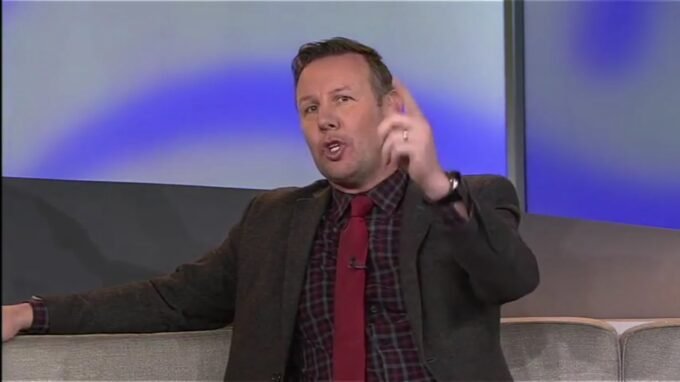
Why he says he took it back This is the part that complicates things. In a video making the rounds online, Okafor told his congregation that the apology hadn’t been entirely sincere — that it was given under pressure. He said friends and other senior religious leaders were being dragged through the mud because of the story, and he didn’t want that to happen. To protect them, he said, he knelt and apologized — not because he admitted wrongdoing, but because of the fallout for those “fathers of faith” he respected.
He even used a loaded word to describe Doris, calling her a “Jezebel,” which, whether intentional or not, carries a lot of weight and judgment. He insisted he had not met her face to face — which adds another confusing layer, because how does one reconcile an alleged eight-year relationship and a claim of never meeting? He also said he intended to pursue legal action to resolve things properly, rather than continue with public apologies.
Also read: When Words Turn Sharp: Doris Ogala and Pastor Chris Okafor’s Public Back-and-Forth
What this smells like — and why I’m cautious When someone apologizes and then pulls the apology back, it raises flags. Was the apology an attempt to quiet things down? Was it sincere and then later undermined by pressure from supporters? Or is there a deeper disconnect about what actually happened? I don’t know, obviously. But I do notice patterns.
People in positions of power sometimes apologize to protect institutions or allies rather than to acknowledge personal responsibility. That doesn’t mean every retracted apology fits that pattern, but it’s a common thread. On the other hand, claims and counterclaims fly fast in the public square; sometimes people say things that aren’t accurate, or they’re reacting to misinformation. It’s messy. It’s human. And it’s why many of us — me included — tend to reserve final judgment.
The money angle is worth noting too. Okafor reportedly gave Doris $10,000. She called it insufficient given the evidence she claimed to hold. That detail says something about bargaining in public controversies: cash can be framed as restitution, hush money, or simply a well-intentioned but inadequate attempt to make amends. Different audiences will read it differently. And those interpretations are rarely neutral.
A few other threads that aren’t settled
- Doris’s allegations reportedly went beyond abandonment; she spoke of criminal and scandalous acts. Those are serious claims and, if true, deserve proper investigation. Yet in the public discourse the nuances often get lost — that’s where legal channels should step in, if anyone chooses to use them.
- Okafor’s children are a part of this story too. His second daughter, Amara, has been reported as saying she might press charges for assault and abuse. That introduces family dynamics and possible criminal investigations that are not to be taken lightly. It also complicates the narrative: this is not just about public image, but potentially about real, private harm.
- The role of “fathers of faith” and senior clergy being pulled into the controversy is interesting. Okafor framed his initial apology as protection for them. That says something about loyalty, hierarchy, and the social pressures within religious communities — pressures that sometimes prompt people to take actions they might not otherwise take.
Tone, judgment, and the messy middle I find myself oscillating between sympathy and skepticism. On the one hand, a person in Okafor’s position faces enormous pressure: congregants, colleagues, reputation, and sometimes even threats to livelihoods. On the other hand, if the allegations are true, any attempt to minimize or retract accountability matters. That ambiguity is precisely the difficult part. Human beings do contradictory things. We apologize and then deny; we try to protect our circle and, in the process, sidestep victims. It’s not neat. It’s not consistent. It’s real.
Also read: When Nollywood Changed: One Actor’s Take on What Went Wrong
Where things might go from here There are a few likely directions: legal action, either civil or criminal; ongoing public back-and-forth as both sides mobilize supporters; or perhaps a private resolution that never fully satisfies the public appetite for answers. I suppose it depends on whether either party wants a definitive court ruling or prefers the drama to continue in headlines. My gut says the legal route would be the clearest way to settle factual disputes — but of course that’s easier said than done.
Final thought This story is far from tidy — and maybe that’s the point. It reminds us how messy public accountability can be: the collision of reputation, loyalty, money, and real human pain. I don’t know exactly what happened. Nor do I expect a single statement to close the book. But the more these issues stay in the open, the more pressure there is for either truth or a formal process that leads to clarity. Until then, people will keep apologizing, retracting, accusing, and litigating — and the rest of us will watch, waiting for something that feels final. Maybe it comes. Maybe it doesn’t.









Leave a comment