
![Blessing CEO auctions her properties to raise funds for cancer treatment [VIDEO]](https://wowplus.net/wp-content/uploads/2026/03/blessing-ceo-auctions-her-properties-to-raise-funds-for-cancer-treatment-video-680x680.jpg "Blessing CEO Cancer Fundraising Takes New Turn as She Auctions Personal Belongings 1")
![Blessing CEO solicits financial help amid battle with breast cancer [VIDEO]](https://wowplus.net/wp-content/uploads/2026/03/blessing-ceo-solicits-financial-help-amid-battle-with-breast-cancer-video-680x389.jpg "Blessing CEO Breast Cancer Appeal Sparks Concern as She Asks for Public Support 2")


![King Mitchy’s apology decoy to attack me – VDM raises alarm [VIDEO]](https://wowplus.net/wp-content/uploads/2026/03/king-mitchys-apology-decoy-to-attack-me-vdm-raises-alarm-video-680x408.jpg "VeryDarkMan Raises Alarm Over King Mitchy Apology, Says Something Feels Off 5")





















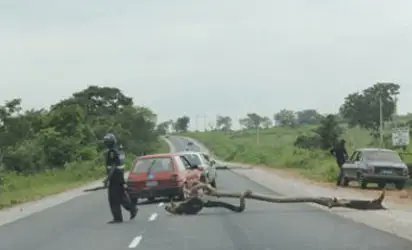
That headline landed suddenly, like a firm knock on the front door. The federal government has now said that using roadblocks to collect taxes and levies is off limits nationwide. No more checkpoints set up on highways just to demand payments or levy fees. It’s a clear, sharp instruction, and—well—people are already reacting.
Why this matters Roadblocks meant for tax collection have been a patchy, uncomfortable part of everyday life for many drivers. You’re going about your day, maybe a little late, and you come across a line of official vehicles across the road. Officers ask for documentation, and then, sometimes, money for a permit or levy, or proof you’ve paid some local charge. It can be quick and orderly. Or it can be slow, intrusive, and arbitrary. That uncertainty has weight. It interrupts travel, stalls commerce, and creates opportunity for abuse—real abuse, not just a bureaucratic hassle.
Also read: When Form Fades: Nicolas Jackson’s Quiet Struggle and What Comes Next
The new ban doesn’t only touch inconvenience. It also signals an attempt to standardize how public charges are collected. Taxes and levies are supposed to be handled through formal channels—offices, online payments, banks—not by impromptu roadside stops. That should mean clearer records, fewer off-the-books transactions, and less room for people to be coerced or misled.
What changes practically Let’s be frank: on the ground things will take a little time to shift. Enforcement habits don’t vanish overnight. Some local authorities may push back or try to find workarounds. Others will comply quickly. Either way, drivers should expect a gradual move away from impromptu checkpoints for fee collection.
This ruling likely means:
- Fewer random stops on highways for non-criminal matters.
- A push toward formal payment methods—online systems, designated offices, official receipts.
- A possible increase in administrative follow-ups if enforcement agencies try to collect through other, formal means.
- Harder conditions for opportunistic collection by individuals using the guise of authority.
There’s also a risk of confusion. Who exactly enforces the ban? Is it federal agencies only, or do state and local enforcement units have to follow suit too? The government’s order is national in scope, but local enforcement often acts autonomously. So expect some messy overlap—at least at first.
Human reactions and the gray areas People will feel differently about this. For commuters who’ve had to deal with random stops, it’s a relief. I know a friend who once missed an important appointment because of a roadblock that took ages to clear. He was furious. There’s also someone else I spoke with—older, cautious—who thinks a little oversight on the road makes things safer, that roadblocks can deter crime. That’s not nonsense. Roadblocks used for traffic safety or criminal checks are legitimate; this ban targets the collection of taxes and levies specifically.
Then there’s the matter of local revenue. Some municipal governments relied, informally or otherwise, on on-the-spot collections to pay for services. Will they adapt? They’ll have to. They’ll need better systems—digital payments, formal collectors—if they want to keep funding essential services. That’s not impossible, but it costs time and resources. So, while the ban is reasonable, it has a ripple effect.
Also read: When the Uniform Meant Danger: My Father’s Story
Potential benefits—and pitfalls On the positive side, banning roadside tax collection reduces chances of corruption, unfair treatment, and the petty shakedowns that undermine trust. If payments move into transparent channels, people can confirm what they’ve paid and hold officials accountable. That should help the rule of law.
But, let’s not pretend it’s a silver bullet. The ban’s success depends on follow-through. If enforcement is weak, the old practices might continue in practice while being illegal on paper. Or, bureaucracies could respond by increasing paperwork and delays at official centers—another kind of nuisance. Ideally, the ban is coupled with user-friendly, accessible payment systems and clear public communication about how and where to pay.
How people should respond now For everyday drivers: keep your documents in order, and avoid paying any tax or levy at the roadside. Ask for identification and a written basis for any charge. Better yet—wherever possible—confirm the official channels for payments in your area, and use those.
For local authorities and officials: this is a prompt to modernize. Invest in clear, traceable payment systems. Train staff on respectful enforcement. Provide receipts with unique identifiers. The legal ban is one thing; changing culture is another.
A small, honest worry I’m mildly skeptical about how fast change will happen. Governments can announce rules; they can’t always change entrenched habits instantly. For some regions, the ban may be transformative. For others, it might simply push the same practices into slightly different forms. Still, it’s the right move from a fairness standpoint. It at least creates a legal reason to correct a problematic practice.
Final thoughts This ban is a step toward making tax and levy collection more formal and less open to abuse. It won’t fix every problem automatically, but it gives citizens a clearer standard: payments belong in official channels, not at a roadside stop. Expect bumps as systems update, and watch how local bodies adapt. And if you’re stopped for money at the road—don’t pay there. Ask questions, demand official proof, and report it.










Leave a comment