



















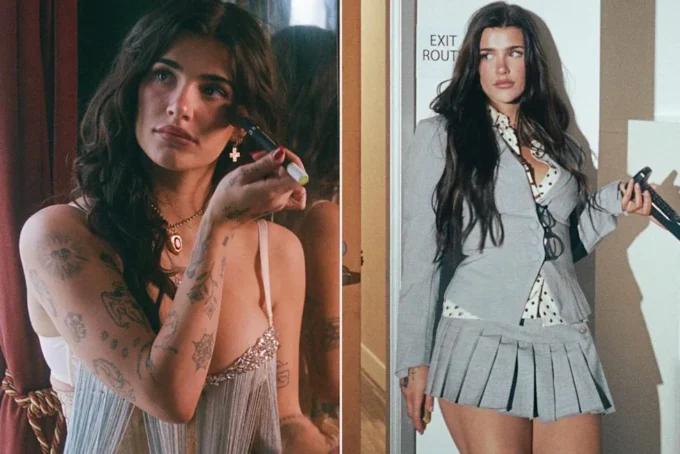









Quinn Everly OnlyFans career has developed from creating her own subscription content into running a management business built around the pressures adult creators face behind the screen.
Everly is the founder of Blue Rose Talent, an Australian agency that represents online adult creators. Her public story stands out because it does not begin with a conventional route into entertainment management. She has spoken about holding a PhD in medical science, working in academia and later discovering that her experience as a creator gave her a different understanding of what clients needed.
That combination now sits at the centre of her public image. Everly is both a former creator and a business owner, while her husband Alex has moved from general practice into the company. Their work has also become part of the Stan reality series Turned On: Dirty Sexy Money, which follows creators and the people managing their careers.

From academic work to the creator economy
Everly’s background complicates the common idea that people enter OnlyFans because they lack other options. Her move was not presented as a rejection of education. Instead, it became a decision about income, independence and the kind of working life she wanted to build. That wider discussion also appears in Wowplus coverage of Camilla Araujo’s effort to reshape a viral OnlyFans brand, where the difficult part was not attracting attention but deciding what should come after it.
Creator experience became business knowledge
According to Blue Rose Talent’s own account, Everly spent years in the adult industry before establishing the agency. She has said that she built her own page into the platform’s top 0.1 per cent within six months. That claim comes from the company she founded, but it helps explain the authority she now presents to prospective clients: she is not advising them solely from a spreadsheet or a marketing course.
Her experience would have exposed her to the constant demands of audience growth, content planning, direct messages, privacy concerns and the pressure to remain visible on mainstream social platforms. Those tasks are often hidden when outsiders reduce the job to taking photographs and collecting subscriptions. In practice, a creator may also be acting as a producer, editor, promoter, customer-service worker and brand manager every day.
Leaving the camera did not mean leaving the industry
Everly has acknowledged that she preferred mentoring other creators to remaining in front of the camera. That distinction is important. Some people build a public profile and then try to extend it indefinitely, while others discover that their strongest skill is organising the work around the public figure.
Her transition resembles the broader shift described in Wowplus coverage of Ari Kytsya’s decision to rethink the audience she was serving. Both stories show that adult creators are not locked into one presentation forever. They can change their strategy, set different boundaries or move into roles that use what they learned without repeating the same work.
Blue Rose Talent sells structure, not instant fame
The agency’s public message focuses on management, social-media strategy, brand development, mentoring and protection against leaked content. Those services reflect a central problem in the creator economy: visibility may arrive quickly, but building a stable business around it is more difficult.
Everly has warned that success requires more than appearance. Consistency, a clear niche, work habits and an understanding of personal limits all matter. She has also challenged the assumption that every creator earns an extraordinary income. The biggest success stories naturally receive attention, but they can create unrealistic expectations for people considering the platform.
Her husband’s career change became part of the story
Alex, Everly’s husband, previously worked as a doctor before joining the company. Their partnership gives the business another unusual detail, but it also creates a practical question faced by many couples who work together: where does the job end and the relationship begin?
The pair have discussed trying to separate work conversations from family time, even scheduling meetings rather than allowing business to fill every hour. That boundary is especially relevant in an industry driven by phones, notifications and online attention. A creator-management company can operate at any time of day, which makes switching off a deliberate act rather than something that happens naturally.
Reality television changes the audience
Turned On: Dirty Sexy Money brings Everly’s agency work to viewers who may never subscribe to adult content or understand how the business operates. The programme gives her a new role: not simply manager, but interpreter of an industry that is often discussed through stereotypes.
That exposure carries benefits and risks. It can help present creators as workers making financial and personal decisions, but reality television also depends on conflict, personality and memorable scenes. The agency’s everyday work may be careful and repetitive, while television needs momentum. Everly therefore has to represent the business without allowing the show to define every part of it.
A professional image does not erase difficult questions
Everly’s emphasis on ethical management is meaningful because adult creators can face privacy threats, account restrictions, stigma and financial discrimination. Management may help with some of those problems, but it does not remove them. It also cannot guarantee that a creator will become profitable or avoid future consequences from having intimate material online.

Wowplus has also examined how Cubbi Thompson built recognition by leaning into a distinct identity. Everly’s management philosophy works from a similar idea: a creator needs a recognisable voice and realistic expectations, not a copied formula that promises fast money.
Why Quinn Everly’s career shift matters
The most interesting part of Everly’s story is not a dramatic break between science and adult entertainment. It is the way she has combined habits from different parts of her life. Academic training may support research and organisation, creator experience supplies practical knowledge, and management requires judgement about people as well as numbers.
Her public profile also shows how the adult creator economy is developing its own professional class. There are now managers, strategists, editors, legal advisers and protection services surrounding people who once worked largely on their own. That structure can offer support, although creators still need to examine contracts, ownership and the incentives of anyone claiming to represent them.
Quinn Everly’s move behind the camera has not made her less connected to OnlyFans. It has placed her in a position to shape how other creators enter, grow and sometimes leave the platform. Her next challenge is maintaining the creator-first identity she promotes while television attention and a larger client business make Blue Rose Talent more visible than ever.











Leave a comment