


![‘I was under pressure’ – Chris Okafor makes U-turn, withdraws apology to Doris Ogala [VIDEO]](https://wowplus.net/wp-content/uploads/2026/03/i-was-under-pressure-chris-okafor-makes-u-turn-withdraws-apology-to-doris-ogala-video-680x408.jpg "When an Apology Backtracks: Chris Okafor, Doris Ogala, and the Messy Middle 5")



























The federal government will announce new and expanded travel measures on Wednesday in a bid to limit the spread of the omicron coronavirus variant.
Multiple sources told CBC News and Radio-Canada that the government is expected to renew an advisory against non-essential international travel, which had been in place for most of the COVID-19 pandemic but was quietly lifted in October.
Sources say much stronger measures were discussed with premiers and Prime Minister Justin Trudeau during a Tuesday evening call. The proposed measures included whether to implement a ban on all non-essential foreign travellers into Canada, including from the United States, and stricter quarantine and testing measures for travellers who are allowed into Canada, including returning Canadians and permanent residents.
But no decision was reached.
Sources say the goal is to slow down the spread of the virus.
There was also widespread agreement among the premiers and the prime minister on the need to dramatically increase the pace of third-dose booster shots.
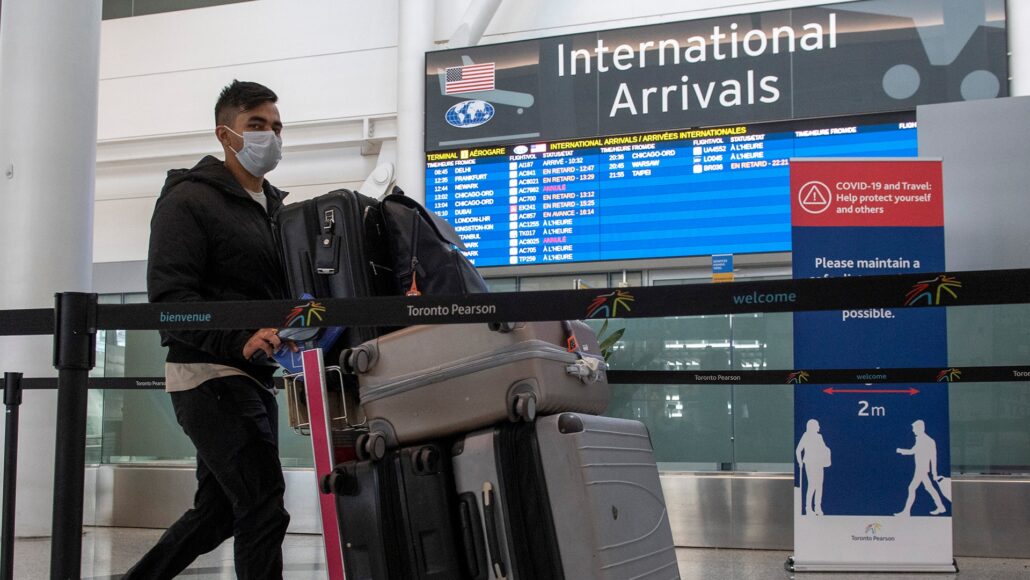
The federal government is expected to again advise against all non-essential international travel, sources have told CBC News, as concerns about the omicron variant grow across the country. 2:44
If implemented, stricter international travel rules would reverse months of progress to reopen Canada’s borders after the country effectively shut down to non-essential travellers during the early stages of the pandemic.
Those restrictions were slowly lifted during the summer and fall as COVID-19 cases declined and vaccination rates increased.
However, the emergence of the omicron variant in late November — which appears highly contagious and capable of infecting vaccinated people more than previous variants — has prompted renewed caution by the federal government.
“We are in the midst of a global wave of a variant that just turns out to be extremely, extremely, extremely contagious,” Deputy Prime Minister Chrystia Freeland said on CBC’s Power & Politics earlier Tuesday.
“We have a chance to keep this under control. But we can only do that if all of us really act, and the federal government is committed to doing its part.”
The omicron variant is already being widely reported in Canada and is expected by public health officials and epidemiologists to soon become the dominant strain of the coronavirus circulating in the country.













Leave a comment