




Table of contents
- Star Wars changed Lucas’ finances because he kept the rights that mattered
- Lucasfilm became more valuable than any single movie
- Industrial Light & Magic and Skywalker Sound expanded the empire
- The Disney sale converted decades of ownership into liquid wealth
- Philanthropy now absorbs a large part of Lucas’ financial attention
- George Lucas’ biggest financial advantage was ownership
George Lucas net worth 2026 is estimated at $5.3 billion, according to Forbes, making the Star Wars creator one of the wealthiest filmmakers in the world.
Lucas’ fortune was not built through directing fees alone. The decisive financial move was retaining ownership and merchandising control around Star Wars when few people understood how valuable movie intellectual property could become. That ownership later expanded into Lucasfilm, Industrial Light & Magic, Skywalker Sound and one of entertainment’s most lucrative franchise businesses.
Forbes currently values Lucas at $5.3 billion. The publication says he built his wealth through filmmaking and merchandise before selling Lucasfilm to Disney in 2012 for $4.1 billion in stock and cash. He has since focused much of his attention on philanthropy and the Lucas Museum of Narrative Art.
Lucas’ financial story sits beside another extraordinary directing fortune. Wowplus recently examined Steven Spielberg’s $7.9 billion net worth, where backend participation, production ownership and long-term Universal economics created wealth far beyond ordinary director salaries.
Star Wars changed Lucas’ finances because he kept the rights that mattered
When Lucas made the first Star Wars film in the 1970s, he negotiated for sequel rights and merchandising rights instead of maximizing his upfront directing compensation. At the time, licensed toys and franchise merchandise were not yet viewed as the central economic engine they later became.
That decision changed everything. As the movie became a cultural phenomenon, Lucas controlled the parts of the business that could keep expanding after theatrical release. Toys, books, games, home video, licensing and future films all strengthened an asset he owned rather than simply increasing a studio’s revenue.
The strategy gave Lucas an unusual degree of independence. Successful filmmakers normally depend on studios to finance each project, but the cash generated by Star Wars allowed him to finance later productions and build infrastructure around his own companies.
Ownership also meant that every new generation of fans could create fresh value from the same underlying intellectual property. A film released in 1977 did not stop producing economic activity when it left cinemas.
That principle is similar to the wealth model behind James Cameron’s $1.1 billion fortune, where participation in giant film successes mattered more than ordinary Hollywood paycheques.
Lucasfilm became more valuable than any single movie
Lucas founded Lucasfilm in 1971, years before Star Wars turned the company into one of entertainment’s most important private studios.

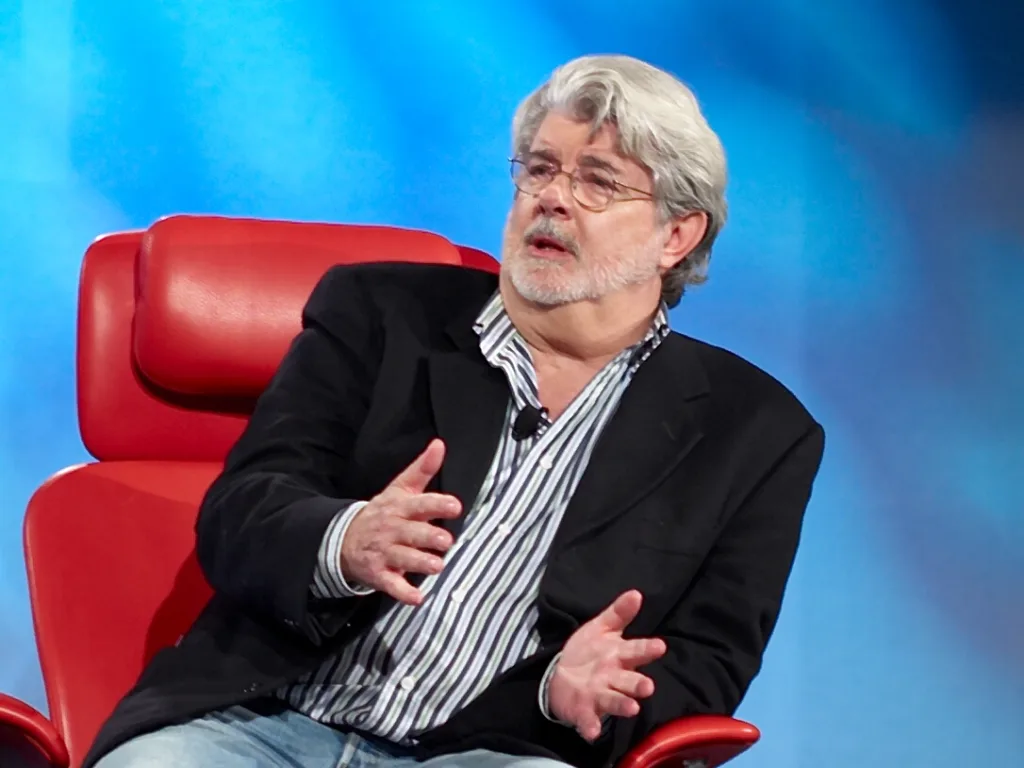
Over time, Lucasfilm became the corporate home for Star Wars, Indiana Jones and a broad range of production assets. The company’s value was therefore tied not only to film libraries but to franchises capable of producing movies, television, games, consumer products and licensing revenue.
That structure matters because a production company can hold value even when its founder is not actively directing. Intellectual property, contracts, technology and distribution relationships continue operating independently of a single person’s creative schedule.
Lucas used that leverage to keep unusually tight control over his creative universe. He could finance projects, delay releases and invest in technology without answering to public shareholders or a traditional studio board.
By the time Disney acquired Lucasfilm in 2012, the company represented decades of accumulated franchise value rather than a simple film-production business.
Industrial Light & Magic and Skywalker Sound expanded the empire
Lucas also built businesses that solved technical problems created by his own films. Industrial Light & Magic became one of the most influential visual-effects companies in cinema, while Skywalker Sound developed into a major sound-production operation.
Those companies gave Lucasfilm capabilities that outside studios often needed, turning internal production infrastructure into valuable industry businesses.
The effect was strategic as well as financial. Lucas did not have to rely entirely on third parties to deliver the visual and audio standards required by his projects, giving him greater control over quality and production schedules.
That vertical integration helped make Lucasfilm more valuable as a whole. A buyer was not acquiring only characters and scripts; it was acquiring production technology, talent, brands and intellectual property operating together.
The broader lesson resembles the ownership strategy behind Arnold Schwarzenegger’s $1.2 billion fortune, where entertainment earnings became much more powerful after being converted into assets that could appreciate over time.
The Disney sale converted decades of ownership into liquid wealth
In 2012, Disney agreed to acquire Lucasfilm for approximately $4.1 billion in cash and stock. That transaction transformed Lucas’ private-company ownership into a combination of liquid proceeds and shares in one of the world’s largest entertainment companies.

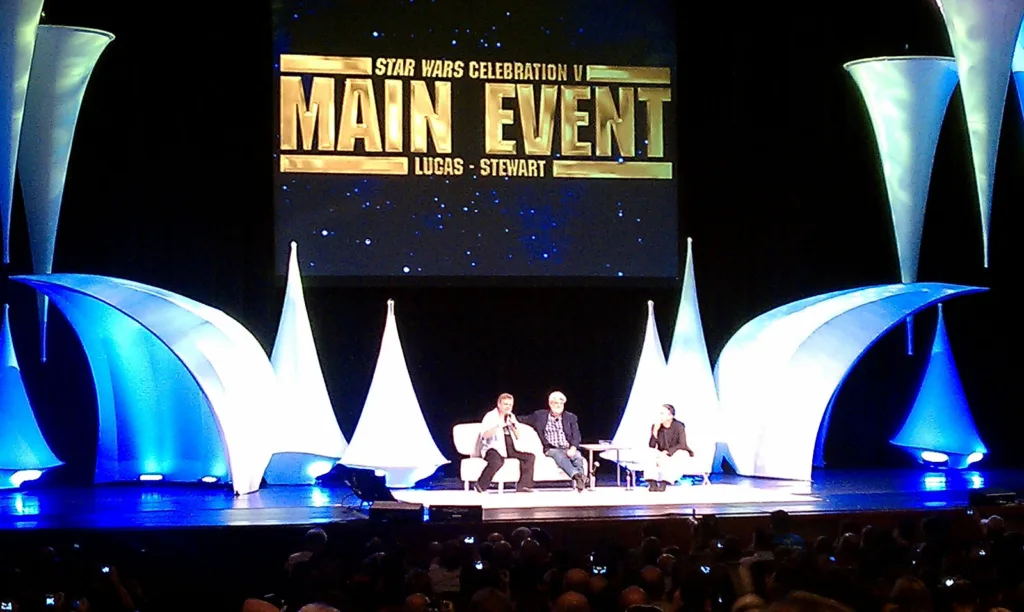
The stock component was especially important because Disney shares allowed Lucas to remain exposed to the growth of the company buying his creation. The final value of any stock position can move with the market, which helps explain why billionaire estimates can change from year to year.
The sale also transferred responsibility for future Star Wars films and television projects to Disney while freeing Lucas to step away from the day-to-day demands of running a major studio.
Forbes’ current $5.3 billion estimate reflects the value of Lucas’ broader assets after taxes, philanthropy, investments and changes in market value. It should not be interpreted as $5.3 billion sitting in cash.
Philanthropy now absorbs a large part of Lucas’ financial attention
Lucas has repeatedly said he intends to give away much of his fortune. His charitable family foundation holds more than $1 billion in assets, according to Forbes, and he has made major donations connected to education and other causes.
The Lucas Museum of Narrative Art is the clearest physical expression of that shift. The Los Angeles museum, funded by Lucas and his wife Mellody Hobson, represents a project worth roughly $1 billion and is designed around visual storytelling rather than only traditional fine art.
That spending does not erase the wealth behind it, but it changes how the fortune is deployed. Instead of using every asset to maximize personal consumption, Lucas has placed substantial capital into institutions intended to outlast him.
This also explains why net-worth estimates can be complicated. Money transferred into charitable foundations is no longer the same as personal spendable wealth, even when the foundation remains associated with the donor’s name.
George Lucas’ biggest financial advantage was ownership
George Lucas net worth 2026 ultimately reflects one unusually powerful decision: he chose to own the universe he created rather than simply be paid to direct inside somebody else’s system.
The first Star Wars film made him famous, but sequel rights, merchandising control, Lucasfilm, visual-effects infrastructure and the eventual Disney sale made him extraordinarily wealthy.
That difference is why Lucas’ fortune still ranks among the largest in entertainment even though he has largely retired from filmmaking. His wealth no longer depends on making another blockbuster.
The assets created decades ago continue to carry value, while the sale of Lucasfilm converted much of that value into investments that could be redeployed into philanthropy and the museum project.
The financial lesson is simple even if the numbers are enormous: the most important thing Lucas earned from Star Wars was not a directing cheque. It was ownership.


Isiagu Tobby
Wowplus editorial contributor.