
![King Mitchy’s apology decoy to attack me – VDM raises alarm [VIDEO]](https://wowplus.net/wp-content/uploads/2026/03/king-mitchys-apology-decoy-to-attack-me-vdm-raises-alarm-video-680x408.jpg "VeryDarkMan Raises Alarm Over King Mitchy Apology, Says Something Feels Off 5")









A pair of statues that have sat in storage for years will not be installed, with the city expressing concern that they could be misinterpreted “as a celebration of colonization.”
The Buffalo and the Buffalo Fur Trader — which features two large bronze sculptures — was commissioned in 2012 by the City of Edmonton and Edmonton Arts Council at a cost of $375,000. The piece was completed six years ago.
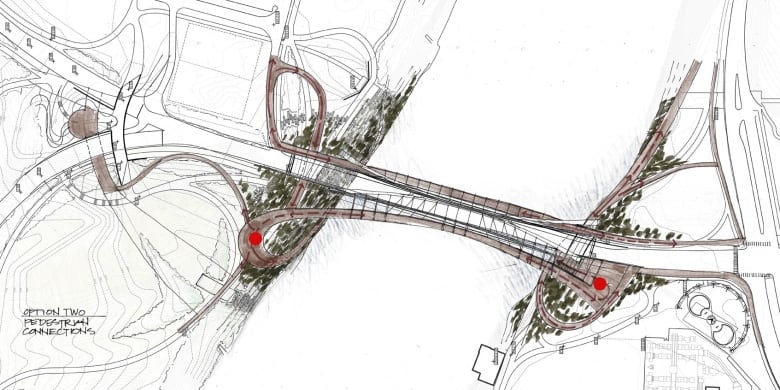
On Wednesday, the city announced it would not install the art in the river valley on the north and south ends of the Walterdale Bridge as previously planned.
“The city’s decision rests on the potential for the artwork to be misinterpreted as a celebration of colonization,” reads the news release.
“While some audiences may find the artwork thought provoking, for others it may cause harm and induce painful memories. For this reason, it is not considered inclusive to all Edmontonians.”
Ken Lum, the work’s creator, is a 2020 winner of the Governor General’s Award in Visual and Media Arts and a professor of fine arts at the University of Pennsylvania in Philadelphia.
In an emailed statement Thursday, Lum took issue with the messaging around the city’s decision.
“The work went through enormous oversight and approval from civic officials,” he said. “It is not as though the work appeared in a vacuum.
“Perhaps the city is not ready for a real dialogue about its colonial past and the condition of coloniality that continues to mark the present. That was my intention with the work, not to celebrate colonialism as the city suggests.”
Lum’s website describes the two sculptures as staring “warily at one another across the expanse of the North Saskatchewan River,” representing the wisdom offered by Indigenous peoples opposite the “folly of the rapacious capitalist represented by the hatted white man atop a pile of buffalo pelts.”
Lum said he has a long record of writing about Canadian issues through the lens of art and culture, often relating to the oppression of First Nations.
Decision-making process
In 2016, the city decided to pause installing the artwork until further conversations could be held with the community, according to city spokesperson Francis Asuncion.
The final decision not to install the sculptures was made this month.
“In the time between the artwork being completed to now, our understanding of the impact of historical injustices on Indigenous Peoples has deepened as a result of several significant events that took place in Edmonton and across Canada,” Asuncion said in a statement.
He cited the 2018 hearings in Edmonton for the National Inquiry into Missing and Murdered Indigenous Women and Girls, the identification of unmarked graves at residential schools in the last two years, and the recent apology to Indigenous communities from Pope Francis.
“In determining the future of the artwork, administration considered our commitments to, and relationships with, those most impacted by the artwork — the artist and Indigenous communities in the region,” Asuncion said.
He said the decision was not precipitated by specific concerns raised by members of the public or any group.
Jenna Turner, a spokesperson for the Edmonton Arts Council, said the artwork is currently in storage and being maintained by the organization’s conservation department.
In 2013-14, consultations were held in partnership with the council, the city, the artist, Rossdale community members and the former Wicihitowin talking circle, an Indigenous organization that was funded by the city.
Turner said there was no consensus at the Wicihitowin meetings on the appropriateness of the final concept, adding that some members were pleased with its direction while others raised concerns.
Next steps have yet to be determined but will be made in consultation with Lum, she said.







Leave a comment