
![Blessing CEO auctions her properties to raise funds for cancer treatment [VIDEO]](https://wowplus.net/wp-content/uploads/2026/03/blessing-ceo-auctions-her-properties-to-raise-funds-for-cancer-treatment-video-680x680.jpg "Blessing CEO Cancer Fundraising Takes New Turn as She Auctions Personal Belongings 1")
![Blessing CEO solicits financial help amid battle with breast cancer [VIDEO]](https://wowplus.net/wp-content/uploads/2026/03/blessing-ceo-solicits-financial-help-amid-battle-with-breast-cancer-video-680x389.jpg "Blessing CEO Breast Cancer Appeal Sparks Concern as She Asks for Public Support 2")

![King Mitchy’s apology decoy to attack me – VDM raises alarm [VIDEO]](https://wowplus.net/wp-content/uploads/2026/03/king-mitchys-apology-decoy-to-attack-me-vdm-raises-alarm-video-680x408.jpg "VeryDarkMan Raises Alarm Over King Mitchy Apology, Says Something Feels Off 5")



















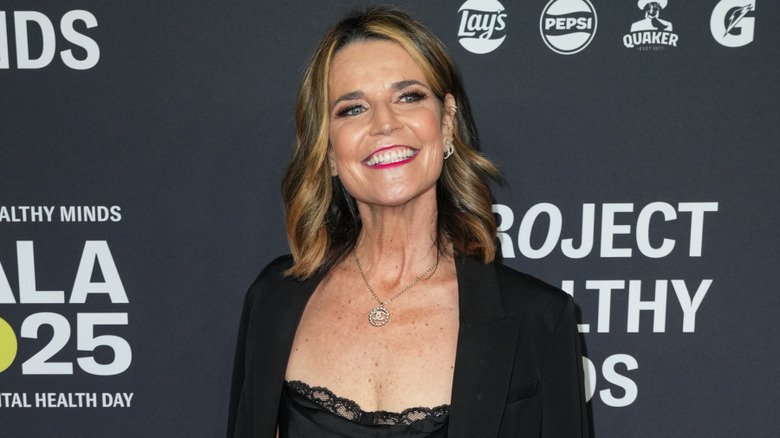
Savannah Guthrie’s voice troubles didn’t arrive out of nowhere. They crept up over weeks and months, the kind of change you notice when you listen to a recording of yourself and realize something’s off. On the December 19 “Today” show, she finally explained what was going on — and why she’ll be stepping away for a short time in early 2026.
A public announcement, but quietly personal Guthrie made the announcement in a way that felt both light and real: she played a clip from The Brady Bunch — you know, the Peter Brady voice change bit — and used that as a way to explain how her own voice had been acting lately. “I have felt like Peter Brady these last few weeks and months,” she said. It’s a small, almost joking touch, but it also made the moment human. She admitted that viewers had probably noticed a “scratchy” quality and occasional cracking. That’s not dramatic phrasing — just the plain truth of how a voice can betray you when it’s under strain.
The diagnosis: nodules and a polyp The medical explanation was straightforward: vocal nodules, and now a polyp, on her vocal cords. If you do any kind of talking for a living — reporting, hosting, singing — you know how quickly small problems can become major obstacles. Guthrie was frank: surgery is the way to fix it. Not a long, drawn-out medical saga, but something that requires a reset. She said she’ll have surgery early in the new year and then be off the air for a couple of weeks to recover. And yes, she joked that she’ll have to be totally silent for a while — which, honestly, made me smile because it’s the sort of wry, slightly self-deprecating humor you expect from someone used to being heard every morning.
Also read: Shailene Woodley’s Dating History: Red Flags?
It’s worth noting the good news: vocal nodules are non-cancerous and, while disruptive, they’re typically treatable. WebMD and other common medical sources describe them as small, benign growths caused by overuse or repeated strain. Still, for Guthrie this isn’t a trivial issue — her voice is literally central to her job, to the way millions of people recognize and trust her. So even though the condition isn’t life-threatening, it’s life-altering in a more immediate, practical sense.

More than one health scare over recent years This voice problem isn’t the only health challenge Guthrie has faced. A few years earlier she went through a series of eye surgeries after a frightening accident: a toy train thrown by a toddler struck her eye and led to a retinal detachment. That’s the kind of thing that raises your pulse just reading about it. Retinal detachment can cause serious vision loss, and Guthrie underwent multiple procedures as doctors worked to repair the damage.
By 2021 she’d had two successful surgeries to reattach the retina, but that, in turn, brought on another issue — cataracts. It’s an odd kind of domino effect: fix one life-threatening problem and then deal with a fairly common side effect. She underwent a third surgery to remove the cataracts and restore clearer vision. The surgeries were successful, and she’s spoken publicly about them, which feels like a helpful move; people often appreciate knowing that even public figures have to go through messy, physical recovery.
Practical advice from someone who’s been there Guthrie has been open about recovery tips she found useful, especially for others facing retinal reattachment surgery. On “Hoda & Jenna” she offered down-to-earth suggestions: if you need to spend time face-down during recovery, see if someone can come help or give you a massage, or have your partner or a child do it. It’s simple advice — perhaps oddly intimate — and it reveals something about how recovery isn’t only medical but logistical and emotional. Small comforts can matter a lot when you’re immobilized and vulnerable.
Also read: Lily’s Return: A Complicated Comeback That Left People Divided
A pause, not an ending Her announcement about the vocal surgery felt like that same mix of practical detail and quiet honesty. She didn’t dramatize it; she simply explained the plan and the timeline. She’ll be off for a couple of weeks, she’ll be silent for that time, and then she’ll return. For someone in live television, a planned break like this can feel jarring — for viewers who are used to seeing the same faces every morning, and for Guthrie herself, who built a career on speaking clearly and steadily.
I can’t help but respect how she handled it: a little humor, a little vulnerability, and a straight answer about what’s next. The “silent” joke lands because it’s true — and because there’s a weird bravado in admitting you need to be quiet. It’s human. It’s imperfect. And honestly, it’s comforting to see someone so public describing recovery in a way that feels like real life: not polished, not scripted, just necessary.
A few takeaways
- Vocal nodules and polyps are usually treatable, but they require time and care — especially if your work depends on your voice.
- Medical issues can come in clusters: one surgery can lead to another condition, as Guthrie found with her eye surgeries and cataracts.
- Simple recovery tips — help with positioning, small comforts — really do matter.
- Public figures sometimes shield the messy parts of their lives; Guthrie didn’t. She shared the details, the plan, and yes, a joke.
At the end of the day, this feels less like a celebrity headline and more like someone dealing with a practical problem, the way any of us would. It’s not dramatic, exactly. But it does ask for patience from an audience who’s used to hearing a familiar voice every morning. She’ll get the surgery, she’ll rest, and she’ll likely come back with the same steadiness — maybe a little quieter for a short while, then back to the cadence we’ve come to expect.








Leave a comment