
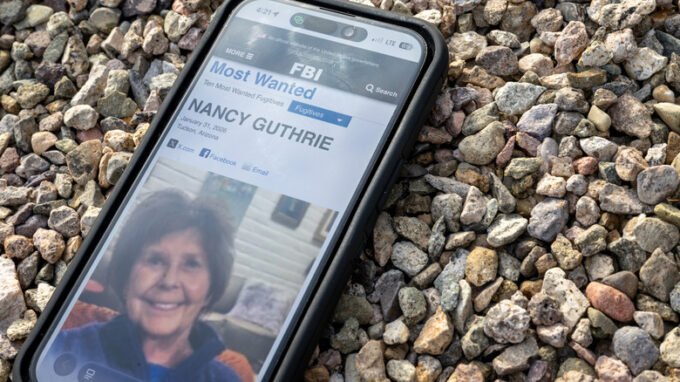









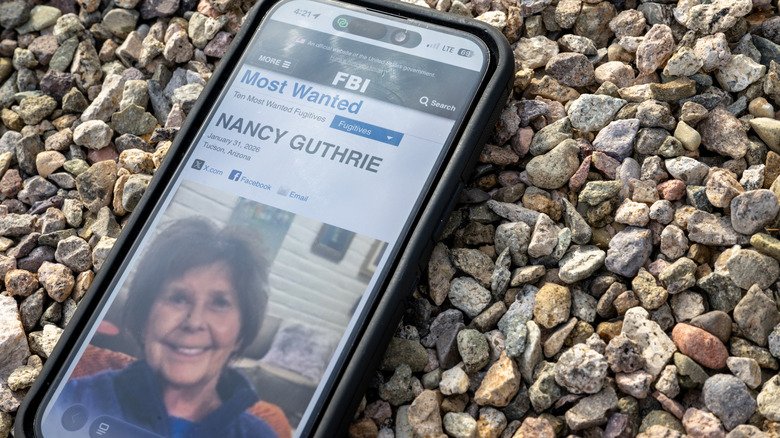
Nobody expected a charcoal sketch to make this case louder, but that’s what happened. The disappearance of Nancy Guthrie was already full of odd details — ransom notes that some people questioned, surveillance footage that left more questions than answers — and then a well-known crime sketch artist put pencil to paper. The result: a drawing that, rather than calming things, pushed the story into a messy public debate.
Why a sketch? It sounds an old-school tool in a very new-media moment. But some things don’t change: when camera images are blurry or masked faces are visible, investigators and artists sometimes try to reconstruct what could be hiding underneath. Lois Gibson, a Houston-based crime sketch artist with decades of experience, released an unofficial rendering of the person seen on Nancy’s property. The sketch was based on frames from a doorbell camera showing someone in a ski mask. Gibson herself was careful—she said she “guessed” at the parts covered by the mask, and that only some features, like the eyes and a bit of the lips or mustache, seemed somewhat certain.
That small admission—“I guessed”—is important, and also why people reacted so fiercely. Guessing is different from claiming. But on social platforms, nuance gets flattened fast. A sketch that might be a helpful lead for investigators became, to many, either a helpful clue or an outright hazard. And so the arguments started.
Also read: Chelsy Davy’s Most Leggy, Non-Royal Looks
Two camps form quickly
On one side are people who see Gibson’s work as an attempt to help. She’s not some random internet commentator; she’s a veteran in her field, and that matters to those who follow such cases closely. Supporters pointed out that police sketch artists have helped in plenty of cases over the years and that a skilled eye can sometimes pick out telling details from limited footage. “Her decades of experience give hope,” some wrote. That’s a reasonable sentiment — if an artist can nudge an investigation even a little, that nudge could matter.
On the other side are those who worry the sketch could mislead. If a drawing is partly speculative, the fear goes, it might send attention and resources in the wrong direction. One poster flatly refused to share the sketch, calling it “confusing” and saying it might divert law enforcement. Others worried about misidentification and the harm that can come from pointing fingers online. That’s also reasonable; false leads have real consequences for individuals and for investigations.
And somewhere in between are the people who simply feel uncomfortable with the whole spectacle. This is a missing-person case about a real person and a grieving family; turning it into a social-media argument feels, to many, like a step too far. I get that. When I read the posts, I felt a mix of curiosity and unease—curiosity because human faces and mysteries draw us in; unease because the conversation can become cruel or careless.

Gender, perception, and the limits of an image
An unexpected side note in the debate: gender. The FBI suggested the person in the footage was likely a man. But online, a surprising number of commenters argued the sketch looks female — or at least androgynous. Some thought the eyes and eyebrows seemed “feminine,” while others said bulky clothing could be an intentional throw-off. So people argued about whether the suspect could have been trying to disguise sex as well as identity.
This points to a deeper truth: what we see is shaped by what we expect. A few strokes of pencil—shading around the mouth, the curve of an eyebrow—can read differently to different viewers. Add the knowledge that an artist admitted guessing, and the certainty dissipates further. It’s easy to forget just how interpretive this work can be.
The internet’s reflex
The reaction also highlights how the internet responds to provisional information. A post goes up, and within hours opinions form, alliances appear, and people decide who’s “helping” or “hurting.” Nuance gets lost. What could be cautious professional judgment becomes, for some, a scandalous misstep. For others, it’s a hopeful contribution. That swinginess—love it or hate it—says more about how we process information than about the sketch itself.
I find it curious that a single drawing can reveal so much about public mood. People want answers and they want them now. They want experts to be decisive. When an expert hedges—“I guessed”—it’s a human moment, but also a trigger for skepticism. We want confidence, even if confidence would be wrong more often than not.
Also read: ‘Remember the Titans’ Cast: Then and Now
What might actually help, here?
If anything constructive comes from this, it’s a reminder about how we treat crowdsourced investigations. Law enforcement has tools, forensics, and protocols. The public can help with eyes and tips, but we should be careful: distinguish between suggestions and evidence. Share responsibly. And, perhaps, allow professionals to lead when the stakes are high.
I don’t know whether Gibson’s sketch will point anyone closer to Nancy or whether it’ll complicate things more. Maybe it’ll do both. Real life is messy like that—helpful in one moment, problematic in the next. The families involved deserve sensitivity; the investigation deserves clear-headed work. And the rest of us? We should temper our certainty. It’s a hard balance.
There’s no neat finish to this. The sketch set off arguments, yes, but it also brought renewed attention to a troubling disappearance. That attention can produce good or bad outcomes. For now, the drawing sits online, opinions swirl, and the search for answers continues.








Leave a comment