
![Blessing CEO auctions her properties to raise funds for cancer treatment [VIDEO]](https://wowplus.net/wp-content/uploads/2026/03/blessing-ceo-auctions-her-properties-to-raise-funds-for-cancer-treatment-video-680x680.jpg "Blessing CEO Cancer Fundraising Takes New Turn as She Auctions Personal Belongings 1")
![Blessing CEO solicits financial help amid battle with breast cancer [VIDEO]](https://wowplus.net/wp-content/uploads/2026/03/blessing-ceo-solicits-financial-help-amid-battle-with-breast-cancer-video-680x389.jpg "Blessing CEO Breast Cancer Appeal Sparks Concern as She Asks for Public Support 2")

![King Mitchy’s apology decoy to attack me – VDM raises alarm [VIDEO]](https://wowplus.net/wp-content/uploads/2026/03/king-mitchys-apology-decoy-to-attack-me-vdm-raises-alarm-video-680x408.jpg "VeryDarkMan Raises Alarm Over King Mitchy Apology, Says Something Feels Off 5")



















There’s something jarring about watching someone shift from private life into the glare of national attention almost overnight. Erika Kirk’s rise to a very public role after Charlie Kirk’s death has felt like that — sudden, messy, and a little hard to read. I’m not claiming to know everything about her motives or feelings; I don’t. But the reactions online, the interviews, the social feeds — they add up to a picture that’s worth unpacking, even if all the pieces don’t fit neatly.
How it all changed so fast
Charlie Kirk’s killing in September 2025 was, plainly, a shock. He was a visible figure in conservative circles, and the suddenness of his death put his circle under intense scrutiny. Erika, his widow, suddenly found herself in a position she hadn’t been in before: thrust into leadership and into the public eye. She was named CEO of Turning Point USA, a role that meant stepping into both organizational responsibilities and the very public world of conservative media. That alone would be overwhelming for anyone. Add grief, a grieving family, and nonstop attention — and you can see why the reaction has been complicated.
What’s striking is how quickly Erika became a media presence. In a matter of weeks she gained millions of followers on Instagram and began showing up at big conservative events, interviews, and appearances. People noticed. People talked. And, predictably, people judged. Some of that judgment came from outside her circles — fair enough, strangers will always weigh in. But what surprised a lot of observers was how many of Charlie’s own followers sounded skeptical, even cold.
The grift accusation and the backlash
There’s a particular tone online — dismissive, almost gleeful — when people accuse someone of “grifting.” In Erika’s case, that accusation has popped up repeatedly: that she’s capitalizing on her husband’s death, that she’s using grief as a platform. Comments across YouTube and Instagram ranged from sharp to outright cruel. One user quipped that she’d been “everywhere except with her kids,” another joked she was stuck in the “five stages of grift.” Harsh, yes. Human, too, in a way that’s uncomfortable to watch.
Also read: The Missing Ring: Why Kate’s Ringless Moment Sparked So Much Talk
Why did this resonate so widely? Part of it is the cultural moment. Politics and media economies reward visibility, and there’s a cynicism now toward anyone who seems to benefit from attention. Combine that with real grief — which is inherently messy, inconsistent, and personal — and you have a perfect storm for suspicion. People expect particular behaviors, or they invent them. That expectation breeds impatience, and sometimes cruelty.
Erika’s response: defensiveness, honesty, and boundaries

Erika hasn’t ignored the chatter. She’s pushed back, and sometimes rather forcefully. On social media she wrote about keeping Charlie’s things in place — even the scattered socks — and used that detail to make a point about judgment and privacy. She didn’t couch it in flowery language; it was blunt and, I think, human. “They’re already at capacity,” she wrote, meaning people were already judging everything she did. That line landed with some, annoyed others. It’s the sort of reaction that feels generational: some will sympathize, others will see it as performative.
She’s also made a broader argument about grief itself: that there is no single “right” way to mourn. That’s true, but it doesn’t always stop people from policing how others grieve. You can spot that tension across her interviews. When asked about hugging public figures or attending events, she often leans into empathy and small, personal explanations — “my love language is touch,” she said on a public appearance. That’s a disarming, slightly vulnerable admission. It’s effective for some audiences, less so for others who prefer distance between personal mourning and public life.
Moments that amplified the debate
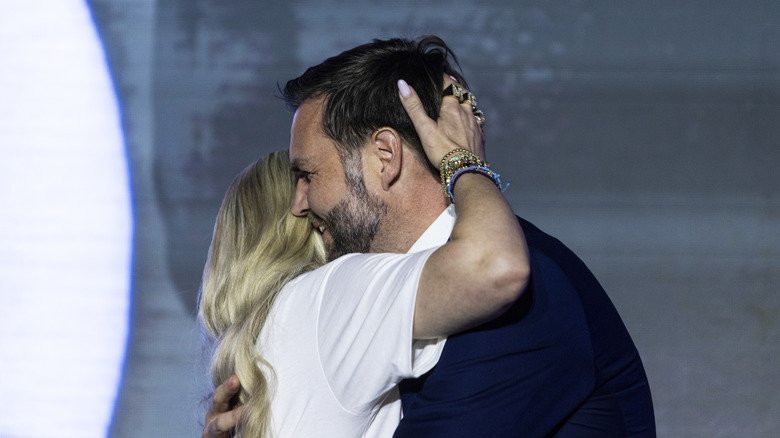
A few incidents pushed the conversation into overdrive. One notable moment was a photo of Erika hugging a high-profile conservative figure at an event. For some folks, that was a normal, human gesture; for others, it looked calculated. The difference in interpretation tells you something about our current media landscape: context matters, but it’s often lost in the rush to react.
Another recurring spark has been her social media presence. Rapidly gaining followers, posting personal details, then appearing on multiple high-profile interviews — it felt to many like a carefully managed image campaign. Or, it could be genuine attempts to connect, to process, and to carry on work she believes in. Both readings are plausible. I tend to think it’s often both — people act from mixed motives, and we sometimes forget that complexity in favor of a neat explanation.
Why some reactions feel harsher than they should
I don’t want to excuse cruelty. Part of the online heat is performative outrage — people piling on because it’s easy, because it gets clicks, because it feels righteous. Add to that politics: Erika now sits at the center of an organization and a movement that already has critics and supporters. That polarization sharpens everything. So when her actions are interpreted through that lens, they’re rarely seen in full nuance.
Also read: When a Marriage Ends, Old Scars Shape the Custody Fight
There’s also a gender dimension here. Women, especially widows or caretakers thrust into public roles, often face a narrower set of accepted behaviors. They’re judged both for being too public and for not being public enough. It’s a lose-lose in many respects, though that doesn’t mean everyone’s criticism is unfair. Some questions are reasonable: how will she balance public leadership with family life? Is she prepared for the institutional demands of Turning Point USA? Those are practical concerns, not just moralizing.
A final thought
Watching this unfold — the attention, the sympathy, the suspicion — feels like watching a trial by media. There’s grief and there’s duty, and they sometimes collide messily. Erika’s defenders see someone doing hard work under impossible scrutiny; her critics see someone changing tack quickly and perhaps opportunistically. Both sides hold pieces of the truth. Which is telling, actually — because life rarely hands you only one clean story.










Leave a comment