

![How me and my best friend got pregnant for my husband – Actress Omo Local [VIDEO]](https://wowplus.net/wp-content/uploads/2026/03/how-me-and-my-best-friend-got-pregnant-for-my-husband-actress-omo-local-video-680x1020.jpg "When Two Pregnancies Collided: My Story — Omo Local’s Truth 2")
![Older men allow you get away with a lot of things – Joke Silva [VIDEO]](https://wowplus.net/wp-content/uploads/2026/03/older-men-allow-you-get-away-with-a-lot-of-things-joke-silva-video-680x384.jpg "Why Older Partners Sometimes Make Life Easier 3")
![Seyi Law makes U-turn, apologizes for saying Nigeria is safer than 10 years ago [Video]](https://wowplus.net/wp-content/uploads/2026/02/seyi-law-makes-u-turn-apologizes-for-saying-nigeria-is-safer-than-10-years-ago-video-680x680.jpg "Seyi Law Backtracks on “Safer” Nigeria Comment 4")
![Seyi Tinubu is threatening my life – VeryDarkMan cries out [VIDEO]](https://wowplus.net/wp-content/uploads/2026/02/seyi-tinubu-is-threatening-my-life-verydarkman-cries-out-video-680x408.jpg "“I’m Scared — VeryDarkMan Says Seyi Tinubu Threatened Him” 5")







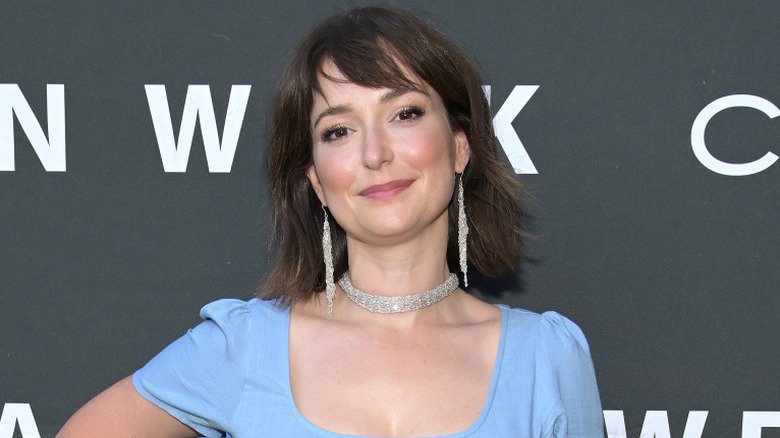
People who grew up seeing the AT&T spot with Lily — the bright, droll character played by Milana Vayntrub — might have assumed they knew her story. But then she did something that made a lot of folks pause, scroll back, and argue. It was December 8 when Vayntrub posted a few striking photos on Instagram, images that were definitely meant to catch the eye. They were styled to be flirty, a little risqué, and paired with a message about a charity effort called Only Philanthropy — a cheeky riff on the subscription site name everyone knows. That twist is key, because what she was pitching wasn’t a personal brand pivot so much as a fundraiser idea dressed in a deliberately provocative wrapper.
A quick look at the message: Vayntrub explained that the L.A. wildfires left many people needing immediate help, and she’d seen cash was the most direct way to help. So she asked, roughly, “What if we tried something ridiculous together?” The photos, in her words and on the site, were “flirty and tastefully risqué, but not nude.” Her plan: creators could offer content through tiered subscriptions and funnel proceeds to wildfire relief. The point being practical more than performative — but then things got messy.
Also read; The Photo That Haunts You: When a Perfect Moment Turns Into a Nightmare
Why some people were confused
There’s an obvious tension here. A few years earlier, Vayntrub had spoken out about how the massive attention from the AT&T campaigns had led to ugly, sexualized comments and harassment. She talked publicly about how having her likeness distorted and used without consent hurt her. At one point she said, bluntly, that fans had “lost the privilege” of looking at her body until she felt safe. So when she later posted steamy images — even as part of a charity push — many fans read that as a contradiction.
Comments ranged from sympathetic confusion to sharp accusations of hypocrisy. “Didn’t she get upset a few years ago because people were sexualizing her?” one person wrote. Another mocked the charity’s cheeky name as “Only hypocrisy.” Some asked, more directly, if it was suddenly okay for men to look now. Those remarks highlight how complicated consent, agency, and context feel to audiences. People remembered a time when Vayntrub said she didn’t want her body ogled — and that memory didn’t fit neatly with the fundraiser photos.
But the other side of the reaction matters, too. Plenty of followers pushed back against the critics, pointing out a simple, but often overlooked distinction: consent and control. If Vayntrub chose to use images of herself to direct funds to people who’d lost their homes, and if she set the terms — what’s shown, how it’s promoted, where the money goes — that’s not the same thing as being sexualized against her will. Some defenders reminded others that consent isn’t a binary; it’s contextual. Just because someone once said “no” to being looked at in certain settings doesn’t mean they can never make a different choice on their own terms.
A personal side to the story
admit, I saw the photos and paused. It felt jarring, because I remembered her candid posts about harassment. But then I thought about the real people affected by fires — people who were suddenly out of work, displaced, or scraping by. There’s a human impulse here to do whatever actually helps, even if it looks unconventional. That’s not to dismiss the discomfort people feel; it’s just to put it alongside a practical aim that matters to many.
Vayntrub’s history with online harassment gives extra weight to the debate. In August 2020 she broke down on Instagram Live about the toll of being sexualized online, describing messages, doctored photos, and feelings that echoed sexual assault trauma. Later, in 2021, she explained why she’d chosen not to show her body in certain AT&T commercials that year: the flood of unwelcome comments had made it unsafe for her to allow her image to be treated like public property. She even noted that she directed those spots herself — the measure of control matters.
Also read: Meg Ryan’s image suffered after an infamous, awkward interview.
So when someone who’s been harmed decides to reclaim control and use the same tools for something they care about, the response is bound to be messy. People interpret such moves through their own memories and moral frames. Some see empowerment. Others see inconsistency. Both reactions are, frankly, understandable.
The charity idea and its optics

Only Philanthropy was marketed with tiered subscriptions and a promise to direct the money where it was needed. Framing the content as “not nude” but suggestive was a deliberate stylistic choice. That choice did two things: it amplified interest (which likely raised more funds) and it invited moral judgment (which cost goodwill from some corners). If you’re campaigning for donations, eyebrow-raising strategies can be effective — but they also change the conversation from “who needs help” to “who should help, and at what cost.”
There’s also a broader cultural question lurking here about how we police women’s decisions publicly. Some critics assume that past vulnerability equals ongoing permission to judge. Supporters argue that autonomy should let someone shift tactics as they see fit, especially when the stakes are people’s livelihoods.
What this feels like now
At the end of the day, Vayntrub’s post did what she intended in at least one way: it got attention, and that attention had the potential to be converted into real help for wildfire victims. Whether that method sits well with everyone is another matter. For some, it was a painful reminder of how exploited public figures can be; for others, it was a pragmatic, self-directed use of visibility to help strangers. There’s no single right read.
People will keep disagreeing. I’m not surprised. Humans don’t like tidy narratives. We remember the hurt, we notice the change, and we argue. Sometimes the loudest reaction is less about the person making the choice and more about what those choices reveal about what we’re willing to accept or forgive.






Leave a comment